

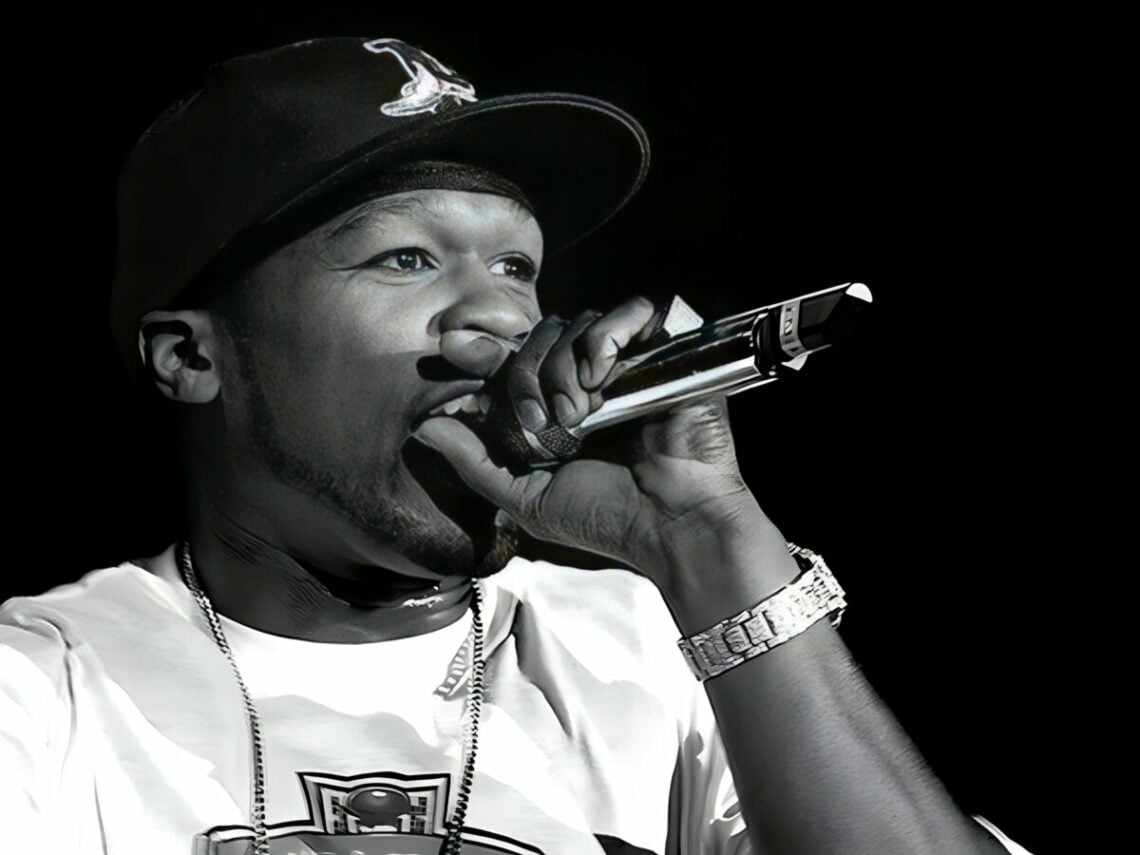
The song with Lil Kim, 50 Cent thinks “they fucked up”
The story of ‘Magic Stick’ is not neat. It is a hit that was born out of a plan that fell through, a song that made its way through hands and label offices before becoming one of the biggest rap singles of 2003. Fans tend to remember the hook and the chart position, but behind it sits a disagreement, a miscommunication and one of 50 Cent’s longest standing grudges.
By the time the track came out, both Lil’ Kim and 50 were already big names. Kim was building momentum with La Bella Mafia again, 50 was in the midst of his Get Rich or Die Tryin’ takeover. A collaboration between them should have been a label dream. Instead, how the song made its way into her album is where the story gets messy.
The version the world heard was not what was originally intended. 50 did not write the song with Kim in mind at all. He had another artist in place, another recording in motion, a commercial strategy mapped out. Something in that chain broke.
And according to 50 Cent, the snap is where things “got fucked up” exactly.
‘Magic Stick’ was originally a track 50 written by him for his own album. He wanted Trina on it. He has said again and again that he sent her team the record with the expectation of a confident, explicit performance, but what they returned was, as he put it, unusable. The record was “sent back wrong” and the collaboration crumbled. With the deadline for Get Rich or Die Tryin’ fast approaching, the track had been pulled. At that time, Atlantic Records executive Gee Roberson heard the unused version and urged Lil’ Kim to take the record for La Bella Mafia.
Kim caught it clean and locked in her verse and took the lead. The track was released as her single in April 2003. So far, the salvage job had been a win. A raunchy radio ready hit pairing two big personalities should have been pushed hard. But the song’s promotion was never on the scale of the song.
There was no music video. The label scheduled one, and then canceled it. Accounts differ: some say personal tensions got in the way, others say it was label politics. 50 later rapped “I wrote Magic Stick, I gave Kim a hit, then I wouldn’t shoot the video” as a pointed reminder that not everyone involved was cooperating. Whatever the reason, for one of that size to go to market with no visual campaign was unheard of at the time.
Yet the song still took off. It reached number two on Billboard Hot 100 and remained there for weeks, kept only in check by Beyonce’s ‘Crazy in Love’. On airplay alone it topped the R&B/Hip-Hop charts, and became one of the most recognisable songs of that year. La Bella Mafia went platinum off the momentum, and Kim received one of the largest solo hits of her career.
This is where 50’s frustration is more comprehensible, as he believed the song could have been even bigger. A number one record was on the table. A music video would surely have pushed it way over the edge. From his point of view, an opportunity had been lost at the point of handover. The track had passed from his album to someone else’s, the campaign was not in his control and the song’s potential was not maximised.
Lil’ Kim’s public position has always been more diplomatic. She has described the track as something like a peace offering. According to her, 50 apologised for a previous slight, and gave her the record because he thought it suited her. She took it in her stride and has never publicly criticised the rollout. For Kim, the song is recalled as a time of re-emergence, a reiteration of her sexual assurance, her stardom.
Looking back, ‘Magic Stick’ is in a strange place. It is a smash that succeeded in spite of its circumstances rather than because of them. It reveals the power of songs to have lives bigger than the plans behind them. It also illustrates the length to which grudges can be carried when music industry decisions get in the way of personal expectations.
When 50 Cent says “they fucked up” he is not talking about Kim. He is talking about the path the song had taken before it came to her. In his eyes the original collaboration was mishandled and the eventual hit could have been even bigger. But whatever else went on behind the scenes, the result for the public is undeniable.