

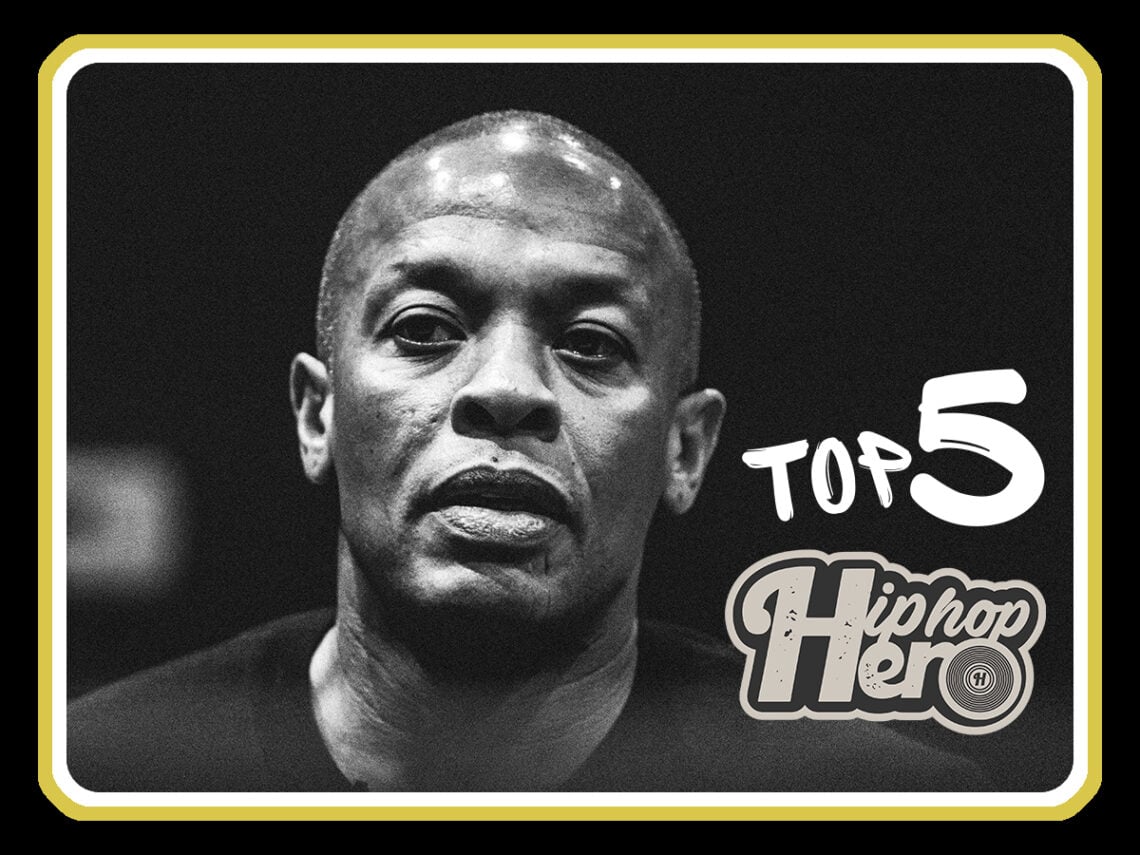
Dr Dre’s five most important Aftermath signings
Dr Dre’s undeniable legacy is not just found within his catalogue, but the artists he would place behind him. Aftermath Entertainment had never been a music label. It was selective, slow, and often ruthless, but when Dre committed, he reshaped hip hop.
The only difference between Aftermath and other powerhouse labels is timing. Dre did not just sign talent. He brought artists into the picture at times when the culture was in need of a change. Every key signature was the start of a new era, not a small successful run.
Not all of these artists came in as outsiders; some were already street legends who just needed a spotlight. The thing they had in common was that they possessed a clear voice and could develop once Dre provided them with structure, discipline, and access.
These are the top five Aftermath signings, not only in terms of sales, but in terms of cultural impact, duration, and how much they transformed the sound of mainstream rap.
The Game
The Game was the bridge that Aftermath had to the West Coast in the mid 2000s. At the time he was signed by Dre, Los Angeles rap was in a period of poor mainstream relevance. The Game arrived with hunger, name-drops, and a strong sense of the historical relevance.
The Documentary brought cinematic production to a new generation, and created defining singles such as ‘Hate It or Love It’ and ‘How We Do’. Although the relationship between The Game and Aftermath burned fast and ended loudly, the impact was undeniable. He contributed to regaining the West Coast credibility and showed that Dre was still able to make stars in an evolving industry.
Anderson Paak
Anderson Paak signifies the late developmental stage of Dre as an executive. Dre took him onboard during the Compton era, which was a clear indication that Aftermath was no longer about street rap supremacy.
Paak crossed music genres with ease, combining soul, funk, rap, and live instrumentation. His appearance broadened the creative identity of the label and demonstrated that Dre was not living in the past, and still had his ears open to new ideas. Paak has shown that there are new ways to build the future without repeating the past, as he has done with Malibu and other projects with Dre.
50 Cent
The most commercially explosive signing that Dre made was 50 Cent. Dre realised a raw talent when Eminem brought him in to Aftermath, recognising a sound that can take over the radio and the streets at the same time.
Get Rich or Die Tryin’ was one of the most significant albums of the 2000s, not only in terms of sales, but also in redefining what a rap superstar was. 50 made trauma mythical and aggression mass-marketable. His songs transformed marketing, mixtape culture, and the labels pursuing crossover success over a decade later.
Kendrick Lamar
Kendrick Lamar was the demonstration that Aftermath could still create greatness without resorting to shock and spectacle. Dre quietly signed Kendrick and the effect was earth-shaking.g
good kid, m.A.A.d city brought back the narrative nuance to mainstream rap, and To Pimp a Butterfly went way further past what a major label would typically permit. Kendrick did not simply thrive under Aftermath, he put it in a higher status. He was the heir apparent of Dre, and he demonstrated that age, brains, and hard work could still be successful at the top.
Eminem
Without a doubt, Eminem is the most significant Aftermath signing. It transformed their lives and the direction of hip hop when Dre signed him in the late 1990s.
Eminem turned out to be one of the largest artists in the history of music, though, more importantly, he assisted in establishing Aftermath as an empire. His fame earned Dre freedom, leverage, and credibility to sign other people on his terms. Eminem was the heir to the talent instinct of Dre, as shown in The Slim Shady LP to The Marshall Mathers LP. All the significant Aftermath moments are traced to this decision.