

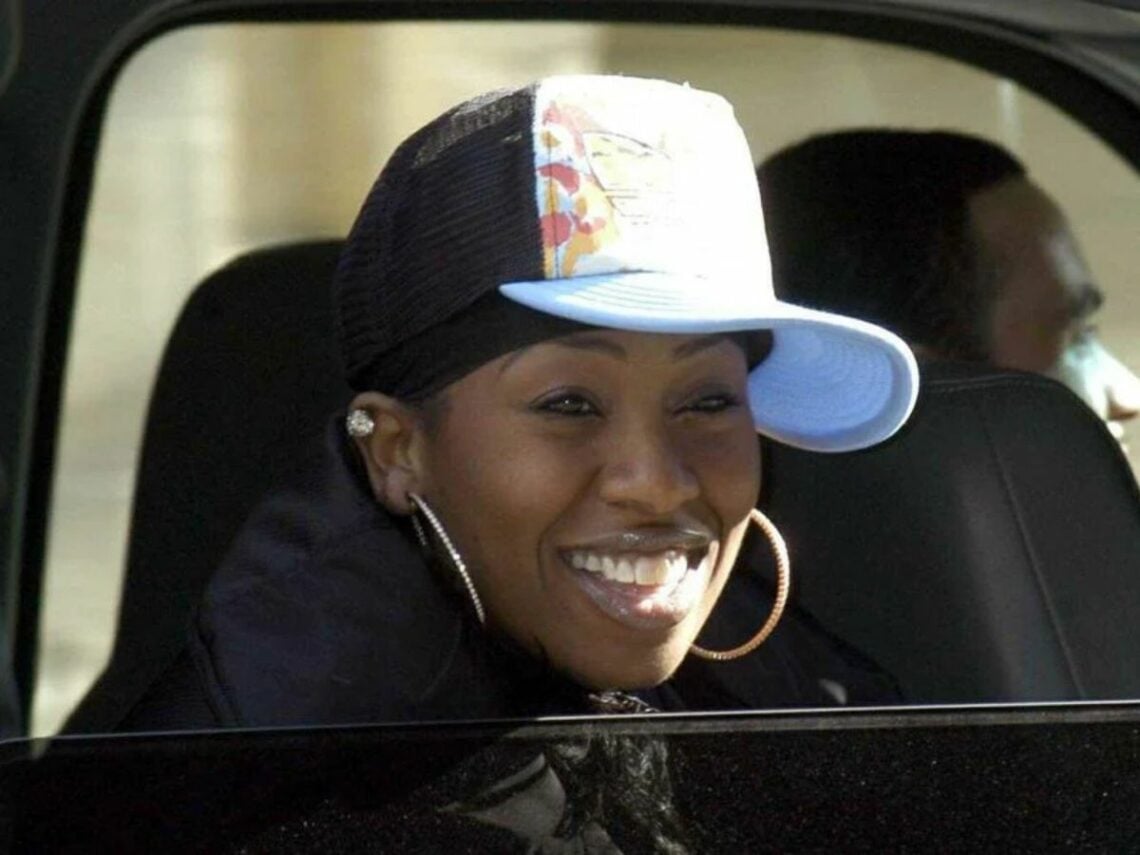
The story behind Missy Elliott’s ‘Get Your Freak On’
Everyone knows Get Your Freak On by Missy Elliott. One of the most definitive songs of the 2000s.
The Timbaland co-produced 2001 tune remains one of the most iconic singles of the generation. Reaching number seven on the US Billboard Hot 100, it also netted Top 10 placement in the UK and the Netherlands.
Arguably, it’s one of those songs that have only become more legendary as the years have rolled on. Still played with near-dogmatic loyalty in parties and clubs across both sides of the Atlantic, it re-entered the charts when Elliott performed it at the 2015 Super Bowl halftime show. It’s also been covered loads of times, including a Nelly Furtado remix treatment. Perhaps the most notable of its legacy was when Michelle Obama – then First Lady – rapped it with James Corden in the comedian’s Carpool Karaoke routine.
Most notable until now, that is. It will come as no surprise to anyone who’s found themselves automatically shaking their hips to the song’s intro, that earlier this month Rolling Stone anointed Get Your Freak On as the greatest song of the 21st century so far.
And yet the song almost didn’t happen. Speaking on the Rolling Stone Music Now podcast, Missy Elliot revealed that Timbaland was exhausted and wanted to leave the studio, but Elliott insisted that the album, Miss E… So Addictive, needed another song.
“He started hitting anything,” she explained. “He was bamming on the keyboard ‘cause he was ready to go. And he hit something and I was like, “that’s it right there.” And he was like, “What? What are you talking about? I just went in the booth and did the record.”
The song is notable for its inclusion of bhangra elements, a popular music and dance genre from Punjab in India, and a six-note base played on a tumbi and bassline played on a tabla, two popular instruments in the region. Its unique sound is a testament to the success of the multi-cultural blending of these sounds with an All-American approach influenced by Elliott’s upbringing in Virginia.
“I felt like I was at one of those go-go jams,” she said on the podcast, reflecting on the creation of the song. “They’re always chanting something. I was like, “oh man, I need to do a song like this.” If you keep it simple, then people are going to be able to [sing along].” Elliott also detailed that throughout writing and producing the song, she was imagining choreography for it, something she attunes to spending “so much time around dancers.”
“When I’m doing that record, I’m thinking of my dancers,” she said. “I could just see them moving to it.” And the rest of the world, to boot.
And fans need not worry that Elliott is resting on her laurels with this incredible accolade. Whilst the rapper is “super excited and thankful” to Rolling Stone, she’s more concentrated on making music rather than reflecting on what she wrote and co-produced almost 15 years ago.
“I have something in the works,” she said on the podcast. Elliott, who has not made new music since her 2019 EP Iconology, revealed that she’s been spending time in the recording studio recently.
“It’s just different,” she said of what she’s been working on. “It’s me being experimental again… I got some stuff coming. Some fire.”