

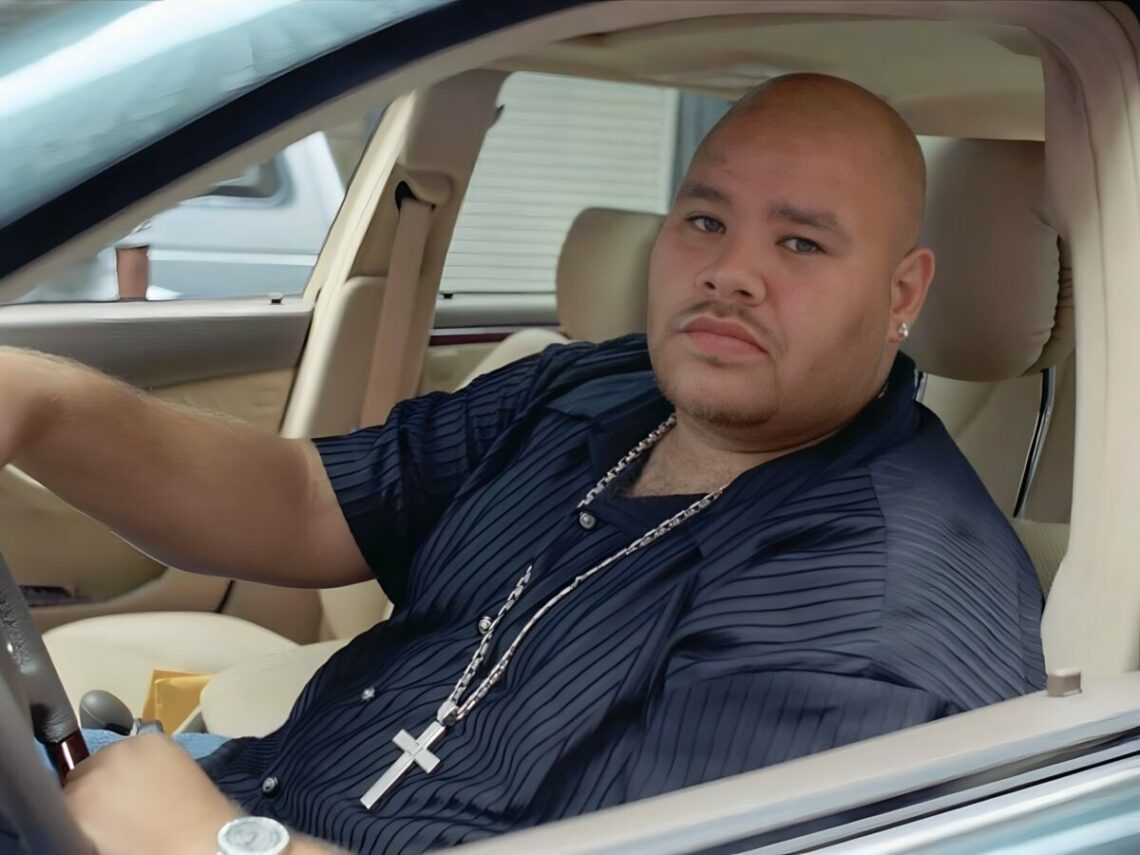
The five best beats Fat Joe ever jumped on
Fat Joe has never been just a rapper chasing the next chart position. His longevity has been earned by a talent more subtle than punchlines: the ability to pick the right beat and make it his own.
From his first Bronx boom bap records to arena-shaking anthems, Joe has consistently known when to snarl, when to glide, and when to stand back so the instrumental itself does the heavy lifting.
Three decades of shifting soundscapes have passed him by, but his catalogue shows an artist who adapts without losing his identity. You can trace the evolution of hip hop itself through his collaborations with producers like Diamond D, Scott Storch, Cool & Dre, and DJ Khaled.
The five songs below are more than highlights. They are turning points where Joe’s ear for production didn’t just complement the culture, it redirected it.
The best beats Fat Joe ever worked on:
Scott Storch – ‘Lean Back’ (2004)
In 2004, hip hop radio was flooded with lush synths, sped-up soul samples, and maximalist beats that filled every available pocket. Then Lean Back arrived. Scott Storch stripped it all away, leaving nothing but an eerie piano loop, snapping snares, and a drumline so skeletal it felt incomplete. That restraint was the genius. In a year crowded with noise, silence suddenly became power.
Fat Joe understood the assignment. His bars land with a deliberate patience, stretching out just enough to let the piano breathe, while Remy Ma’s verse sharpens the track’s edges. Together they turned the minimalist loop into a hypnotic chant that swallowed clubs whole. The result wasn’t just a summer hit, it was a blueprint. From then on, the gospel of producers was to move dancefloors by doing less, not more.
DJ Khaled, DJ Nasty & LVM – ‘All I Do Is Win’ (Remix) (2010)
By the dawn of the 2010s, hip hop had gone widescreen. Songs weren’t just for block parties anymore; they were written for arenas, locker rooms, and national TV broadcasts. All I Do Is Win was that ethos turned into sound: horns blaring like a championship parade, booming drums that refused to sit still, synths that felt built for fireworks. It was a beat designed for communal victory.
Joe steps into the chaos with the confidence of someone who has lived it, not just imagined it. His verse doesn’t get lost in the noise; it bends the noise to his presence, adding grit to a beat that might otherwise have leaned too far into pageantry. What followed was bigger than a single: the track became ritual. Stadiums adopted it, celebrations borrowed it, and hip hop once again expanded its borders. Joe proved he could thrive in this new landscape without surrendering his Bronx-born authority.
Edsclusive, Cool & Dre – ‘All the Way Up’ (2016)
When All the Way Up dropped, it sounded like Fat Joe was storming back to claim his throne. The beat is aggressive: stabbing horns that cut like alarms, a bassline that rattles concrete, percussion that stomps rather than swings. Edsclusive and Cool & Dre built it to be undeniable, the kind of track that doesn’t politely ask for your attention, it seizes it.
Joe and Remy Ma attack the beat with urgency. Their verses ricochet off the horns, trading bravado with the sharpness of people who know the city is watching. But the cultural weight of the song came from timing. Trap and Southern dominance had reshaped hip hop, and New York needed a fresh anthem. All the Way Up delivered exactly that, bridging generations: the young heard a Bronx veteran who still mattered, and the old heard proof that their city could roar again.
Diamond D – ‘Flow Joe’ (1993)
Rewind to the beginning. Before platinum records and crossover anthems, Fat Joe introduced himself with Flow Joe. Diamond D’s production is textbook golden era: jazzy horn stabs, chopped samples, heavy drums that don’t just keep time but punch you in the chest. It’s raw, unpolished, and deeply Bronx.
Joe’s delivery matches that grit. Hungry, aggressive, slightly unrefined, the kind of voice that makes you believe he’s still proving himself block by block. The track cemented his authenticity, showing he could hold his own in a borough overflowing with competition. Three decades later, the beat still holds weight. It reminds listeners that before Fat Joe became a cultural fixture, he was a kid with a mic, a point to prove, and a beat that made him impossible to ignore.
Scott Storch – ‘Make It Rain’ (2006)
Two years after Lean Back, Joe linked with Scott Storch again, this time diving headfirst into Southern textures. Make It Rain is a different beast entirely: ominous organ lines, 808s that hit like thunder, snares rattling with trap intensity. It was cinematic and dangerous, built for strip clubs and car systems alike.
Joe doesn’t imitate the South, he adapts. His flow bends into the cadence of the beat while keeping his Bronx DNA intact, riding the production with a confidence that proved regional borders were meant to be crossed. In 2006, when the South was reshaping hip hop’s mainstream, Make It Rain showed that Fat Joe could thrive in that environment without losing himself. The song didn’t just chart, it cemented him as New York’s chameleon, who could still dictate trends rather than chase them.