

The first song Azealia Banks was obsessed with: “That was my shit”
Prior to her being the fearless rapper of 212, Azealia Banks was a Harlem child who was attached to the television and found the power of pop in the 1990s R&B. She told the original song she had ever been obsessed with in a British GQ interview: the first track she heard by Destiny’s Child, ‘No, No, No’.
The pre-teen Banks recalled seeing Beyoncé and her bandmates singing in the same outfits and immediately coming to the conclusion, “Oh my God, you could not tell me that I was not going to grow up and be one of them when I saw that”. She was struck down by their confidence and style and precision. One of the singers had pink in a flash of her hair. “Who are these girls? What had she done to give her hair the colour pink?” she thought. The one video was all it took to put the seed in the thought that she could own a stage as well.
The initial idols of Banks were all attitude-oriented. She equally adored Aaliyah’s song ‘Back & Forth’, which she referred to as “my shit”, because of her dance in baggy jeans and a crop top as a new image of femininity in music: cool, independent, full of rhythm. The initial blend of inner-city style and heartfelt R&B cool became the template that would be used in later years in her own compositions. Before she took a mic, Banks was rehearsing the moves and learning how to make confidence work into performance.
As Destiny’s Child released ‘No, No, No’ at the end of 1997, it was a revolution that transformed R&B. The Wyclef Jean remix threw the light original into a head-nodder. It was fresh and fearless because of the syncopated voice runs of Beyoncé and the ad-libs of Wyclef. The single peaked at number 3 on the Billboard Hot 100 and was platinum in most countries across the world.
To Banks, it was more personal: four young Black women who were taking over the screen, singing with confidence and establishing that empowerment could be sweet. The chorus, “No, no, no, no, no… when it is really yeah, yeah, yeah, yeah”, youthful mantras became her refrain in childhood.
The same was hit by the 1994 Aaliyah hit ‘Back & Forth’. She was 15 years old, but her Tommy Hilfiger cool and silky voice had a natural duality, with roughness, but gentleness, with street, yet style. It could make you glamorous and grounded at the same time, it told Azealia. That R&B attitude of self-possession that was very popular during the mid-90s oozed into her mind, and she saw that pop stardom did not mean giving in.
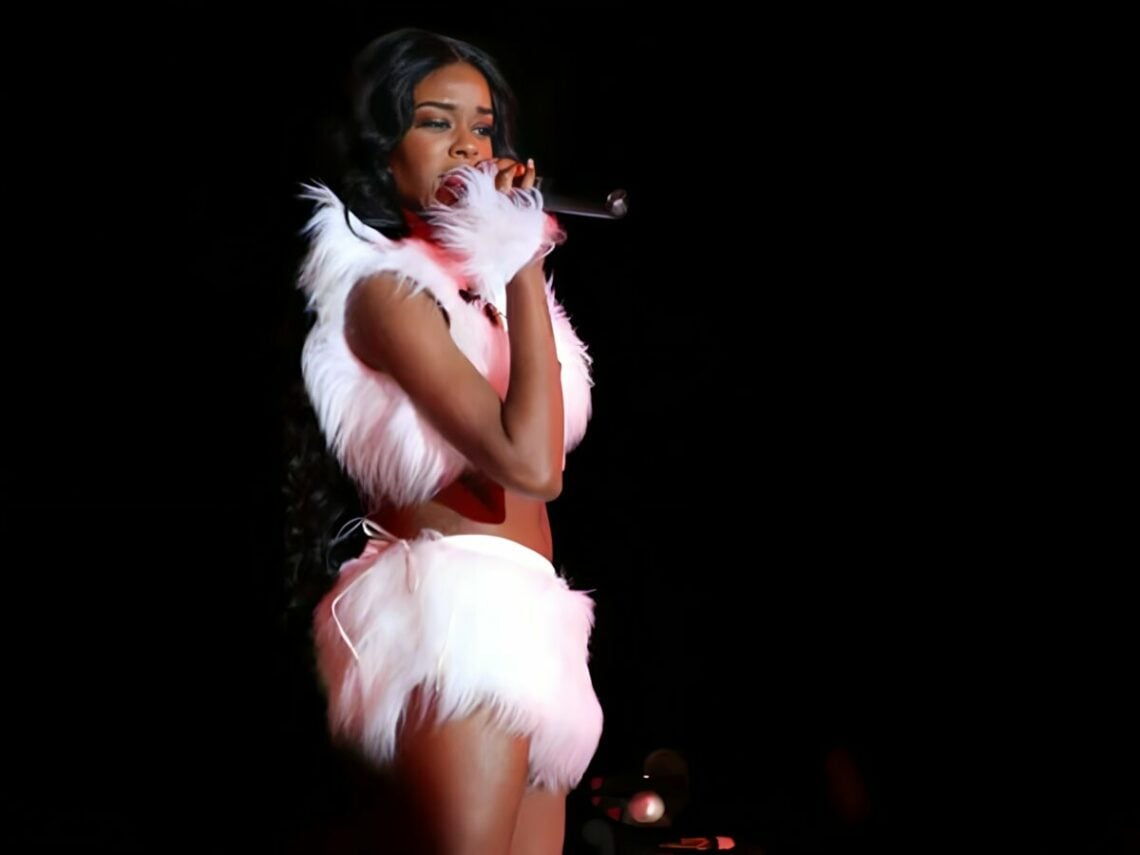
Banks inherited that DNA as she became her own artist. On ‘212’, she switches between hard-hitting raps and the flirtatious beats, something she enjoyed as a child, a hip-hop-meets-R&B mixture. Ferocity and grace that Destiny’s Child mastered combined to be her creative north star. Even her stage act, confident, fashionable, uninhibited, is an expression of the girl-group energy she used to worship. She then joked that she used to be “the Spice Girls style” in her clothes and that she would proudly combine the glamour with grit.
It was not just nostalgia over that first musical love. It allowed Banks to be experimental, to regard genre as a playground. Since she had been surrounded by a life full of songs that had already pushed boundaries, she never felt confined within rules. The girl singing ‘No, No, No’ along with it would then blend rap, house and electronic music with equal liberty. “That was my shit, my shit, it still goes on,” said she, and you can hear it. Each beat she spins, each verse she spits, is a heartbeat of that original infatuation – a prompt that the seed of discovery can be used to jump-start an entire career and win the support of the titans of hip hop.