

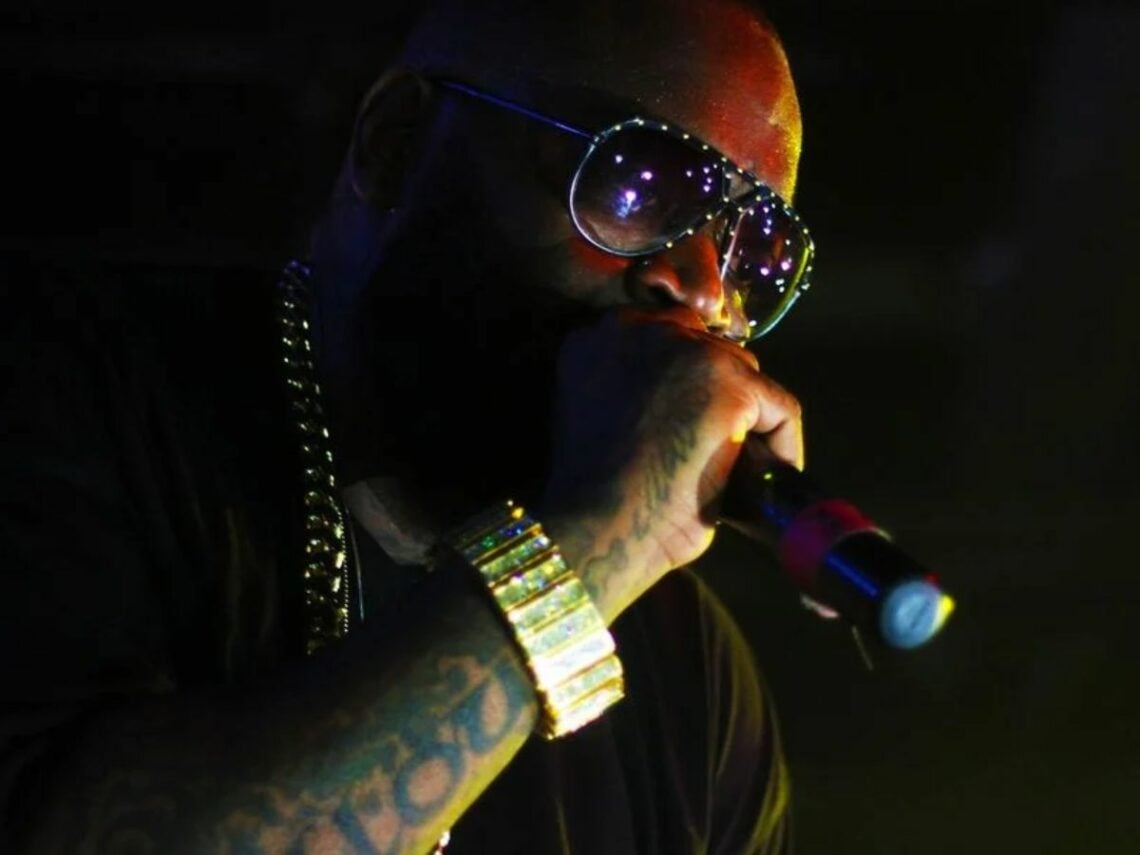
The “corny” Los Angeles EDM duo Rick Ross sued for copyright infringement
Electronic dance music, or EDM, was a defining sound of the 2010s. We’re all entitled to our opinions about whether or not that constituted a good thing, but, regardless, it happened, and certain DJ/producers who made that sort of music were elevated to a level of fame they’d never previously enjoyed.
The likes of David Guetta, Calvin Harris and the late Avicii were absolutely massive throughout the ’10s, as were an EDM duo from Los Angeles called LMFAO. The year 2011 was an especially big one for LMFAO, as they released two number-one hits, ‘Party Rock Anthem’ and ‘Sexy and I Know It,’ that were everywhere at the time.
The first of those songs, ‘Party Rock Anthem,’ reached a truly absurd level of popularity. It topped the charts in 20 countries, while entering the top five in several others. It became Australia’s best-selling single ever, while, in the United States, it is considered to be one of the best-selling digital songs ever. On YouTube today, it has clocked up a view count in the billions.
Songs don’t come much more popular than ‘Party Rock Anthem,’ but it did end up landing the LMFAO duo into a spot of bother with a giant of rap music. Rick Ross wasn’t at all happy when he first heard the track, and his annoyance was such that he decided to take legal action.
Ross’ beef with the EDM song revolved around one of its key lyrics: “Every day I’m shufflin’.” This phrase was a little bit too familiar for Ross’ liking, as he thought it ripped off his first ever single, ‘Hustlin’,’ which came out six years earlier. On that song he repeatedly recites the broadly similar phrase, “Every day I’m hustlin’.”
As Ross explained to Rolling Stone in 2016, he was convinced that “these two corny guys” had “jacked” his song. He even claimed that one of the members had “admitted that they sat in the studio playing my song over and over for hours while they came up with their ideas.” He believed, then, that their success was based on his work, and he wasn’t happy about it. He decided to sue for copyright infringement in 2014.
The case did not play out as Ross wanted it to. A judge rejected the rapper’s claims, deciding that an altered three-word phrase in a song didn’t qualify to be protected by copyright. Ross decided to appeal that decision, and, as he told Rolling Stone, he was “confident something will come back around.”
Ross felt LMFAO had been privileged sorts, in light of the fact that one of the members, Redfoo, is the son of Motown Records founder Berry Gordy. Ross therefore painted himself as the underdog in this tale, the “self-made” man fighting against industry-backed heavyweights.
Ross characterised himself as “the biggest boss,” whereas “those corny guys” had been privileged and “their dad” had “paid for their great Michael Jackson lawyers and all that.” He was annoyed by their perceived advantages, but, regardless of how irritated he was, he did not emerge victorious. The lawsuit was officially dismissed in 2016.