

The influence of hip-hop on presidential elections
In hip-hop and outside of it, it seems like it is impossible to get away from the circus that has engulfed American politics. In what appears to be the most divisive election in recent memory, the battle between Kamala Harris and Donald Trump will reach its crescendo on November 5th.
In the digital age we are privy to all, if not most, of the factors that influence presidential elections. If you were unaware, it is quite alarming. Elon Musk has basically turned Twitter nto a right wing propaganda machine, whilst other tech giants, such as Meta and Google, have been cited in moderating conservative content, favouring the left. Where both parties can claim some semblance of agreement is that they will take the money of the highest bidder if they adjust their policies ever so slightly. It seems that in order to be influential, you either need a large audience or a large sack of cash. Enter hip-hop.
In a paper titled Music and Politics, published at Oxford University in 2013, J.Street stated that, “Various movements, minorities, and political groups across the globe used rap to bring attention to inequality. As a result, rap and hip hop were ‘almost exclusively viewed as political’ in many places, especially in its original context of the Afro-American and Latin communities of the 1970s and 80s.”
According to the University of Westminster, “Music is popular – and this means politicians want to control it. This is why in Russia, for example, music has been censored through the 20th century. Rock, jazz and blues were forbidden almost until the 1990s. The state paid money to the loyal musicians who, they hoped, would distract local citizens from the Western bands like Rolling Stones and Guns ’N’ Roses. These state-sponsored rock bands were relatively popular, but not as fiery as Western rock. Punk, rap and hip-hop are the edgiest music genres in modern Russia. However, there is a state-sponsored version of rap music and there are rap artists critical of this.”
In essence, if you want to minimise the number of people who oppose you, limit access to messages from those on the mic. Hip-hop has, in one way or another, always been political. Artists such as Public Enemy, with tracks such as ‘Fight the power’ and KRS-One with ‘Sound of da police’ have advocated for social equality for the oppressed. Chuck D, Public Enemy’s lead vocalist and creative lead, once said that, “Rap music was the invisible TV station that Black America never had.”
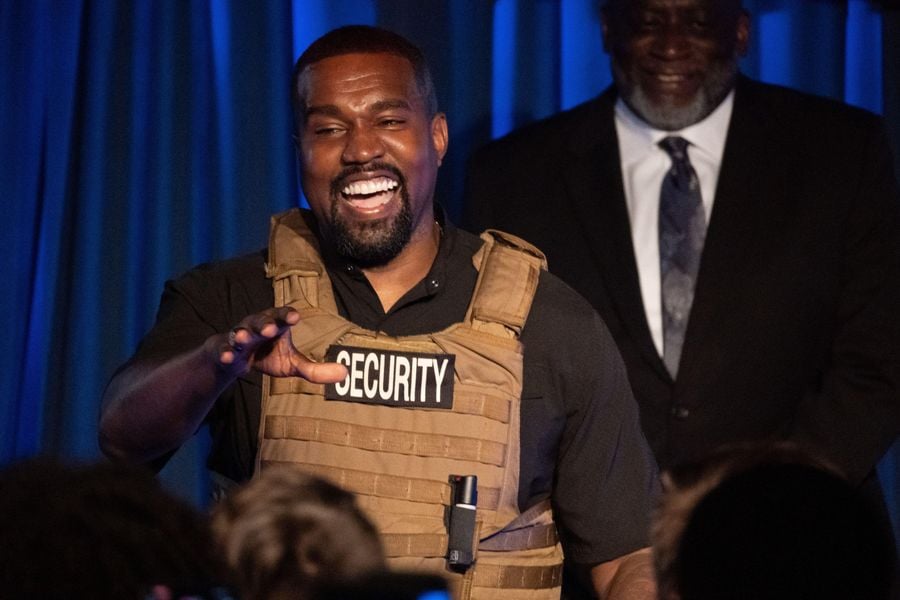
During the 2020 election, artists such as Cardi B and Killer Mike have been politically active, with the former interviewing Bernie Sanders about his policies and discussing politics with her followers on Instagram live, and the latter campaigning for Democratic candidates in Georgia. For obvious reasons, hip-hop artists have historically been left-leaning (Kanye West’s and M.I.As endorsement for Donald Trump notwithstanding).
If it was already abundantly clear, the stakes are quite high for this election. The issues that existed when hip hop was born still stand today. Racial injustice, economic inequality and climate change, amongst others. Hip-hop holds the unique position of being particularly popular amongst younger voters. With the rise of social media platforms, such as TikTok and Instagram, amplifying the political messages that artists are raising, hip hop acts as a catalyst for social change, as traditional political campaigns are less likely to influence this key demographic.
Chance the rapper has been vocal in recent months about the importance of voting in elections. Not just the federal election but also vote for senators, governors and other officials who have a vote in policies that affect the people. Whilst YG and Nipsey Hussle’s 2016 track ‘F*** Donald Trump’ has picked up in popularity again.
Today, artists are more than just entertainers. They can influence their fans in ways that politicians could only dream of. The overarching message (aside from the pointed jab at the Republican party leader above) has been to make your voice heard, most importantly at the polls.
The fact that people of colour have been disenfranchised for decades, in conjunction with the propensity for gerrymandering (which is the practice of manipulating the boundaries of a constituency to favour a political party), opportunities for social change have been severely inhibited. Hip-hop, acting a a voice for the oppressed, has, and will continue to have, the platform to affect change for the greater good.