

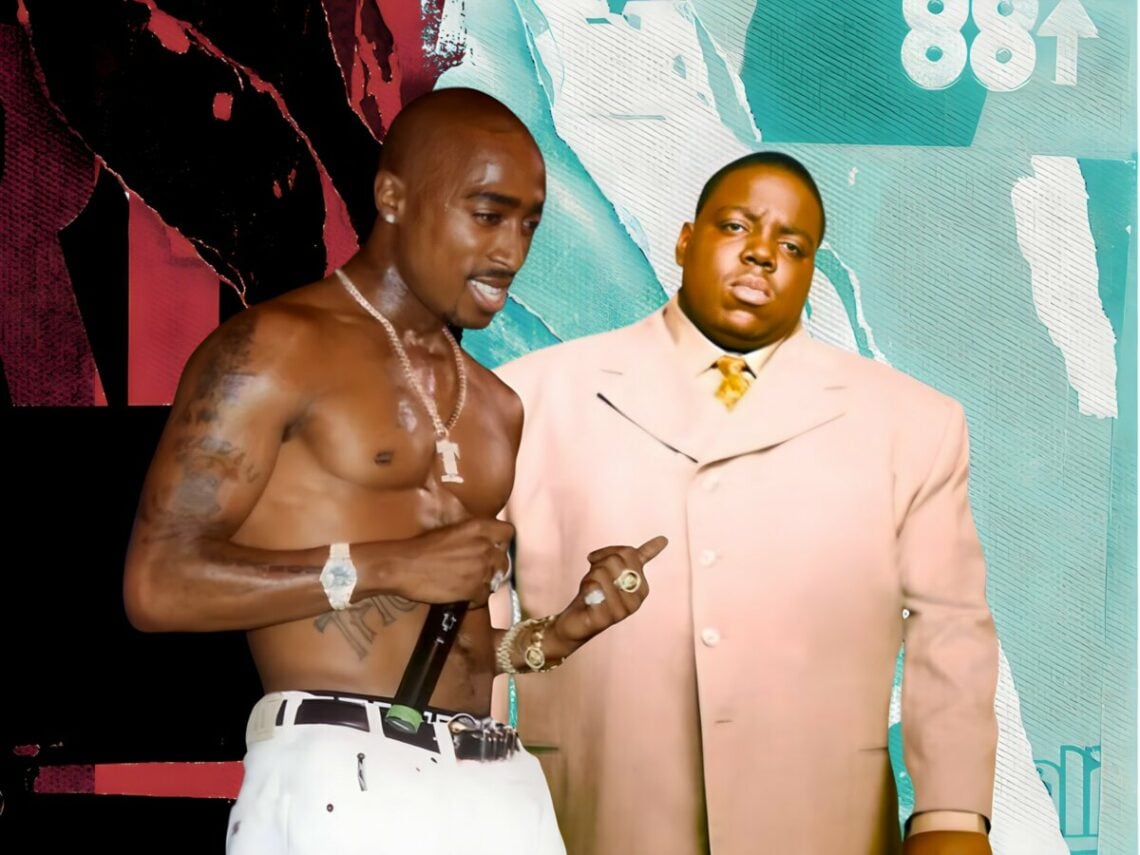
Five things we learned from the 2Pac and Biggie Smalls beef
The West Coast vs East Coast feud that plagued hip hop during the 1990s, as much as it may have entertained the culture, was an amalgamation of bloodshed and pure horror that ultimately ended with the deaths of two amazingly talented rappers: 2pac and Biggie Smalls. However, the origin of the beef is complex and often misunderstood.
The landscape of hip-hop looked vastly different in the 1990s than it is today. When we’re looking at 1990s hip hop, we’re looking (for the most part) at two feuding record labels, Death Row Records on the West Coast and Badboy Entertainment on the East Coast. Both companies had their stars, with 2pac signed to Death Row and The Notorious B.I.G to Bad Boy.
Respectively, these two artists, with their affiliates, i.e. Snoop Dogg, Dr Dre, Suge Knight, Lil Kim, Faith Evans and Diddy, were ruling the rap charts and selling unfathomable amounts of records with their feud actually fuelling sales. The origin of the regional feud actually began with 2pac and Biggie’s friendship. The two, as the biggest rap stars in the US, were, at first. However, one incident changed all of that.
In 1994, the rapper was ambushed and shot in the lobby of Quad studios, and according to 2Pac, he recognised two of the three men as associates of his Biggie Smalls. With 2pac effectively forcing his record label and crew to pick a side in what he considered a war, the two labels were officially enemies. With one headquartered on the West Coast in LA and one headquartered on the East Coast in New York, it spread like a virus going from two artists to two labels to two whole states.
The beef resulted in two murders. However, there are at least five things that hip-hop fans learned from the death of these artists, and retrospectively, we can see where things went wrong for them both.
Five things we learned from 2Pac and Biggie Smalls beef:
5. MCs should only have a small entourage
The amount of people an artist has around them can sometimes be the thing that makes or breaks them. In fact, on more than one occasion, it has been proven that the bigger your entourage is, the more likely you are to fail as an artist. Whether it’s Tekashi 6ix9ine spending time in jail due to the Nine Trey Gangster Bloods, he surrounded himself with or King Von’sVon’s murder due to his entourage of Black Disciples, a massive, potentially rowdy group of young men is an unwise choice of company.
This was very much involved in 2Pac’s murder, and the same can be said for Biggie Smalls. In their prime, both artists surrounded themselves with large entourages. Furthermore, many people in both their entourages had street connections and little to lose. This meant that 2Pac and Biggie Smalls had people in their ears, fuelling the beef and sturring the pot who need not be there.
4. Be careful who’s profiting from you
Whether it’s Birdman, Jerry Heller, Dame Dash, or Gucci Mane, when rappers sign to other MCs who have made it to the mainstream and are already wealthy, some people grab the money and sign the deal like they have won the lottery. However, hip-hop has repeatedly seen its favourite artists speak about unfair contracts and relationships turned sour. MCs should always be careful about who they put their trust in and who is profiting from them.
In retrospect, it is fair to say that both Suge Knight and Sean ‘Diddy’ Combs were not responsible for their signees. During the East Coast vs West Coast beef, the label heads fuelled the fire to such an extent their artists were murdered. But following their death, they still owned the masters. Combs and Knight were unhelpful and pushed the negativity. A lesson hip-hop should learn is that just because a figure offers you a record deal does not mean they are your friend or intend to send you in the right direction. Bluntly, perhaps 2Pac should have had some more scepticism about Suge Knight, and the same applies to Biggie concerning Diddy.
3. It’s not where you’re from it’s where you’re at
Many street feuds are fought over the gang people belong to and what block they represent. Although these dynamics may be suitable on a small scale, once applied to the US map, it’s not wise or sustainable to turn a personal disagreement into a regional beef. Once you’re a nationwide phenomenon, you are no longer just a person “from” California; you are nationwide, and it is clear from the 2Pac’s approach to Biggie Smalls that he was willing to sacrifice where he was at to represent where he was from.
With his diss track ‘Hit Em Up’ constantly reminding listeners how he was from “West Side”, towards the end of his career, it almost seemed as if he was more focused on his “Side” winning in a regional beef than maintaining his position as a superstar with amazing and insightful songs.
2. Make a home away from home
Nowadays, rappers don’t stay in their city and record labels with a fixed address and recording location aren’t a big thing. Concerning the 2Pac and Biggie feud, with the former recording at the Death Row studios in Los Angeles’ Tarzana neighbourhood and the latter in Bad Boy’s Manhattan, it was easy to predict where these artists would be regularly. Many artists live and record in cities they weren’t born in or moved to for safety. In an interview with Vlad TV, Boosie Badazz once highlighted how he would never move to his hometown of Baton Rouge as he had too much history and dangerous affiliations there.
Other rhymers have expressed a similar sentiment, and it is safe to say that an artist like 2Pac could have and should have made a home away from home where they weren’t privy to the psychodrama of the streets. With LA native and infamous gangster Suge Knight at his side, it is safe to say it was probably never safe for 2Pac to be in LA. The same can be said for Biggie, and the epic battle that ensued may not have been so fierce if the two legends hadn’t been tied down to their respective home states.
1. You’re never gangsta to die
This is an obvious yet ironically the most important lesson learned from the 2Pac and Biggie Smalls feud. Although many have put 2Pac’s gangster credentials into question over the years, his brash, aggressive and gang-affiliated spectacles were a part of his demise.
Although the ‘Dear Mama’ lyricist was a star who could afford protection, it appeared that he thought that, with the protection of Suge Knight, he was immortal. 2Pac may have had a lot of loyal LA bloods riding for him, but when worst came to worst, the bare-chested, tough guy from the ‘Hit ‘Em Up’ music video was murdered with ease. Still, unfortunately, it seems many artists have not learnt this lesson, and this decade, we have already seen many rappers face trial for all kinds of charges.