

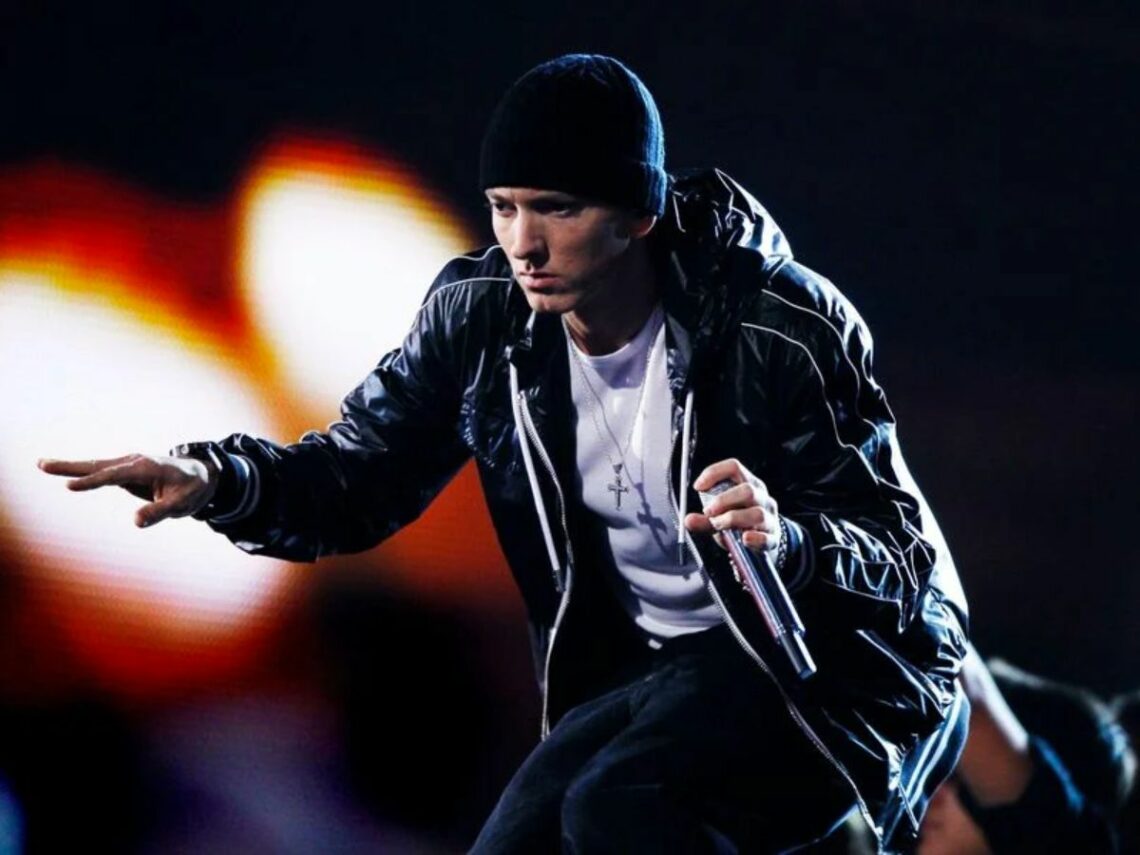
The Brooklyn rapper Eminem was scared of lyrically
Eminem has proven himself to be one of hip-hop’s most legendary figures, but his reputation was not established lightly. As a young, wannabe MC, he had to overcome much suspicion and mockery directed his way.
Hip-hop, as a cultural form that first developed within the ethnically diverse neighbourhoods of the Bronx, decidedly did not begin with white people. Black and Latino people were, by and large, responsible for its creation, meaning that, by the time white people were beginning to take a liking to it, there was a healthy skepticism about it. The sense that cultural appropriation was taking place was real.
A popular, predominately white, mainstream culture appropriating elements of minority tastes and practices is a story as old as pop culture itself. A sensitivity to this trend among the Black community in particular is well-warranted, so, once Eminem began to develop a reputation as a great rapper, he initially faced a lot of resistance.
Em has always been hyper-aware of his place within hip-hop. He has never tried to claim the culture for himself, frequently acknowledging that he is part of a largely Black cultural form. But, despite his care for the culture, he has nonetheless doubted his own place within it.
As Eminem was developing his rap skills as a young person, the Beastie Boys had begun to break the taboo of being white people in rap music. This was initially reassuring for Em, but then another act emerged on the scene that duly made him doubt himself again. The group X Clan emerged from Brooklyn with their debut album To the East, Blackwards in 1990, and it terrified Em.
X Clan, and their original line-up of Brother J, Professor X, Paradise and Sugar Shaft, became associated with Afrocentric themes and for advocating militant Black activism. Listening to this, Em, as he revealed to Rolling Stone in 2004, felt targeted by their lyrics. Recalling how much he’d loved To the East, Blackwards, he admitted, all the same, to being frightened by the words.
“Brother J was an MC that I was afraid of lyrically,” Em conceded. “His delivery was so confident. But he also made me feel like an outcast.”
Eminem specifically referred to X Clan’s song ‘Grand Verbalizer, What Time is It?,’ which contained the line, “How can polar bears swing on vines with the gorillas?” What that referred to was the notion of white people, “polar bears,” trying to rap, or “swing on vines,” in place of Black people, the “gorillas,” who were the true masters of the practice.
Em noted that “as militant as Public Enemy were,” they had never made him feel excluded from rap music as a white person. But X Clan’s words were like “a slap in the face.” They made him nervous of his place in hip-hop, but, ultimately, he stuck with it and won people over. He is widely regarded as one of rap’s greats now, but he has never lost sight of the culture’s origins.