

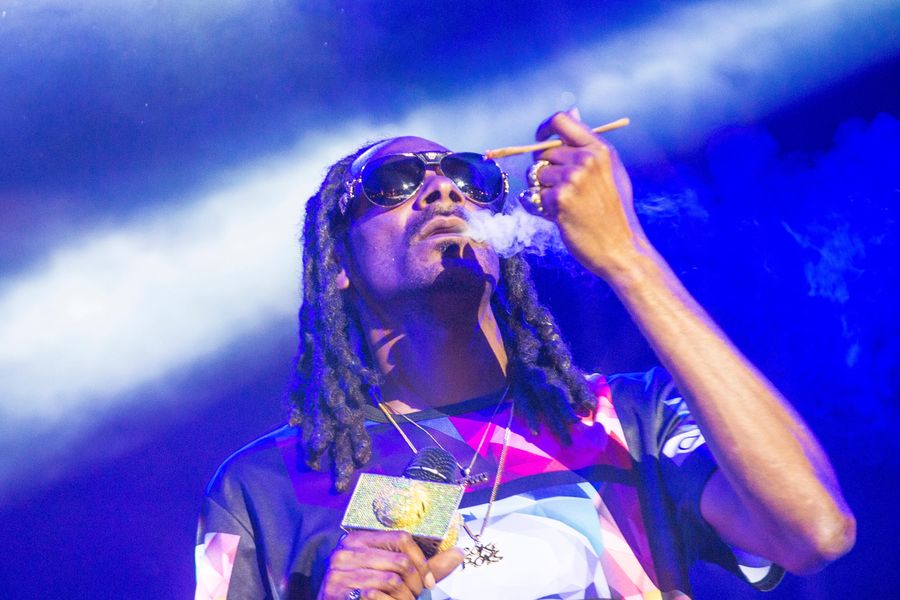
Why Snoop Dogg was banned from becoming a Rastafarian
The life and career of Snoop Dogg has been subject to plenty of twists and turns through the years. But an especially notable period was when he converted to Rastafari and took on a new name: Snoop Lion. He backed up his new lifestyle with a reggae album, Reincarnated, but not everyone bought into his apparent awakening. Some prominent Rastas, in fact, intervened to keep him out of the community.
Snoop became interested in Rastafari in 2012, when he visited Jamaica. He soon converted to the religion and changed his name to Snoop Lion, under which he released Reincarnated in 2013. Reviews of the album were mixed at best, but even worse was the reaction from some within the Rasta community itself.
Rastafari emerged among poor communities in Jamaica around the 1930s, partly as a pushback to the British colonial culture that was dominant in Jamaica at the time. It has been described both as a religion and as a social movement, and it bears within it a set of complex beliefs and practices. The smoking of ganja is an especially well-known example, but it is far from the only one, and the rationale for doing it is more complicated than many outsiders tend to appreciate.
The fact that Rastafari is constituted by a deep history of cultural, religious and social beliefs and practices is often overlooked within Western culture, which often has a tendency to caricature it. That is precisely why Snoop Dogg’s supposed conversion caused such disquiet among many Rastas. Perhaps the most prominent of those skeptics was Bunny Wailer, an original member of Bob Marley’s band, the Wailers. Marley himself was probably the most famous ever Rastafarian.
Wailer questioned Snoop’s commitment to Rastafari beliefs and culture, publicly expressing concern that Snoop’s conversion had taken place for cynical, business-related reasons. He went so far as to call for Snoop’s excommunication from the religion.
According to reporting from TMZ, Wailer claimed that Snoop had engaged in “outright fraudulent use of Rastafari community’s personalities and symbolism.” He had done so, Wailer believed, for commercial gain, using his newfound association with the religion to sell his new reggae record.
Wailer wasn’t the only Rastafarian with an issue with what Snoop was doing. A group called the Ethio-Africa Diaspora Union Millennium Council, otherwise known as the Rastafari Millennium Council, published a seven-page letter to Snoop, in which they called into question how genuine Snoop’s apparent turn to Rasta culture really was. In one section of the long letter, they raged that “smoking weed and loving Bob Marley and reggae music is not what defines the Rastafari indigenous culture!”
The criticism may well have impacted Snoop, who, not long after the Reincarnated album had come out, was casting doubt on whether or not he would ever return to Jamaica to NME. “I definitely feel like I’m gonna make more music but I don’t know if I’m gonna go to Jamaica, I may wanna go somewhere else,” he said. “I may wanna venture into another part of the world. Some things you let them be what they are. That was a priceless moment. I may wanna do something different next time.”
That quote does, indeed, imply that Wailer’s criticism was valid. The way Snoop spoke about things, it did seem like the Snoop Lion thing was little more than a phase. Sure enough, he was soon calling himself Snoop Dogg again.