

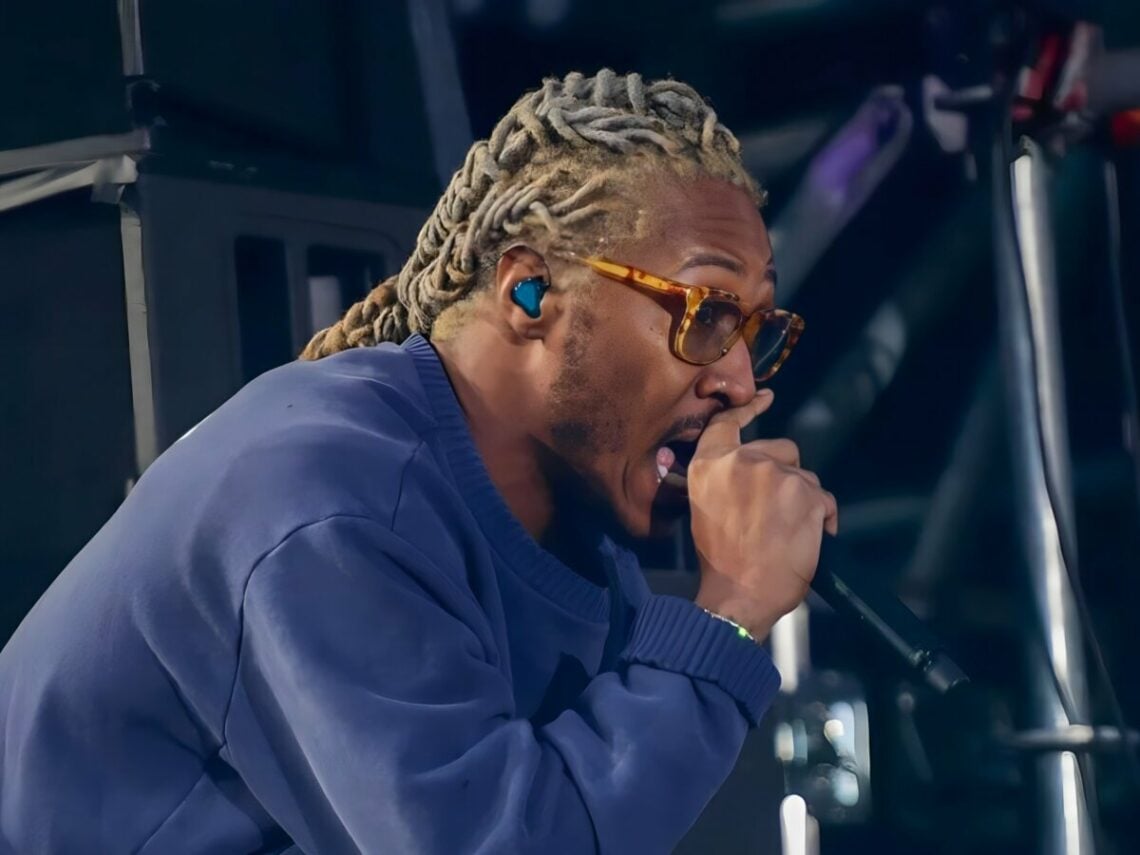
Why is Future considered the male Beyoncé?
Owing to his innovations in incorporating auto-tuned melodies into his hip-hop, Future, for good or for ill, has done more than most to shape contemporary rap. But his influence on the scene has decidedly questionable qualities, given its associations with sexism. For that, he has been dubbed the “male Beyoncé.”
The point with that term is that Future kind of inverts Beyoncé’s act. While Beyoncé is known for promoting positive female empowerment—and there are plenty of legitimate critiques one can posit in response to the particular brand of feminism that she espouses—Future’s music seems to promote male behaviour in the entirely opposite spirit. It can be understood as, at times, straight-up misogynistic.
Future wouldn’t be the first rapper to lean heavily into misogyny in his songs, but there is a particular way in which he sticks out. Take, for instance, his promotion campaign for his 2022 album I Never Liked You, in which he involved the late internet personality and self-styled “relationship expert” Kevin Samuels, who has been described by The New York Times as a “hypermasculine authority.” Lots of rap is misogynistic, but there is a sense in which Future has embraced contemporary online toxicity in a way that few other artists of his stature have. He’s arguably the true manosphere rapper.
When asked by The Fader in 2019 about his “male Beyoncé” persona, he seemed to cherry-pick the positive associations of such a comparison to Bey. He replied, “I feel great [about it]. Only reason I say I feel great about that is because I feel like Beyoncé is, if not the greatest, one of the greatest. And to be compared to that is great.”
Elaborating a little bit on how he understands his brand of “male empowerment,” he said, “I wanna be able to use my voice for a lot of good in men, and not just the bad. Not when you just going through a breakup or not when you feel like you just wanna have a party lifestyle. You just wanna party. I’m speaking for the men that’s going through something, that’s gonna party. I wanna speak for the men that’s in relationships. I wanna speak for men that’s in love. I wanna speak for men that have found true love. I wanna speak for men that done went through something but also felt like they wasn’t gon’ become the person that they are. And they listened to Future, and they became a better person.”
That’s quite a claim for someone who once, in a song about his groupies, described a woman as “a slut and a metaphor.” Plenty of artists adopt nefarious personas for the sake of their art, using satire as a means of highlighting social ills as they actually exist. But is that what Future is doing? In an age of rising manosphere-generated misogyny, it’s questionable. His music seems to, at least sometimes, earnestly espouse those sexist values that are again in the ascendancy.
Future himself would probably argue against that point. He doesn’t think his lyrics are celebrating sexism, as he explained to The Fader. “[Future’s music] didn’t make [male listeners] feel like the wrong things they was doing was good. Like I make all your wrongs great. I make all your wrongs right. I don’t wanna make your wrongs right anymore. I wanna shed light on the right. I just wanna be that voice how her voice is to reach out and be looked at someone as more of a positive light and someone that’s like a innovator or as empowering women. I wanna empower men with that same power but also in the right way.”