

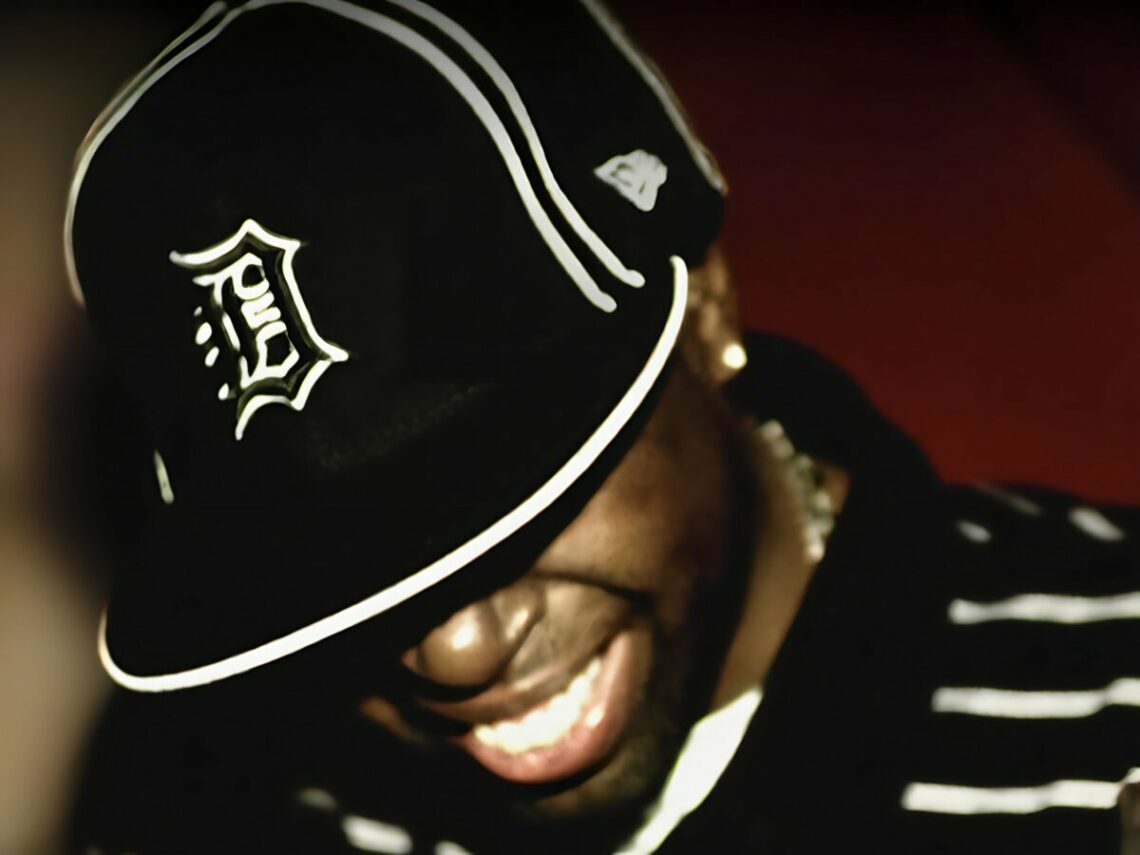
Why did J Dilla leave Slum Village?
J Dilla is remembered as a genuinely pioneering producer, who, during his short lifetime, changed the sound of hip-hop forever. But before his work for the likes of A Tribe Called Quest, The Pharcyde and Busta Rhymes made him a legend, Jay Dee got his start in the Detroit rap group Slum Village.
Slum Village was formed in Detroit during the mid-’90s, made up of high school friends Jay Dee, Baatin and T3. They quickly started to generate a buzz around the city once they left school, but, as the group was beginning to make a name for itself, J Dilla was also establishing himself as a uniquely talented producer on his own terms.
Throughout the second half of the ’90s, Dee started producing music for some huge names, including Tribe, Pharcyde, Busta, De La Soul and Janet Jackson. Many of his productions during this period failed to credit him personally, as they were attributed to the Ummah production team that he was a part of, but his reputation within the scene was certainly becoming formidable. Tribe’s Q-Tip and Ali Shaheed Muhammad were also members of Ummah, while Raphael Saadiq and D’Angelo occasionally dropped in to contribute, too.
Slum Village remained active even as Dilla started to increase his profile as a producer outside of the group, and they toured alongside Tribe in 1998. But within three years, the group had begun to succumb to tensions. Dee left in 2001.
In 2004, a couple of years before his untimely death, J Dilla chatted with XXL about his decision to leave Slum Village three years previously. The way he spoke about the situation, it seems that the old euphemism of “creative differences” was to blame, although he didn’t use the phrase directly.
Characterising his decision to leave the group as “the best thing I could ever have done,” Dee described the group as being like “business situation where you not clickin’ creatively.” He also deployed an unorthodox analogy to make his point. “Some n—as wanna eat garlic on the tour bus,” he said, “and some n—as ain’t like that shit. You gotta deal with that shit.”
It’s perfectly possible that this wasn’t an analogy at all, and that certain people eating garlic on the tour bus really was the straw that broke the camel’s back. But, in any case, there were deeper tensions emerging within Slum Village, and it made it too difficult for Dee to continue.
“Sometimes that friction is a lil too much to handle,” he said, “and I was glad that I was able to walk away before ill shit went down like fighting with n—as on some crazy shit. Like I seen from Pharcyde to Tribe to all that shit, you being able to see that shit behind the scenes… I saw that shit about to happen and that’s exactly the path that we were on.”
It seems that the other two members had begun to resent J Dilla’s success away from Slum Village, and it was messing with the dynamics within the group. “That’s the vibe I was feelin’ from them,” Dee said. “Like, ‘Yo, you out there doing that shit but what about us?’ It wasn’t like that.”
From Dee’s perspective, even though he was working hard outside of the group, he never stopped trying to make Slum Village successful. “Even how I got with Tip was shopping the Slum Village demo,” he claimed. “I’ve always been on Slum Village shit, they didn’t understand that while I was out there doing beats for people I would play these Slum Village tapes and get laughed at.”
There clearly were lingering resentments between Dee and the other Slum Village members around the time he was giving this interview, but, nonetheless, there was still love there. He was happy for any successes Slum Village achieved after he left. They were, in his words, “still my dawgs.”