

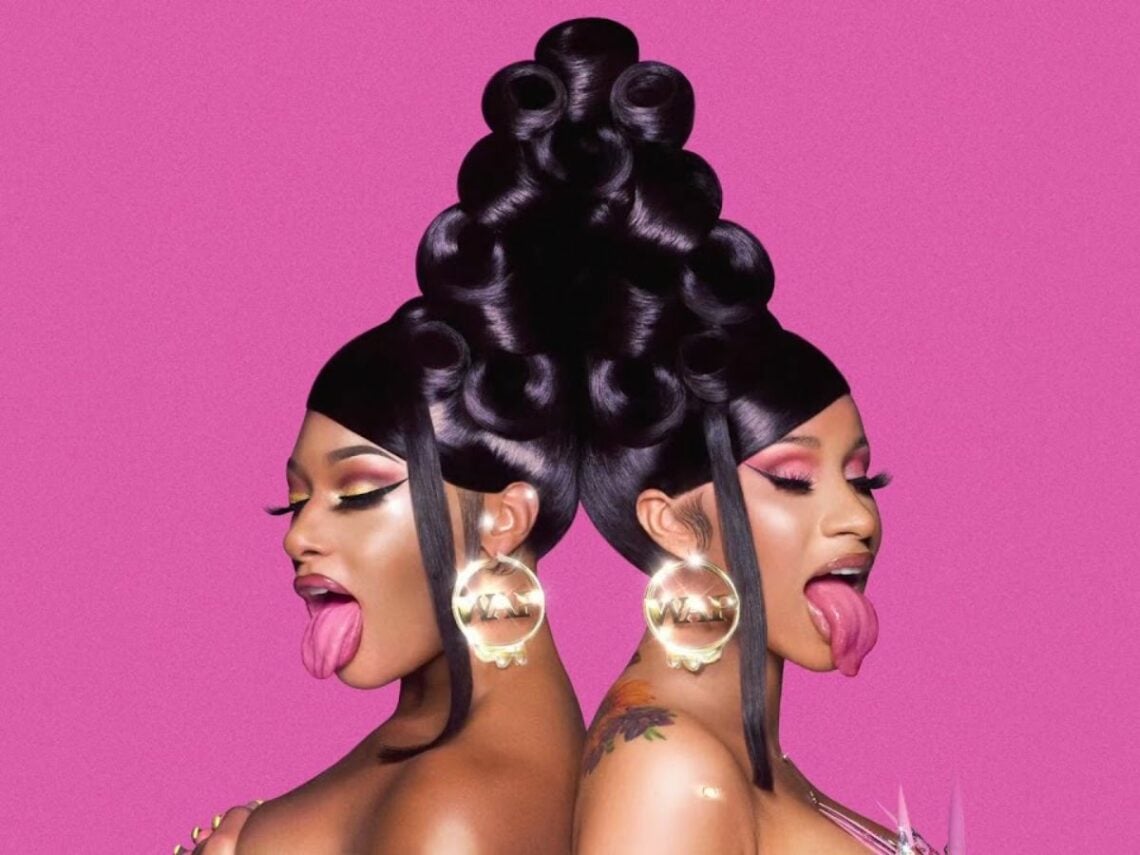
Why Cardi B’s ‘WAP’ is most definitely not a feminist masterpiece
When Cardi B’s famous single ‘WAP’ was released in 2020, it raised eyebrows, and even more people began to take issue with it when Cardi B performed it alongside Megan Thee Stallion at the 63rd annual Grammy Awards.
‘WAP’ wasn’t just a phenomenon, but it was a song that polarised hip-hop. Many music publications labelled it as a feminist masterpiece that showed how sexually liberated women are in the 21st century. However, the track led to a lot of questions about the influence and responsibility that comes with being a celebrity.
Sexual content and sexually provocative lyrics are not something new in hip-hop. From Lil Kim to Trina and Nicki Minaj it is something that is, in fact, quite common. However, the outrage and division that ‘WAP’ provoked was slightly different to anything the culture had seen in previous years.
In the past, female MCs have used metaphors to discuss sex and similar topics. Still, Cardi B’s brazen and unapologetic track made many question whether a line had been crossed. Furthermore, her performance alongside Megan Thee Stallion at the Grammys was not something that many Americans felt should be aired on primetime television.
Still, despite the brazen vulgarity of ‘WAP’, critics were hailing it as a modern feminist masterpiece. However, This sentiment was one I struggled to come to terms with. ‘WAP’, which is an acronym for Wet A** P*ssy, is undoubtedly the furthest thing imaginable from a feminist masterpiece. If ‘WAP’ was made as an ode to sex propogating that the pièce de résistance of a woman is her body, then it undoubtedly counteracts all the efforts of modern feminism. In an era where more and more women are rightly being praised for their intellect and creative brainpower, the promotion of ‘WAP’ as a masterpiece puts sex at the forefront once again.
Reducing a woman’s being to only her sexual promiscuity could prove to be highly damaging to women in the long run. One critical aspect that fans and critics conveniently forgot shortly after WAP’s release is that Cardi B is a mother and a wife (for now). As such, while she makes music glorifying the stereotypical slut, on a day-to-day basis, she is actually extremely far removed from that lifestyle. Hip-hop has seen this duplicity before in drug rap, and shortly after the SoundCloud era, the US found itself in an opioid crisis which saw several rappers die.
Although official statistics are hard to come by, many would infer from the deaths of figures such as Rich Homie Quan, Mac Miller and Juice Wrld that drug abuse in rap is on the rise. That said, ‘WAP’ and its relentless promotion created our hip-hop culture today with Sexyy Red and Ice Spice. Indirectly breeding a generation of young women to feel they have to live up to what WAP tells them to be is toxic.
The labelling of ‘WAP’ as a masterpiece is nonsensical. If men in hip-hop demand the stereotypical slut, then surely women like Cardi B further pushing this stereotype in any shape or form are making women more subservient to men by playing up to that male ideal of a woman. Instead, should women not be creating new, more realistic ideals that show the multi-faceted nature of women instead of the one-dimensional slut?
For a long time now, rap music has centred around money and sex, but ‘WAP’ may have prolonged the degradation of women in hip-hop for a generation, as it so brazenly and shamelessly helped reaffirm all the preconceived notions men in hip-hop already have about black women and their promiscuity. And yes, ‘WAP’s release was a disservice to black women as there was not a single white woman in the video.