

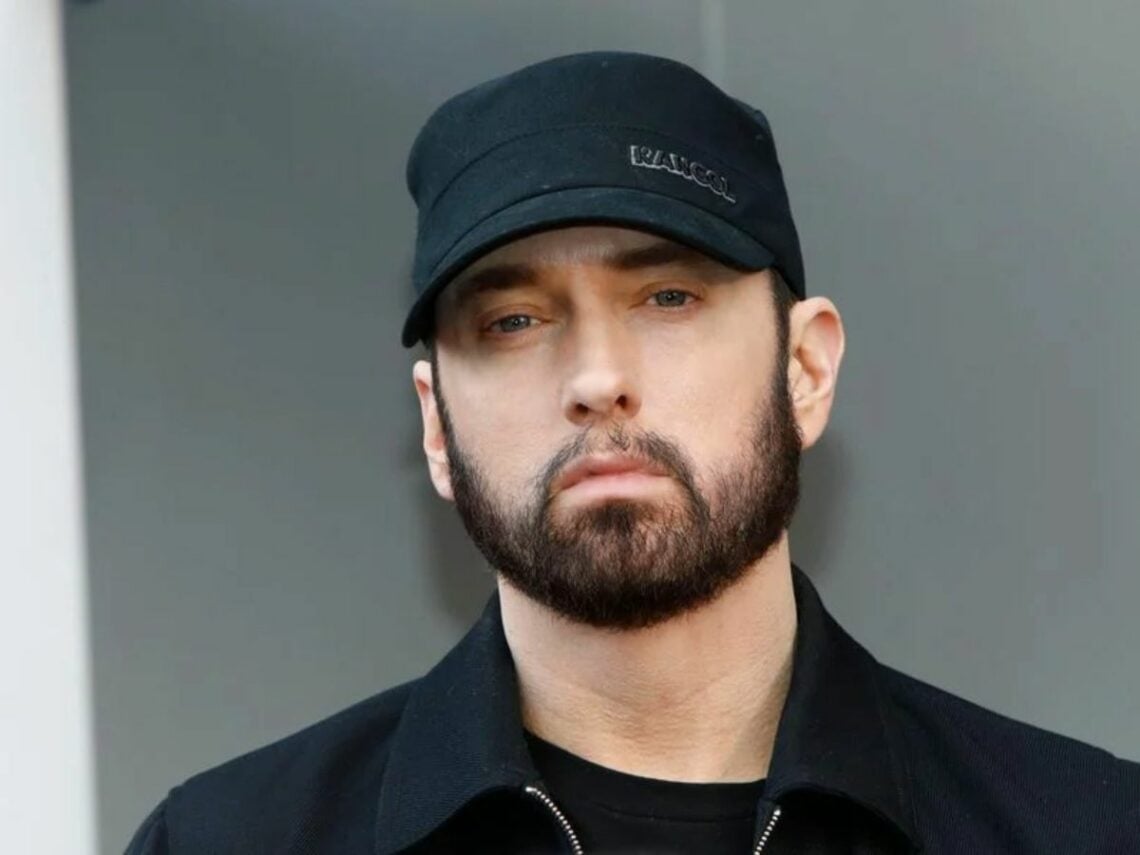
Why ‘8 Mile’ shattered Eminem’s confidence
People of a certain age—it is disturbing to find themselves suddenly using that phrase in life, but such is the nature of growing older—will remember the frenzy surrounding Eminem in the early 2000s. By this point, he had already acquired a well-earned reputation for shocking the conservative sensibilities of popular culture, yet he had also garnered an absolutely massive following. Eminem and his alter ego, Slim Shady, were stars, but things went truly stratospheric with the 2002 release of the movie 8 Mile. Both the film and its accompanying soundtrack were wildly successful, yet the experience of actually making the movie was one that sorely undermined Eminem’s confidence.
Based loosely on the real-life experiences of Eminem—whose real name is, of course, Marshall Mathers—8 Mile follows the story of Jimmy Smith, a young man seeking escape from the deindustrialised economic devastation of mid-1990s Detroit, Michigan. Working under the stage name ‘B-Rabbit’, Jimmy enters into hotly contested rap battles, where he is able to express himself freely while edging towards achieving his dream of hip hop stardom. The film touches on some hard-hitting themes like poverty, racism, and urban decay, constructing a fascinatingly immersive narrative.
The film starred Brittany Murphy, Kim Basinger, Mekhi Phifer, Michael Shannon, and Anthony Mackie, but it was the movie debutant, Eminem himself, who really took the plaudits. He put in a fairly remarkable shift for an acting first-timer, drawing on his early life to provide real depth to the character of Jimmy.
Speaking of his performance in a conversation with Spin in 2003, Eminem reflected that, though the movie mirrored his specific struggles as a younger man, he had intended for his depiction of Jimmy to be universal. “I wanted to make a movie that concentrated on the struggle, not just of me being a white rapper,” he said. “But the struggle that rappers go through—period… So we made a movie that took bits and pieces of my life, but it could be anybody, and anybody can relate to it.”
The film was set in the mid-1990s, which was, in many ways, a cultural high point for hip hop, but it had not yet truly broken into the mainstream—indeed, Eminem himself would help with that in the years to come. If he was to play his character with authenticity, then Eminem realised he needed to inhabit the headspace of his younger, less successful, less confident self.
“It reminds me of me before ‘Eminem,’ before I started making a name,” he told Spin, reflecting on his process. “I had to strip myself of all ego and really be me before I made it. Yo, it was a trip! I was recording The Eminem Show, and I put it on hold for three or four months and did the songs for the movie. When I was done, it took me a few weeks to get my ego back, to get my confidence back, and to be Eminem again.”
To be fair, reconstructing his ego was probably helped by the immense success of the movie and its soundtrack, which bore one of Eminem’s greatest classics in the form of ‘Lose Yourself’. Awards, money and plaudits all came flooding in following the movie’s release, and Eminem, arguably, became the biggest star in the world.