

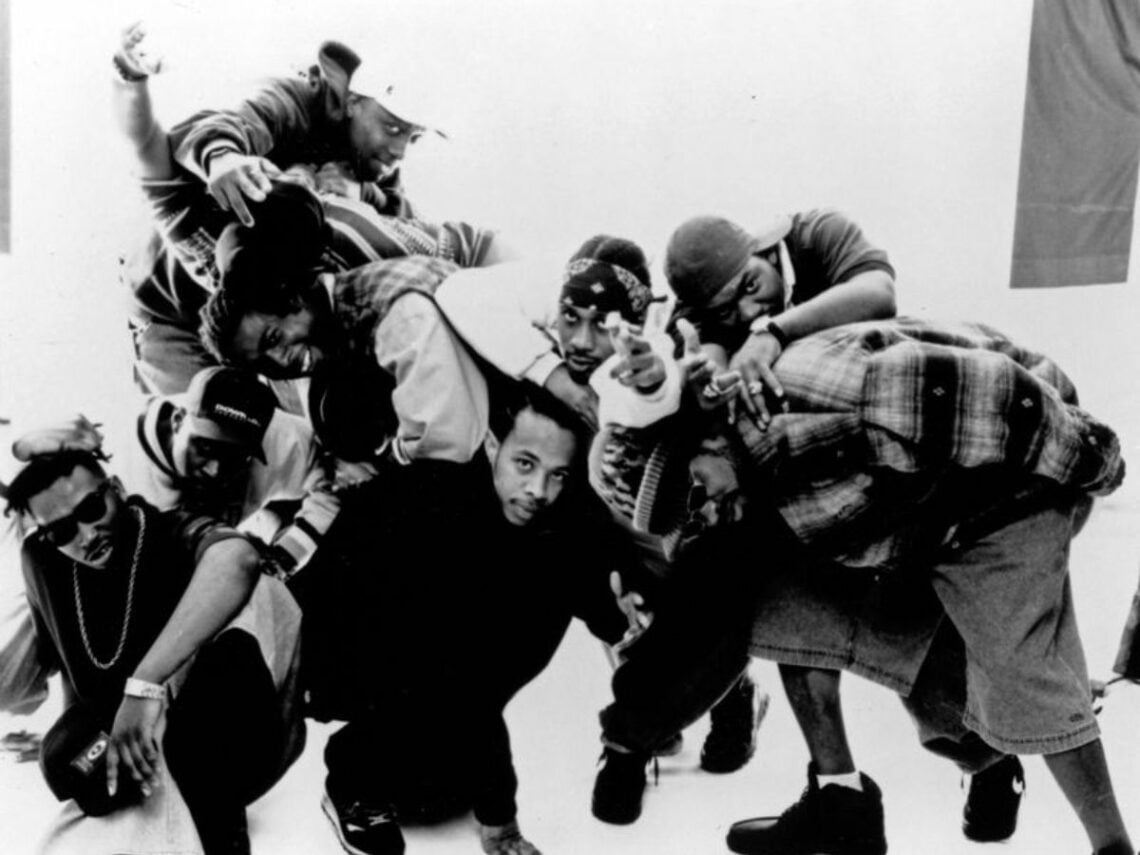
What are the 36 Chambers? The inspiration behind Wu-Tang Clan’s debut album
The lore of the Wu-Tang Clan is deep, and it can seem impenetrable to the uninitiated. It can be difficult to know where to begin, but perhaps a good place to start is with the first album, Enter the Wu-Tang (36 Chambers).
In that spirit, a good question to wrap one’s head around is this: what, exactly, are the 36 chambers that are referred to in the title?
The Wu-Tang Clan are famous for their love of, and constant references to, kung-fu movies, and that forms the basis of their debut album’s title. Enter the Wu-Tang is a nod to the 1973 film Enter the Dragon, with the term “Wu-Tang” itself referring to a martial arts style featured in the 1983 film Shaolin and Wu Tang.
But the 36 Chambers part is a reference to the film The 36th Chamber of Shaolin, which came out in 1978 and is today considered to be one of greatest kung-fu movies of all time. It follows a student who, seeking to overthrow the ruling dynasty of 17th-century China, joins a Shaolin temple to learn kung fu.
As part of his martial arts training, the student must enter into the temple’s 35 chambers. It is within each of these chambers that he will learn a specific element of kung fu. The character later seeks to create a 36th chamber within the temple, in which he will instruct ordinary people in the art of kung fu.
The Wu-Tang Clan, thinking in terms of the film, believed themselves to be lyrical masters of the 36th chambers. While their peers and rivals were seeking to get to grips with just 35 chambers, they had advanced beyond that to the 36th. They were the real masters of hip-hop.
There is further potential significance of this number 36 to the Clan. Given that there were nine members on this debut album, each of whom has a heart bearing four chambers, it could be said they collectively possessed 36 chambers between them.
Another read of the significance of 36 to the Clan is based around an idea that there are 108 pressure points in the human body. Adherents of the Wu-Tang fighting style understand that, of those 108 points, 36 are deadly, so, to extrapolate from there, we can say that the nine members of the Clan possess the skill, lyrically speaking, to hit these 36 deadly pressure points. Their lyrics are lethal, is the point.
A lot of this is open to interpretation, but what’s clear is how important the idea of the 36 chambers is to the Clan. In addition to their debut album, Ol’ Dirty Bastard’s first solo album, Return to the 36 Chambers: The Dirty Version, is named after The 36th Chamber of Shaolin’s 1980 sequel, Return to the 36th Chamber, while the third film, 1985’s Disciples of the 36th Chamber, gives its name to a 2004 Wu-Tang Clan live album. Their ongoing final tour, too, is known as The Final Chamber.