

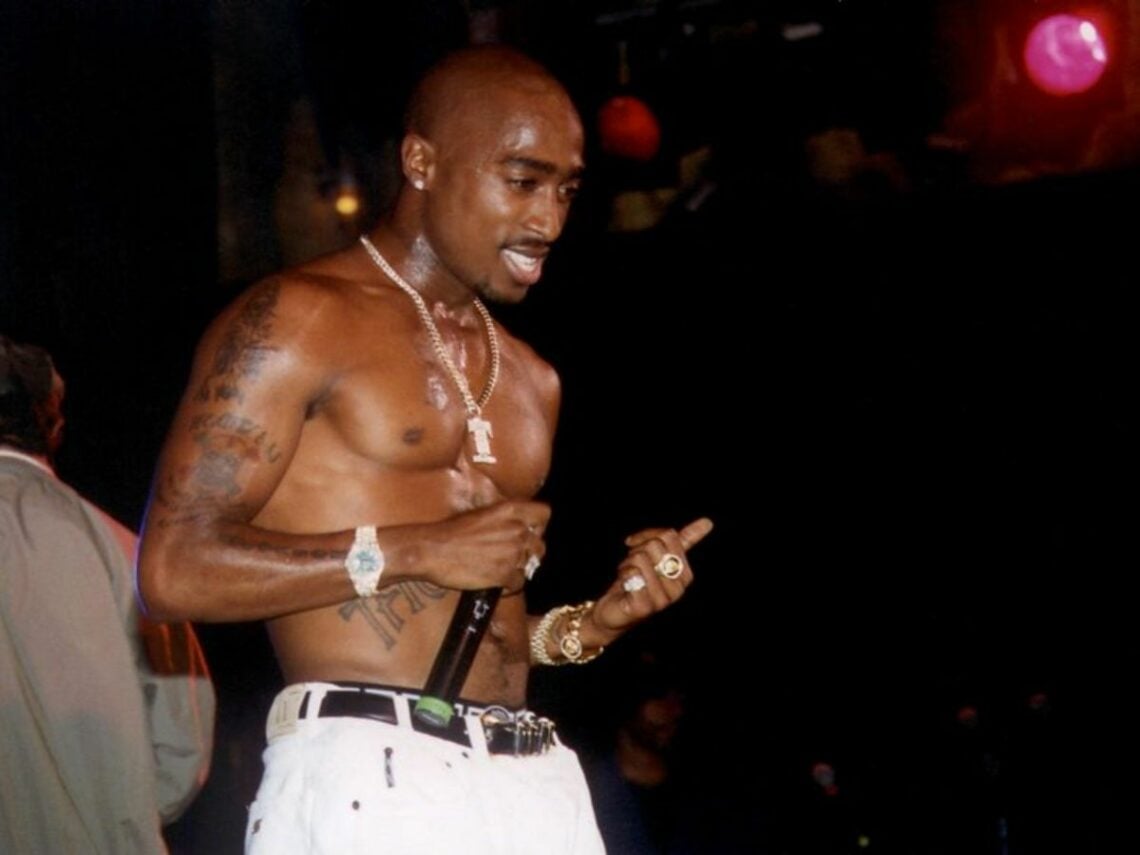
The reason Tupac Shakur was paranoid: “I’m nervous”
There is a broad understanding that, as Tupac Shakur neared the end of his short life, he was increasingly succumbing to paranoia. It was reflected in his music, but it also affected the way he led his life in general.
Pac’s paranoia proved to be justified. He was murdered in September 1996, only seven months after his album All Eyez on Me had been released. This record was the ultimate artistic expression of his increasing anxiety, which, in the end, was bleakly demonstrated to be an entirely rational response to what was going on in his life.
Speaking to MTV a few months before the album came out, Pac explained, “It’s called All Eyez on Me. That’s how I feel it is. I got the police watching me, the Feds. I got the females that want to charge me with false charges and sue me and all that. I got the females that like me. I got the jealous homeboys and I got the homies that roll with me. Everybody’s looking to see what I’mma do now, so All Eyez on Me.”
The pressures of fame, police harassment, and the East Coast–West Coast hip-hop rivalry that would, in the end, take his life were all getting to Pac by the mid-’90s. They made it difficult for him to move through life in a normal way, which, as he spoke about in an interview on KMEL’s
Westside Radio programme in April 1996, interfered with his interactions with fans.
Pac, during the conversation, was asked what he wanted people to know about him. “Number one,” he replied, “when I diss y’all… meaning, like, when you come up to me and I’m not giving you the type of reaction that you think I should give you, it’s not because I’m ungrateful… It’s because I’m nervous.”
He then explained why, which, indeed, led him to touch upon some of the themes that occur throughout All Eyez on Me. “I’m paranoid,” he said. “I just got out of jail. I’ve been shot, cheated, lied and framed, and I just don’t know how to deal with so many people giving me that much affection. I never had that in my life.”
Pac was aware that his issues may be making him seem rude to fans that approached him, but he wanted them to know that things were more complicated than that. “So if I do that,” he said, “don’t take it personal. Try to understand it and see it for what it is.”
His experience of fame, and of being the centre of so much attention, had apparently given Pac an insight into what it must be like to live life as an attractive woman in a misogynistic society. “Now I understand what it’s truly like to be a fine female who goes to a club and all the guys just rush you before you’re ready to be rushed,” he said. “Everyone is touching you before you’re ready to get touched. So now I have a better understanding of what it’s like to be a woman.”
He asked for his fans’ understanding that the expectations that they placed on him could weigh heavily. It clearly messed with his head, and he wanted his fans to give him some breathing space. He didn’t want to have to act in a certain way just for their sake. “I’m gonna do it because I love y’all,” he said. “I do appreciate what you did. But if you make me do it, then I don’t wanna do it. I don’t care how many albums you bought.”
Things were getting on top of Tupac by 1996, and, tragically, he would never get the opportunity to right things in the end. His life ended in precisely the grim, violent way that he had feared.