

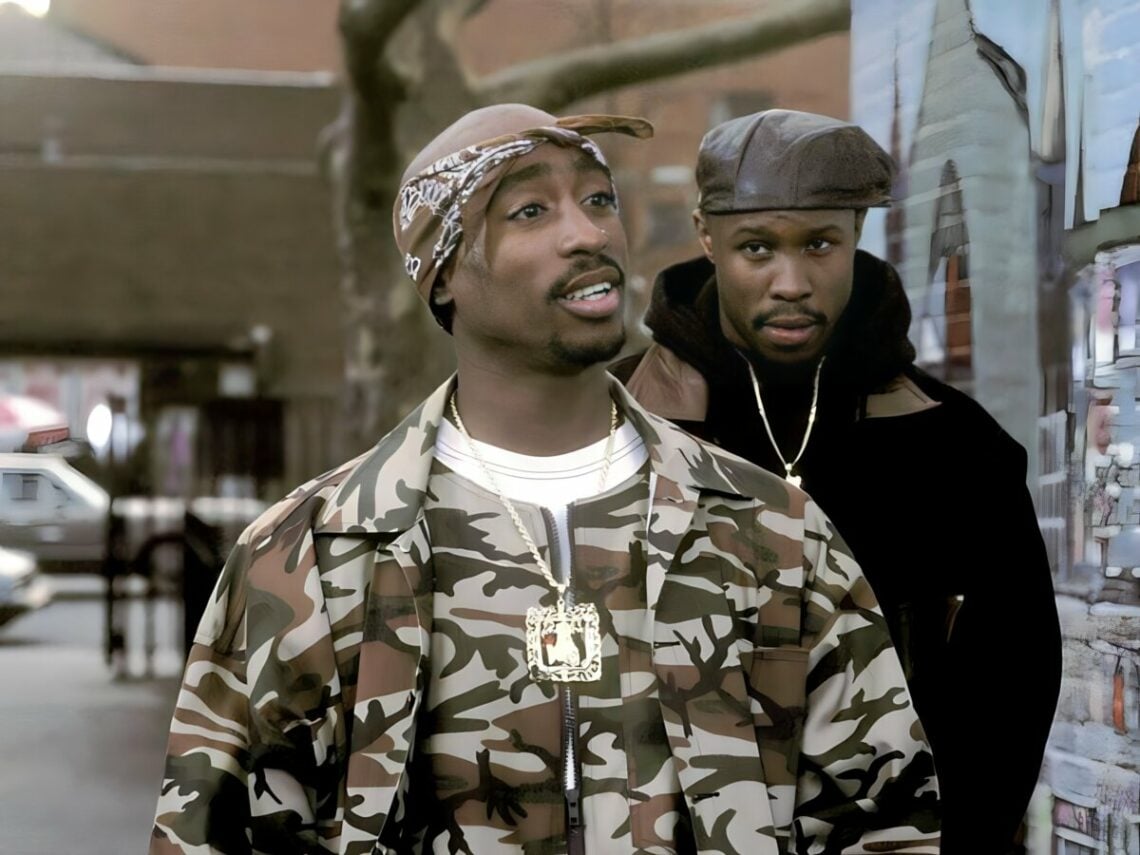
How Tupac Shakur ended up in the US vice president’s firing line: “I was crushed”
Rap music has long been a source of moral panic for pearl-clutching conservative types, who lament its corrosive effects upon the minds and intentions of the youth. There is often a great deal of calculated cynicism involved in these public displays of outrage, with politicians leveraging opposition to rap in order to score political points.
The puritanical hand-wringing over rap music can at times reach absurd heights, as Tupac Shakur learned to his dismay. Following the release of his first album 2pacalypse Now in 1991, Pac found himself caught up in a culture war that led the US vice president of the day, Dan Quayle, to essentially call for Pac’s cancellation, albeit long before the contemporary notion of “cancelling” someone had truly coalesced.
In April 1992, some months after 2pacalypse Now came out, a Texas state trooper was shot and killed after he stopped someone driving a stolen truck. The killer, allegedly, had been listening to Pac’s album on tape at the time, which his defense attorney later argued had influenced his crime.
As well as the defense attorney drawing Pac’s album into the case, the victim’s family filed a civil suit against Pac and his label Interscope. They claimed that the lyrics, which, on the song ‘Soulja’s Story,’ speak of “blasting” and “droppin’ the cop,” had served to incite “imminent lawless action.”
Vice President Quayle, who served as part of George H W Bush’s Republican administration, jumped on the supposed connection between Pac’s music and the murder, saying in a statement that there was “no reason for a record like this to be published. It has no place in our society.” He called upon Interscope to withdraw it.
Tupac was later asked about the furore over his album for a feature in Entertainment Weekly, with the interviewer framing Quayle’s intervention as “probably the best publicity” that Pac could have gotten for his record. The rapper disagreed.
“I don’t see that as being the ‘best publicity you could’ve gotten,’” he pushed back. “Who wants the vice president of the country that you live in, the country that you are ready to defend, to say that your music is not fit, without him even having listened to your album?”
Quayle did not know Pac, had never met him, and the rapper seemed aghast that a politician would so publicly throw him under the bus like that. “I was crushed,” he said. “Crushed.”
Pac believed it was unfair to hold him to the same standards of conduct as a politician. He was a musician, who wasn’t voted into power, and he therefore didn’t have the duty to speak in a certain way in public. “Nobody put me here,” he said. “They just buy my records.”