

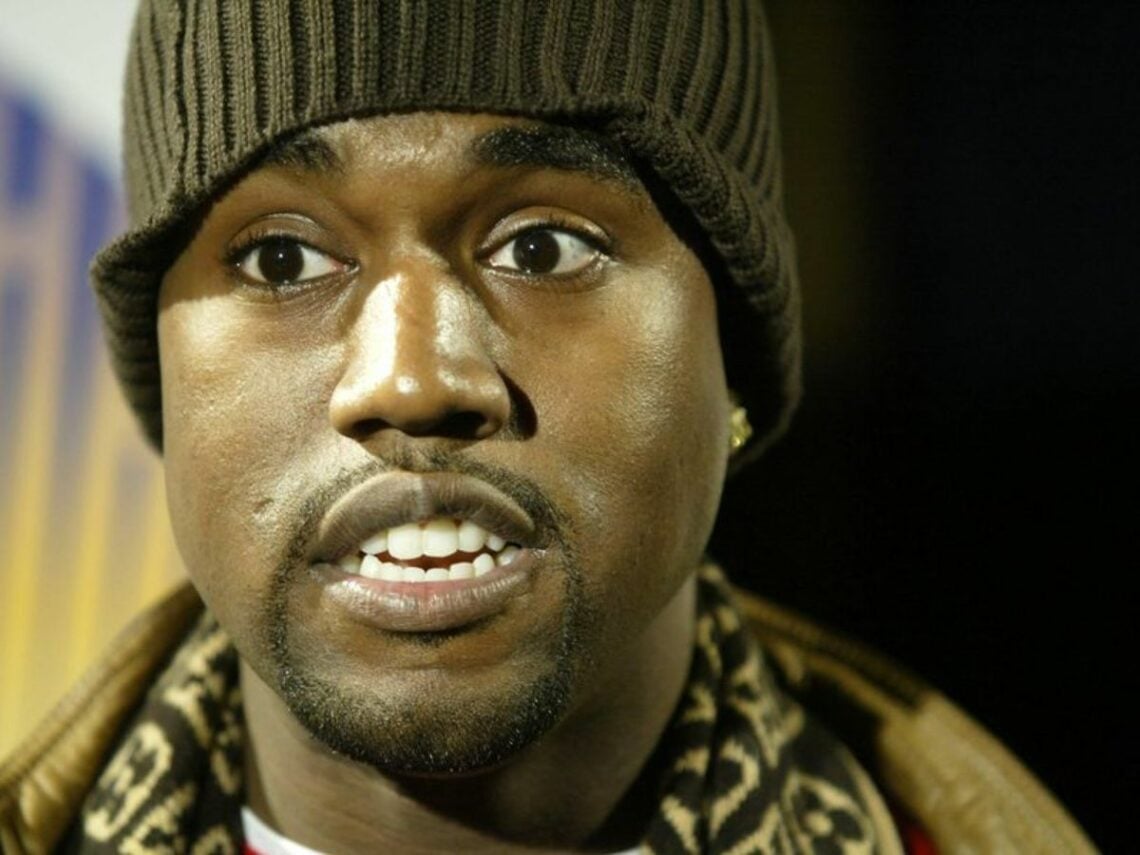
‘Through the Wire’: the song that changed Kanye West’s career
By late 2002, Kanye West was one of the most important producers in hip hop and one of its most doubted rappers. He had helped shape The Blueprint, redefining Jay Z’s sound at a crucial moment, yet his own ambitions on the mic were treated as an indulgence. At Roc-A-Fella, he was respected for beats but not believed in as a frontman.
That tension sharpened after a near-fatal car crash on October 23rd, 2002. West’s jaw was broken in three places and wired shut, leaving him hospitalised and uncertain about his future. Rather than pausing his career, he used the moment as proof of intent. Within weeks, he was back in the studio, recording a song that would permanently alter how he was seen.
‘Through the Wire’ was written and performed while West’s jaw was still wired shut, the title referring directly to the metal holding his face together. His delivery was physically compromised, slurred and strained, but the limitation became part of the record’s force. Listeners could hear the difficulty in every bar, which lent the song a sense of urgency few debut singles carry.
The track sampled Chaka Khan’s 1984 song ‘Through the Fire’, pitching her vocals up to form the hook. The sample choice was precise. Khan’s lyrics about perseverance were reframed as autobiography, turning a familiar chorus into a declaration of survival. It also introduced what would become West’s defining early sound, the sped-up soul sample that felt nostalgic and forward-looking at once. The song first appeared on West’s Get Well Soon… mixtape in late 2002, circulating informally as he ‘Recovered’, but even in that early form, it made an impression. Executives and DJs who had dismissed West as a producer playing rapper heard something different, a voice rooted in experience rather than aspiration. He was not mimicking established styles; he was documenting his own moment.
When ‘Through the Wire’ received an official single release in September 2003, it arrived as a statement rather than a gamble. West financed the music video himself, spending around $35,000 and co-directing it. The video stitched together footage of his hospital stay, studio sessions, and daily life, avoiding spectacle in favour of evidence. It did not sell a fantasy but showed the receipts.
Premiered at Jay Z’s 40/40 Club in New York, the video helped push the song into wider rotation. Its impact was immediate enough that it later won ‘Video of the Year’ at the 2004 Source Hip Hop Awards, a recognition that mattered at a time when West was still fighting for legitimacy within the culture. Commercially, the song performed strongly without sounding engineered for radio. It peaked at number 15 on the US Billboard Hot 100 and reached number nine on the UK Singles Chart. It went gold and later platinum in the United States, its steady performance reflecting word-of-mouth rather than novelty.
Critical response focused on West’s honesty and clarity. Reviewers praised the song as a personal narrative rather than a comeback stunt. Importantly, it forced a reassessment of West as a rapper. For the first time, his voice was discussed on its own terms, not compared unfavourably to the artists he produced for. Inside Roc-A-Fella, the shift was decisive. Years of hesitation gave way to commitment. The success of ‘Through the Wire’ removed the remaining arguments against a Kanye West album. By early 2004, The College Dropout was no longer a risk but an inevitability, backed by evidence rather than faith.
The song also reshaped West’s image. Before it, he was often dismissed for lacking street credibility, an art school graduate in a genre still bound to narrow ideas of toughness. ‘Through the Wire’ reframed vulnerability as authenticity, and West did not exaggerate or posture. He spoke plainly about pain, recovery, and ambition, trusting the audience to follow. That approach became foundational. The emotional openness of ‘Through the Wire’ set the tone for The College Dropout and much of West’s later work. It proved that deeply personal hip hop could succeed commercially without softening its edges. The song’s famous line about history being made was an accurate assessment of momentum and not bravado.
With hindsight, the record stands as more than an origin story. It is the moment West aligned narrative, sound, and intent. The accident stripped away any remaining ambiguity about his path. Instead of retreating into production, he documented the aftermath in real time and turned survival into authorship.