

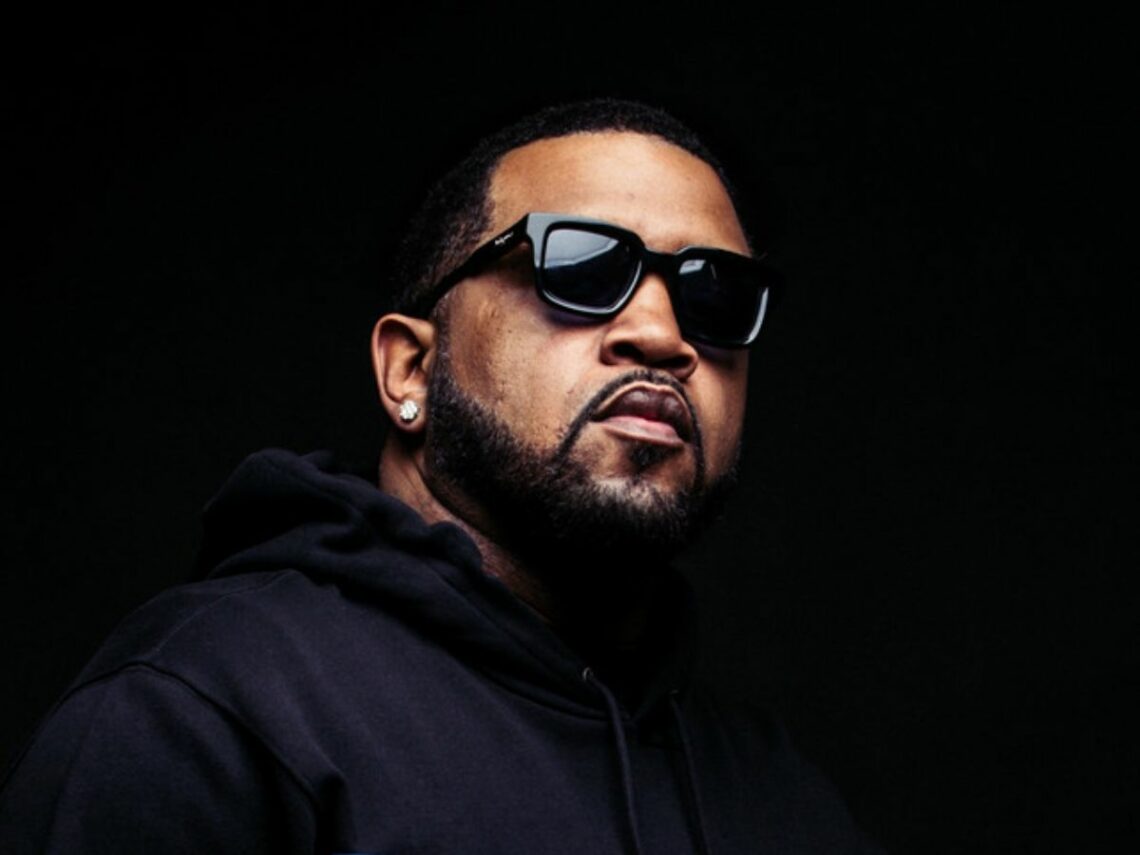
The three artists who had the biggest influence on Lloyd Banks
Lloyd Banks has long been regarded as a rapper’s rapper: sharp, understated, and quietly formidable with a pen. Though his name is often framed within the wider story of G-Unit, Banks has consistently carved out an artistic identity defined by restraint, precision, and lyrical discipline. It’s a path shaped by influence, but never imitation.
Speaking to Billboard in 2022, Banks identified three artists who helped shape his journey: The Notorious BIG, Nas, and Snoop Dogg. Each offered something distinct, from technical mastery to stylistic confidence, and together they form a useful lens through which to understand Banks’ own approach to rap.
For Banks, Biggie stands as the gold standard. “He is my favourite artist of all time,” he said. “His flows were like breaking the rules. Just the way he lined his shit up to me was crazy and the storytelling aspects too.” Biggie’s command of rhythm and narrative left a lasting imprint.
From Biggie, Banks absorbed the idea that East Coast rap could be conversational, menacing, and cinematic all at once. He mirrors Biggie’s ability to shift internal rhythms mid-bar, gliding between punchlines and street reportage with ease. Tracks such as ‘Victory Freestyle’ and ‘Start It Up’ show that influence without ever slipping into pastiche.
Biggie’s emphasis on storytelling also proved crucial. Rather than leaning on theatrics, his street narratives felt lived-in and personal, an approach Banks later adopted on The Course of the Inevitable, where realism and detail take precedence over dramatics.
Nas represents a different kind of benchmark. His debut album, Illmatic, is widely regarded as one of hip hop’s greatest records, and Banks unsurprisingly holds it in high esteem. “It was technique for me,” he explained. “[Nas] had no empty spots. I learned a lot from that first project.”
Like Nas, Banks avoids lyrical excess. His verses are dense but purposeful, built on internal rhyme schemes, layered metaphors, and careful structure. His mixtape run, in particular, showcases endurance and craftsmanship rather than chasing radio-friendly hooks.
Nas also framed rap as something to be studied, closer to literature than throwaway entertainment. Banks shares that reverence for the written word, keeping notebooks filled with verses and freestyles, treating the craft with the seriousness of a writer rather than a performer chasing moments.
Snoop Dogg, meanwhile, offered Banks something less technical but equally vital: permission to be understated. “In my mind, coming into the game, [Snoop] let me know it was cool to be cool,” Banks recalled. Even at G-Unit’s commercial peak, he resisted the loudest spotlight, favouring consistency and calm authority, a confidence rooted in craft rather than spectacle.