

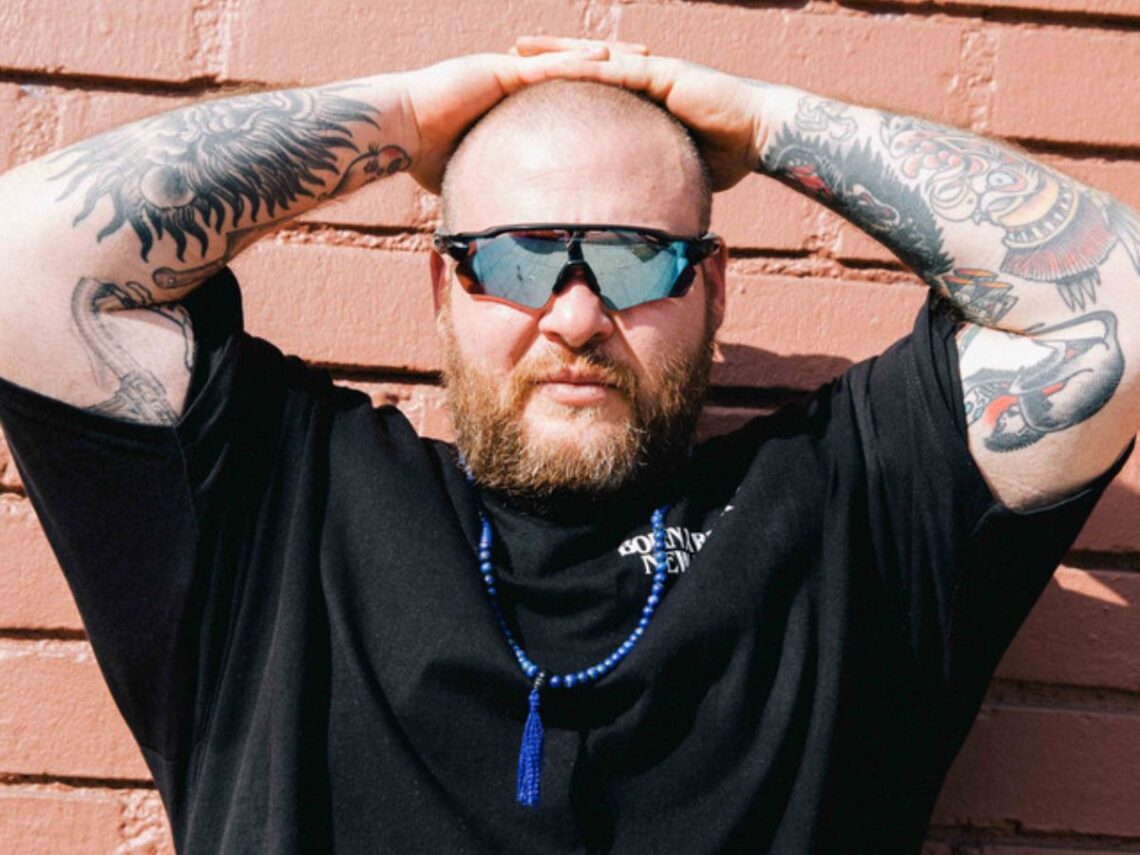
The reason why Action Bronson used to rap the N-word
Action Bronson has found great success as both a rapper and as TV chef, but his lucrative career has not been without its controversies. The content of his songs has drawn vehement criticism.
During the early days of his career, Bronson, who has an Albanian Muslim father and an American Jewish mother, used to deploy the N-word in his verses. While his heritage is complex, and even though he grew up within the multiethnic environment of Queens, this habit came to be understood as extremely problematic.
Bronson initially didn’t see anything wrong with the practice, as he explained to the Westcheddar website in 2011. “When I started rapping, I would say the N-word,” he said. “Because that’s how we talked to each other. That’s how my friends addressed me, so I thought it was okay.”
The term was a part of his everyday life, apparently, but, once the public spotlight started to shine on him upon finding fame, he realised it couldn’t go on. He needed to change his ways.
Bronson explained that “once you put yourself in the public eye,” it becomes clear that dropping that term as a white person is “a death trap.” Outside of his immediate community, people would judge him for it.
“So,” he said, “I stopped using it completely. I took it out of my vocabulary.”
Bronson specifically credited his friend and fellow rapper Meyhem Lauren with talking him out of the habit. Meyhem apparently took Bronson aside for a quiet word as a friend, telling him, “You shouldn’t even go there. You’re already white. You’re just going to give them more reasons to try and hate.”
Bronson maintained that he never meant anything bad by his use of the term, but he appreciated that other people may perceive it as deeply prejudiced. “That’s not me,” he insisted. “That’s not what I want to portray in the music anyway. I say a lot of other crazy things, but that’s where I draw the line.”
Several years after this interview was conducted, though, Action Bronson’s lyrics came back to haunt him again.
He was announced for a gig at George Washington University in 2016, but, in light of some of the lyrics in his songs, his performance was cancelled on the grounds of their supposed homophobia, transphobia, and misogynistism. He later issued an apology, but insisted his songs were depicting stories and weren’t “meant to be anything but an artistic expression.”