

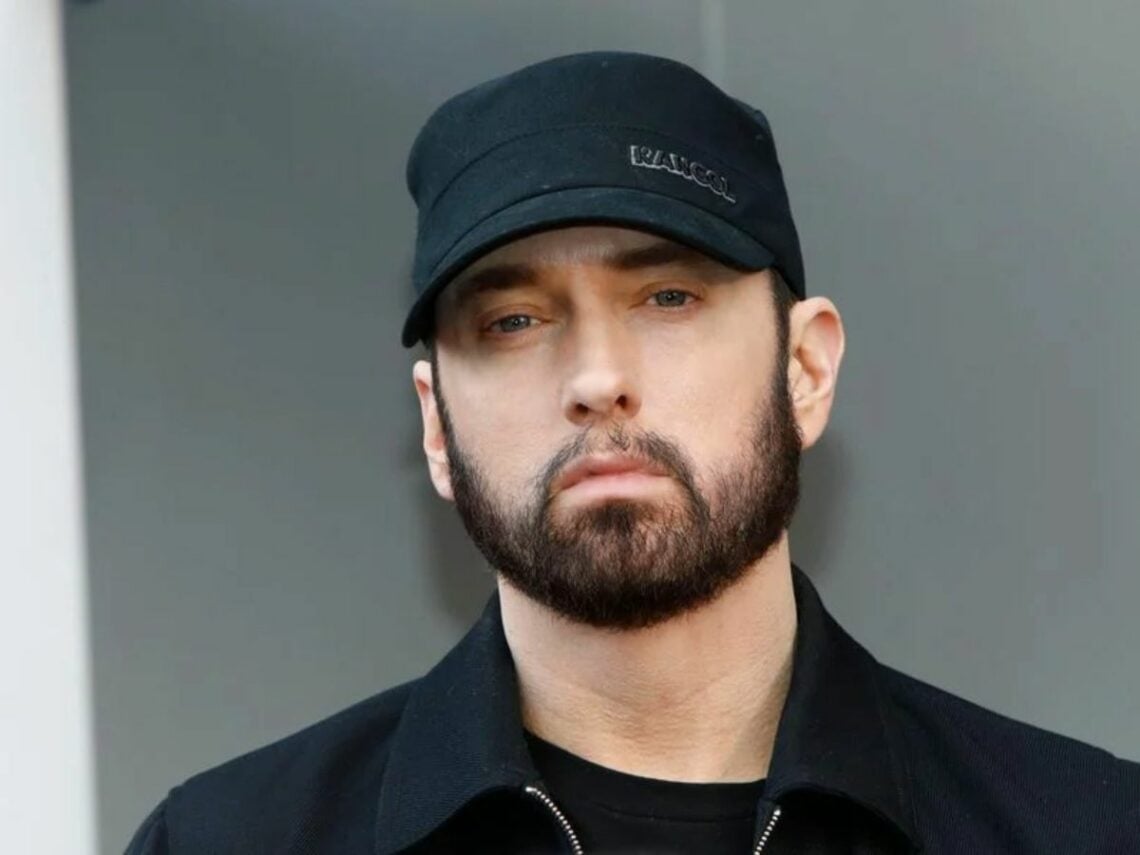
The moment Eminem almost quit rapping: “It’s not worth it”
It’s a difficult field, the hip-hop game. It’s no secret that trying to become financially independent from any creative endeavour is an uphill battle, a struggle tenfold when considering how many of the industry’s rappers and MCs hail from poor, if not poverty-stricken, communities across the United States. Famously, for he has never shied away from his upbringing, this includes Eminem.
And it was just around the start of his rap career, when he was not only in the depths of economic hardship, and living in such a neighbourhood, that he got close to quitting.
“About three or so years ago, not that long after my daughter [Hailie Jade Scott] was born. I was staying in this house on 7 Mile Road, and little kids used to walk down the street going, ‘Look at the white baby!’ Everything was ‘white this, white that,’” Eminem said in a 1999 interview with Spin magazine.
“We’d be sitting on our porch, and if you were real quiet, you’d hear, “Mumble, mumble, white, mumble, mumble, white.” Then I caught some dude breaking into my house for, like, the fifth time, and I was like, “Yo, fuck this! It’s not worth it. I’m outta here.” That day, I wanted to quit rap and get a house in the fucking suburbs,” Slim Shady continued.
“I was arguing with my girl, like, “Can’t you see they don’t want us here?” I went through so many changes; I actually stopped writing for about five or six months and I was about to give everything up. I just couldn’t, though. I’d keep going to the clubs and taking the abuse. But I’d come home and put a fist through the wall. If you listen to a Slim Shady record, you’re going to hear all that frustration coming out.”
Fortunately for everyone involved, Eminem did not quit. As he said, the frustrations of his environment shaped and moulded him into the legendary rapper he’s celebrated as being today. There is, perhaps, an argument to be made that if Marshall Mathers was born a private school kid in suburbia, he’d be in an indie band instead.
But instead, he stuck to his guns, as he illustrated in the magazine interview, and enjoyed immense breakthrough success in 1999. His Dr Dre-produced second album, The Slim Shady LP, was released, introducing his alter ego, Slim Shady, to the world. The album, one of the most iconic rap albums of the era, was celebrated for both its lyrical prowess, which combined dark humour and violent imagery, which was as celebrated by fans as it was controversial amongst commentators.
Despite backlash from parents’ groups – which, if anything, would only further fuel his new role as every teenage boy’s idol – he won two Grammy Awards for Best Rap Album and Best Rap Solo Performance for ‘My Name Is’ in 2000.
By the end of the year, it was already certified quadruple platinum by the RIAA, and cemented Eminem as not just a talented musician, but a bona fide celebrity in his own right. And, assumedly, earned him enough cash to get that aforementioned “house in the fucking suburbs”.