

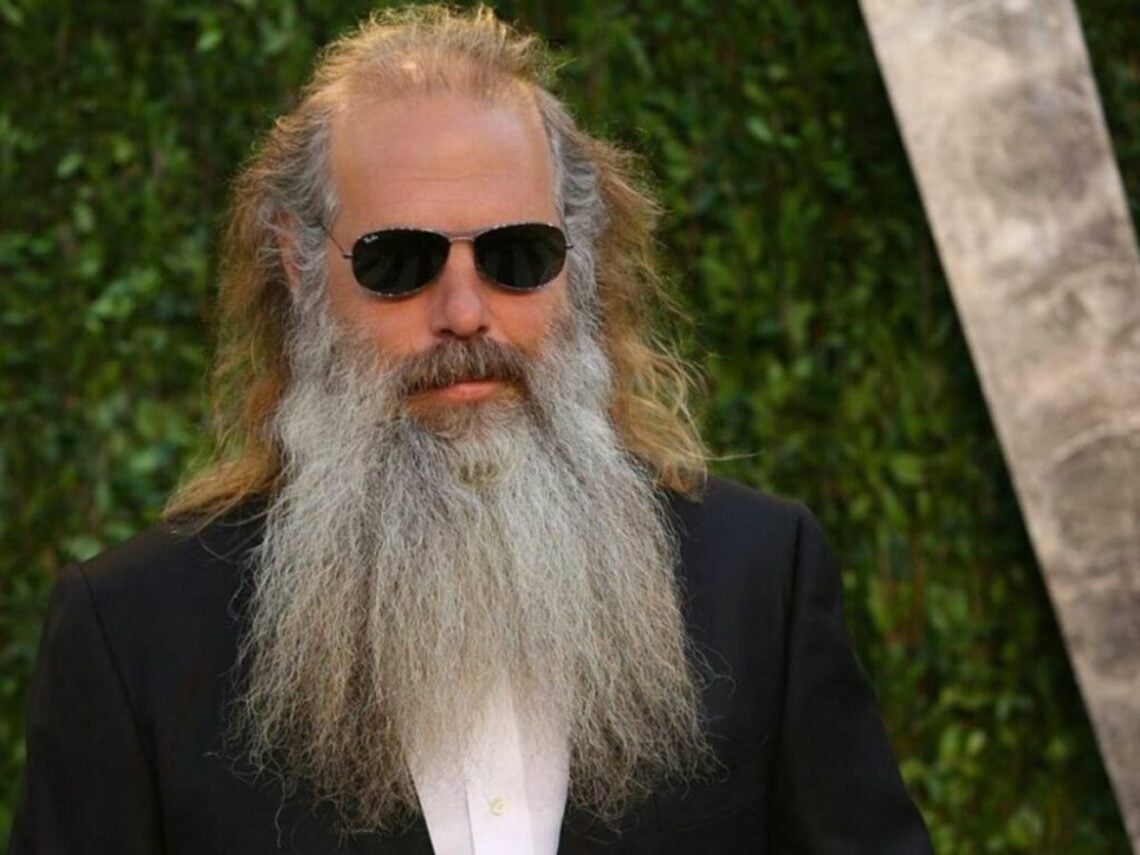
The impact Rick Rubin had on Mac Miller: “We just really hit it off”
The Malibu home owned by Rick Rubin was not necessarily a studio but a refuge, a sort of shrine to seek insight for those musicians who have lost their footing.
That house became Mac Miller’s refuge in 2014 when he was spiralling due to his addiction and creative burnout. The two had met accidentally through a label tie, and the relationship was made immediate. “We got along so well”, Mac had recalled of the meeting later, and that mere casualness would form one of the most significant phases of his life.
Mac was 23, newly sober and unable to focus. When he was on a tour in Europe, he had reached his lowest moment, and then he met Rubin, who considered him with silent encouragement. Thus, instead of going to rehab, he flew to California and rented a small apartment close to the home of the producer, and started a gradual recovery that had no connections with deadlines and singles. The chaos was substituted by the calm in Malibu, where Mac began to regain his musical habits and identity under the gentle guidance of Rubin.
The producer hardly ever touched a control board and wanted to walk, talk or meditate with his artists, and he encouraged Mac to make music with no purpose in sight to find pleasure in the process. ”I would simply go at Rick’s place every day, and sit there and play the keyboard,” Mac said, realising that he had, up to that time, played only when recording. Pressure in the world of Rubin was a thing of the past, and that slackness oozed into GO:OD AM, an album that feels like sunshine breaking through smog.
It was a turning point of an album, and Mac no longer required the drugs or the darkness to be creative. The trust in the songs such as ‘Brand Name’ and ‘100 Grandkids’ was based on a clearer mind. He termed GO:OD AM ”as a breath of fresh air”, the sound of a person going out again. The mentorship of Rubin was subtle and far-reaching; his work resurrecting Mac was not in the form of engineering but in clearing the air so that he was able to breathe.
Rubin continued to exert his influence even following GO:OD AM, where the regimen and concentration that started in Malibu was brought into The Divine Feminine and Swimming, where Mac parsed through love, mortality and self-awareness with increased maturity. The lessons were straightforward: live sincerely, remain inquisitive, and the music will come in its turn.
In retrospect, it was not only an album-making summer in Malibu but a milestone in the salvation of the soul of a young artist. Mac had a more stable heart and a better purpose, a testament to the idea that mentorship in hip-hop can be about humanity as much as music. Rubin is not just a legendary producer, but also a teacher, advising him on how to be content with simplicity, and in the process, contributed to the creation of the man Mac Miller was eager to embrace.