

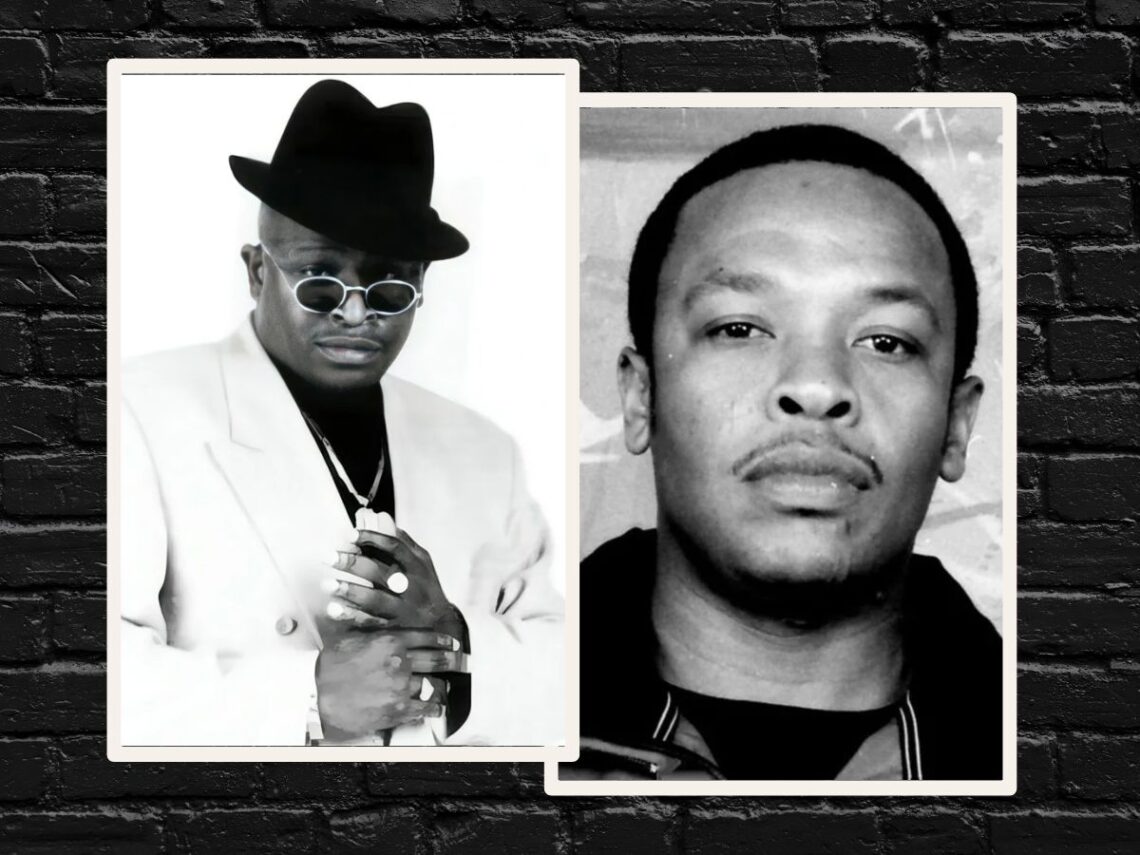
The Dr Dre song Scarface begged for: “I ended up getting it for free”
Scarface has never been afraid of giving a pat on the back where it is due, and in one interview, he slipped out a story that even today leaves fans shocked.
When the producer could earn up to 75,000 to 100,000 by selling beats to Dr Dre, Scarface asserts that he pleaded to be given one and was somehow left without paying a penny. “I pleaded with Dr Dre to record it”, he remembered. “When at last we obtained the record, we had trouble clearing it. Jimmy Iovine would not do it, somehow Dre had a talk and I was given that record free of charge”.
The given song was never proved. It has been a long time held presumption, by fans and writers, that it was ‘Game Over’ on the 1997 album, The Untouchable, of Scarface. The song, which involves Dr Dre and Ice Cube and Too Short, is always mentioned in retrospectives among the essentials of Scarface. Dre is credited as a contributor in several discographies, and some claim that it was ‘Game Over’ that was most likely to have been contributed by the time it was recorded and by the people involved. Scarface himself has never called it by name, though, and there is a haze of mystery about which record Dre silently relinquished.
The title does not matter as much as the circumstances. Scarface told him how the legendary beatmaker literally composed him a few beats, physically in the studio, rebelling against the outdated statement that Dre allowed others to do the work. “That is a fake, Dre was a hands-on person”, Scarface insisted. Higher up the chain came the problem.
According to Interscope chief Jimmy Iovine, the song would not be cleared by his label, another example of the way label politics would intrude upon great records. Scarface had said that it was only by Dre himself stepping in to make the deal happen. When the word went round, the track was cleared on the spot at no charge.
To Scarface, it was more than a victory. He was a southern giant in the 1990s, respected due to his efforts with the Geto Boys as well as his solo albums, but he still desired to bridge the gap between Houston and the mainstream of the hip hop community. A Dre beat was a badge of honour, evidence he could go toe to toe with West Coast and East Coast heavyweights. It being free was nearly unbelievable, a gesture which indicated that Dre valued his work to an extent that he bypassed the red tape and the cost.
It is also evident in the story how high the stakes were. Another sound and an announcement in itself was a Dr Dre production. It might boost the profile of an album and give a message to both the fans and the competitors. By the mid-1990s, only a handful of artists beyond Snoop Dogg, Tupac or Eminem could claim that Dre was personally involved. Scarface pleaded, Dre assented, and the outcome was a song that had all the prestige of a six-figure beat at, so to speak, no cost.
Over 20 years after the events, the details could be argued about, but the lesson is apparent. The history of hip hop is not just penned in the studio, in the label offices, the battles to clear, the mute favours between legends.
This story of Scarface, of how he got a record handed to him by Dr Dre as a freebie, is a reminder that the music business is not just about money and influence, but respect between artists can also hold the earth together.