

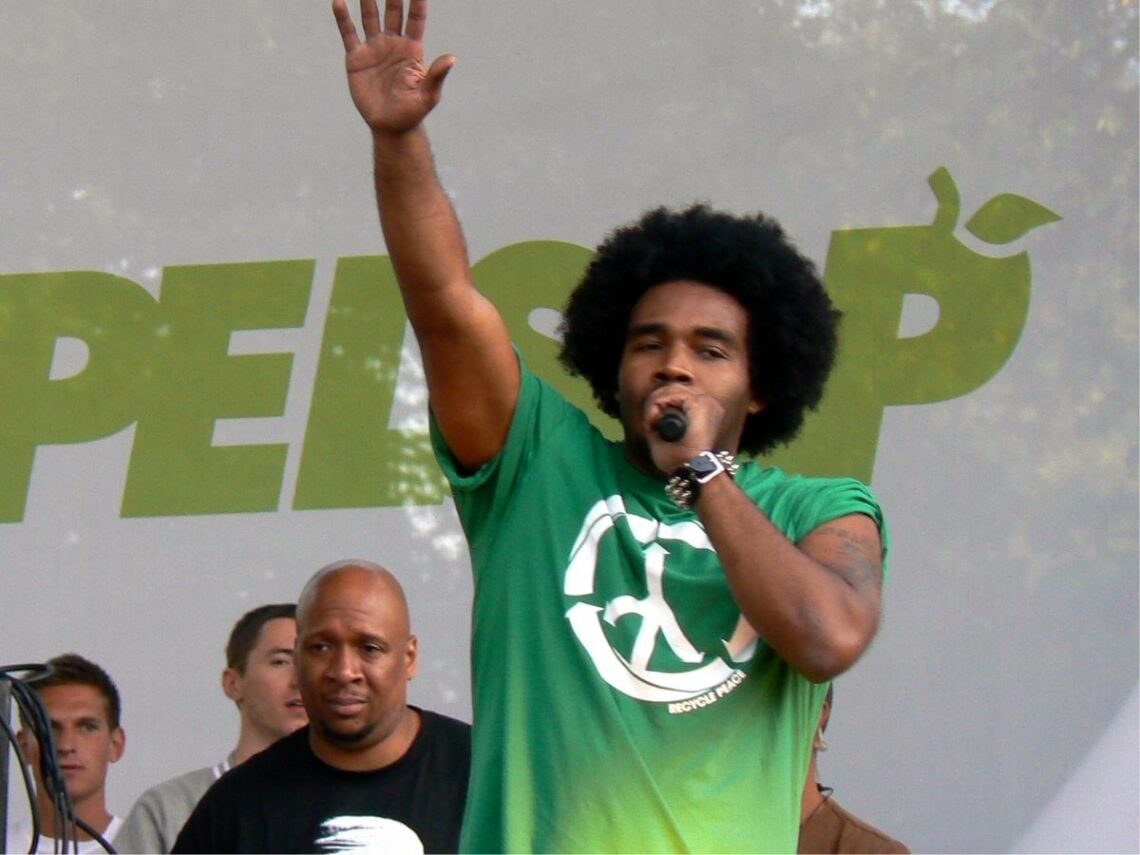
The beat that cost Pharoahe Monch millions of dollars
Pharoahe Monch is one of rap music’s most underappreciated and underrated gems. Inspired by Rakim and KRS-One, the Queens emcee is one of the few New York artists who didn’t receive notoriety during the 1990s for his gritty style and exquisite lyricism.
Monch is a wordsmith who focuses on fundamental issues. Devoid of the meaningless materialistic nonsense that has captured the hip-hop genre, Monch’s music was so potent and presented such a harsh reality it, most likely, would have never crossed into the Top 40.
Just like Mos Def or Talib Kweli, Pharoahe Monch’s lyrical complexity is too much for label executives who want the dumbed-down version and too politically and racially charged for any corporation to want their hands on it.
Golden-age hip-hop fans and fans of conscious Afro-centric music will know that artists like Pharoahe Monch epitomise hip-hop. However, their lack of success shows what type of rap music they want to push. Pharoahe Moch is by far one of hip-hop’s most hidden gems.
As such a lyrical force it is intriguing for fans to hear about what goes into making such great music. However, concerning instrumentals, on one occasion, the New York lyricist had to pay over $1 million for a beat.
The beat we’re referencing is the 1999 hit ‘Simon Says’. Released as the lead single of the emcee’s debut album, Internal Affairs, ‘Simon Says’ was featured in two films due to its excellence — Charlie’s Angels and Boiler Room. The track, which hit number three on the Billboard Hot Rap Songs chart, was a success but caused Monch a lot of stress. The beat contained some uncleared samples, which pressured the lyricist to spend over $1million.
The instrumental is iconic and has been rapped over an unfathomable amount of times. However, it samples the 1992 Japanese film Godzilla vs. Mothra theme song. Monch produced the beat but told Sean Price in an interview, “They sued the sh*t out of me!”
The track, composed by the famous Japanese instrumentalist Akira Ifukube, was made especially for the film. Entitled ‘Gojira Tai Mosura’, it has since been sampled by No I.D., who utilised it in 2020 for the Big Sean track ‘The Baddest’, which appeared on Detroit 2.
EDM producer Vato Gonzalez also used it in 2011 for the hip-house song ‘Badman Riddim (Jump)’ featuring Foreign Beggars. Since Pharoahe Monch’s use of ‘Gojira Tai Mosura’, beatmakers have been careful and have made sure to clear the sample with Toho, the company that owns the rights to the song’s sample.
Toho not only sued Monch in 1999 as the producer but also Rawkus Records, who prevented it from being played on the radio and pulled it from Internal Affairs as a result of the lawsuit. It has since been returned.