

The Story Behind the Sample: A Tribe Called Quest, The Fugees and ‘Memory Band’ by Rotary Connection
Hip hop was born from the soul and funk genres that dug their roots into New Orleans and spread rapidly across America throughout the 20th Century. The then-emerging genre is now one of the most distinctly recognisable types of music globally. This is due to its universal characteristics that define rap within its own realm, characteristics like sampling.
Sampling is one of the fine arts of the genre and is also one of, if not the foundational aspect, that hip-hop has built upon. DJ Kool Herc has come to be known as the ‘Father of Hip Hop’ and for good reason. At his sister’s back-to-school party on Sedgwick Avenue in 1973, he would throw the stone that changed the course of music forever as he mixed his records on the turntables.
The invention of mixing became a cornerstone of rap and led to the creation of sampling. The idea of taking something old and turning it into something new is a practice that almost every artist utilises today. The better and more niche the sample, the more fans applaud.
By the 1990s, sampling was common practice. It was also common to hear hip-hop collective A Tribe Called Quest on every radio station as they pumped out record after record of rap genius. The group saw unheard-of instant success off the back of their 1990 debut album People’s Instinctive Travels and Paths of Rhythm. The track most associated with the album is undoubtedly ‘Can I Kick It?’, but another of the standout songs is ‘Bonita Applebum’. Whenever this single is named, fans will instantly think of the iconic four sitar plucks that kick off the beat.
Depending on where your allegiances lay in the ‘90s, though, that guitar strum might make you think of a different group. In 1996, The Fugees released their iconic album The Score, their second and final release. If sampling was made for hip-hop, The Fugees were made for sampling. The collective is notorious for its heavy use of sampling and completely remixing songs.
It made sense then that the trio looked towards one of the other dominant groups of the time for inspiration. In truth, they shared a lot of similarities with Tribe as they both produced more of a chilled sound and discussed theoretical, philosophical and political topics in their lyrics.
The New Jersey collaborative included potentially their biggest song on the 1996 record, ‘Killing Me Softly’. Following Lauren Hill’s opening vocals, the flow and verses are introduced by none other than the same four strings. They directly sampled both the hook and beat from ‘Bonita Applebum’, but the sitar introduction is arguably just as synonymous with ‘Killing Me Softly’ due to its massive popularity.
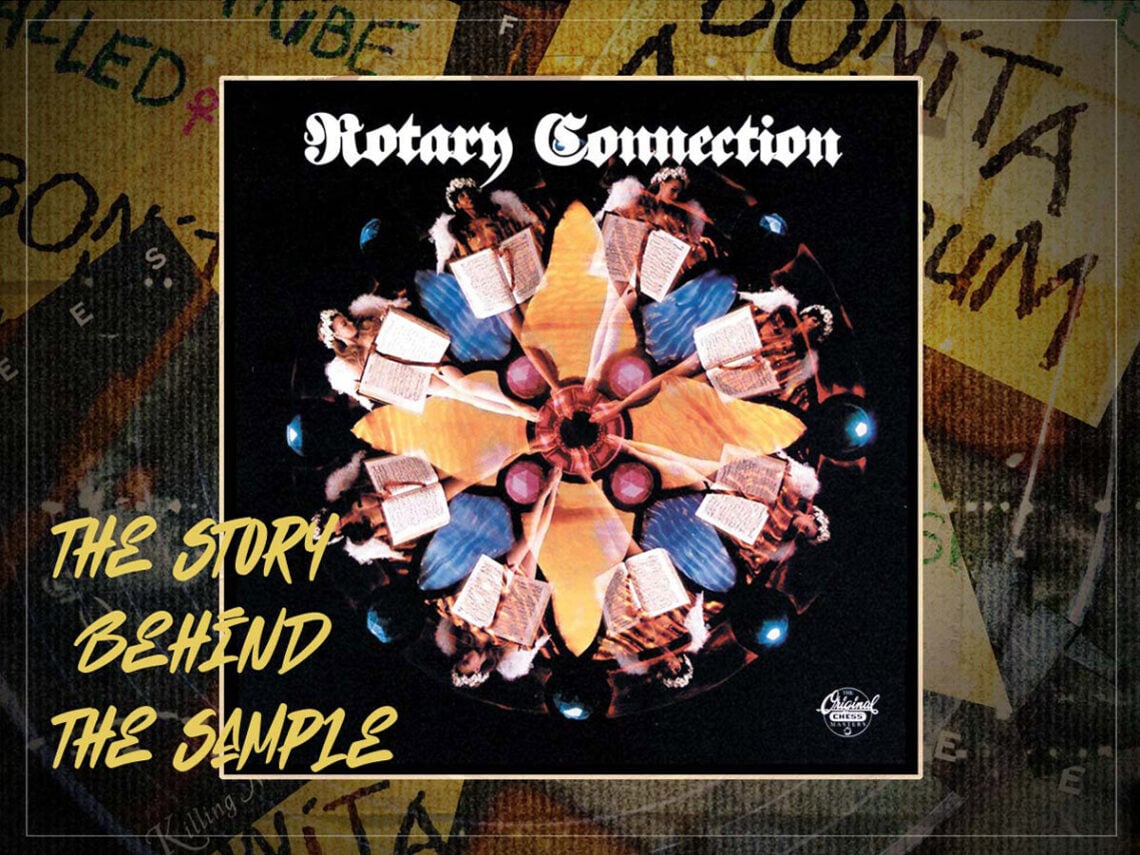
So, where did this iconic sitar sound come from? The answer is a 1967 track called ‘Memory Band’ by American psychedelic soul band Rotary Connection. Rotary Connection was the experimental brainchild of Marshall Chess, son of Chess Records founder Leonard Chess. Marshall was attempting to start up his own production company and, taking inspiration from Chess Records, wanted to focus on soul and blues sounds with a then-modern twist.
The group, who notably included famous soul singer Minnie Riperton before her individual success, released their self-titled debut album in 1967 that included ‘Memory Band’. Rotary Connection took influence from many different genres like pop, rock and soul, but the sound was extremely unconventional and didn’t see much commercial success.
That would be the story of the band that released their second and third albums, Aladdin and Peace, in 1968 and disbanded in 1974. These albums were heavily political, discussing love and calls for an end to the war in Vietnam. Peace notably displayed a picture of a hippie-ified Santa Claus as the album cover to coincide with the Christmas release.
A drunk executive at mail-order business Montgomery Ward once cancelled all shipments of the record after mistakenly believing a different picture of a battered and bloody Santa on the battlefield to be the album cover. Realistically, given the political messaging of the record, it was destined to fail.
Understanding Rotary Connection’s history and values, it is completely apt that both Tribe and The Fugees utilised ‘Memory Band’. Both collectives are known for taking brave political stances inside and outside of their music. Quest, even as recently as 2016, reunited and released ‘We the People’ in direct opposition to Donald Trump’s Presidential campaign.
Hopefully, Rotary Connection’s influence and message will reach the limelight someday, and the members will receive their plaudits for, if nothing else, contributing to one of the most iconic hooks in hip-hop history.