

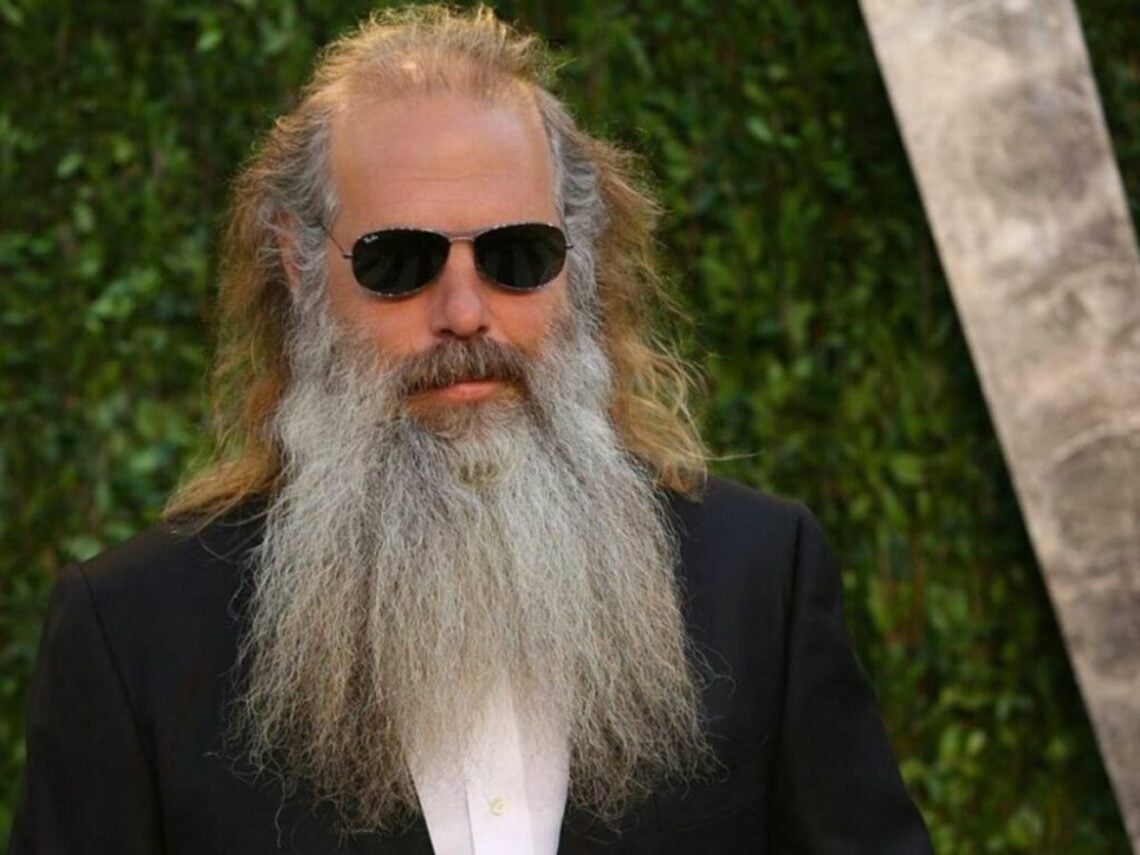
Rick Rubin describes what’s wrong with hip-hop today
Rick Rubin is a master of music with a talent that knows no limits. Akin to Larry Smith, he was highly involved with Run-DMC, the face of hip-hop in the ’80s. However, Rubin was affiliated to such an extent that he founded what would become Def Jam Records alongside Russell Simmons.
Rubin’s musical interest stemmed primarily from rock. However, hip-hop and rock (both innately rebellious) informed his music and made him a pretty special beatmaker. The legendary DJ Jazzy Jay of the Zulu Nation taught Rubin the ropes of rap music production.
For the past 35 years, Rubin has been an influential figure in music. From co-founding Def Jam Records, he has gone on to produce albums for AC/DC and Justin Timberlake. Regardless of whether or not you like his music, it is impossible to say that he isn’t versatile and highly gifted.
Few know that the New York native had a big hand in the production of Kanye West’s 20133 project Yeezus. In an interview with the Daily Beast, the beatmaker spoke about his lengthy career, some of his inspirations, and what is wrong with the industry today.
During the in-depth conversation, Rubin delved into the details of working with Ye. The Def Jam legend revealed he was a last-minute addition to the album and only entered the fray when Kanye contacted him.
Recalling the events, Rubin told the Daily Beast, “Kanye called me. I’d just finished working at the studio for about two months on another album, and I was getting ready to go away on vacation for a couple weeks.” He proceeded to explain how Ye wanted to play him an album for feedback.
Recounting what followed, he continued, “So he came over to my house in Malibu. We listened. I thought I was going to hear a finished album, but actually we listened to probably three and a half hours of works in progress. I assumed that the album was scheduled to come out next year. So I said, ‘When are you thinking of finishing up?’ And he said, ‘It’s coming out in five weeks.’” Rubin ended up helping West polish and complete the award-winning project.
As mentioned, Rubin wasn’t a hip-hop head as a youngster and accidentally fell into the genre. Speaking about how he watched rap music from the outside, Rubin explained, “The thing is, when you’re a fan from the outside of something, you can embrace it in a different way than when you’re a fan from the inside.”
Rubin only ended up in the genre after meeting several key figures while at NYU during the 1980s. However, the music has changed a lot since then and in his interview, Rubin spoke about some of the issues he believes plague rap music at the moment.
Blasting the music executives and industry, Rubin explained, “People are willing to get short-term gains at the risk of long-term choices. So, if someone can do something to sell a few more records now at the expense of the artist, even if that artist will sell a lot less later, they’ll make that choice.”
He added, “A lot of it has to do with structure because the structure of the music industry is rooted in a corporate structure. It’s a quarterly business, but art is not a quarterly business. It has a different ebb and flow. The highs are higher, and the lows are lower. You have to look at it as a longer-term game.”