

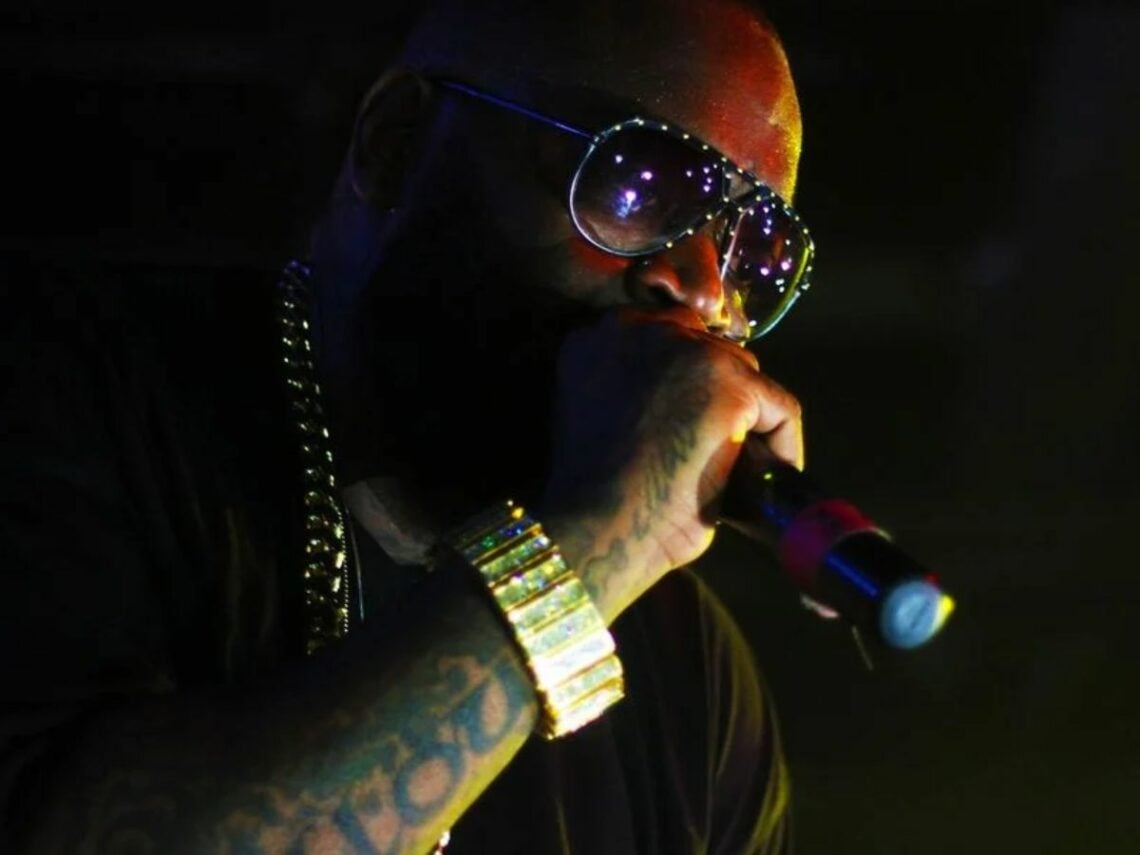
The time Rick Ross had to fight for his name in a California court
As rap names go, “Rick Ross” is among the more modest. It sounds fairly typical, nothing particularly special about it.
Yet Rick Ross himself was forced into a years-long legal saga in order to retain the right to use it for his career. Someone else claimed it for himself, and it led to a dispute that could only be worked out in a Californian courtroom.
In the summer of 2010, a man known as “Freeway” Ricky Ross sued his rapping namesake precisely because of the moniker. Freeway Ricky claimed that the rapper Ross, whose real name is William Leonard Roberts II, had called himself Rick Ross as a way to invoke Freeway Ricky’s name and image for the sake of boosting his own rap career.
Freeway Ricky isn’t necessarily the sort of person you’d like to get into a dispute with. He was once a drug lord who ran something of an empire across Los Angeles, generating huge revenues. He was, at his height, a powerful and wealthy man.
It was reported that Freeway Ricky was looking for $10 million in damages. He also raised the prospect of seeking to prevent Ross from releasing his fourth album Teflon Don.
In the week following the filing of the lawsuit, the rapper Ross delivered a public statement addressing the situation. Comparing his circumstances to being “like owning a restaurant,” he acknowledged that there were going to be “a few slip and falls” along the way. A person in his position can “get lawsuits,” but “you deal with them and get them out your way.”
The case over the name dragged on for three years, with Ross insisting his stage name had not come directly from Freeway Ricky. He admitted that he had heard of the drug lord’s story and that it had “grabbed him,” but he maintained his own stage name had evolved from his high-school football nickname “Big Boss.”
In 2014, after a long case, a judge ruled in favour of the rapper. While they acknowledged that Ross’ artistic persona was in some way indebted to Freeway Ricky’s story, they said that Ross’ work was sufficiently its own.
The judge noted that Ross was “not simply an impostor seeking to profit solely off the name and reputation” of Freeway Ricky. He instead “made music out of fictional tales of dealing drugs and other exploits” and, in so doing, “he created original artistic works.” Rick Ross won the case and kept his name.