

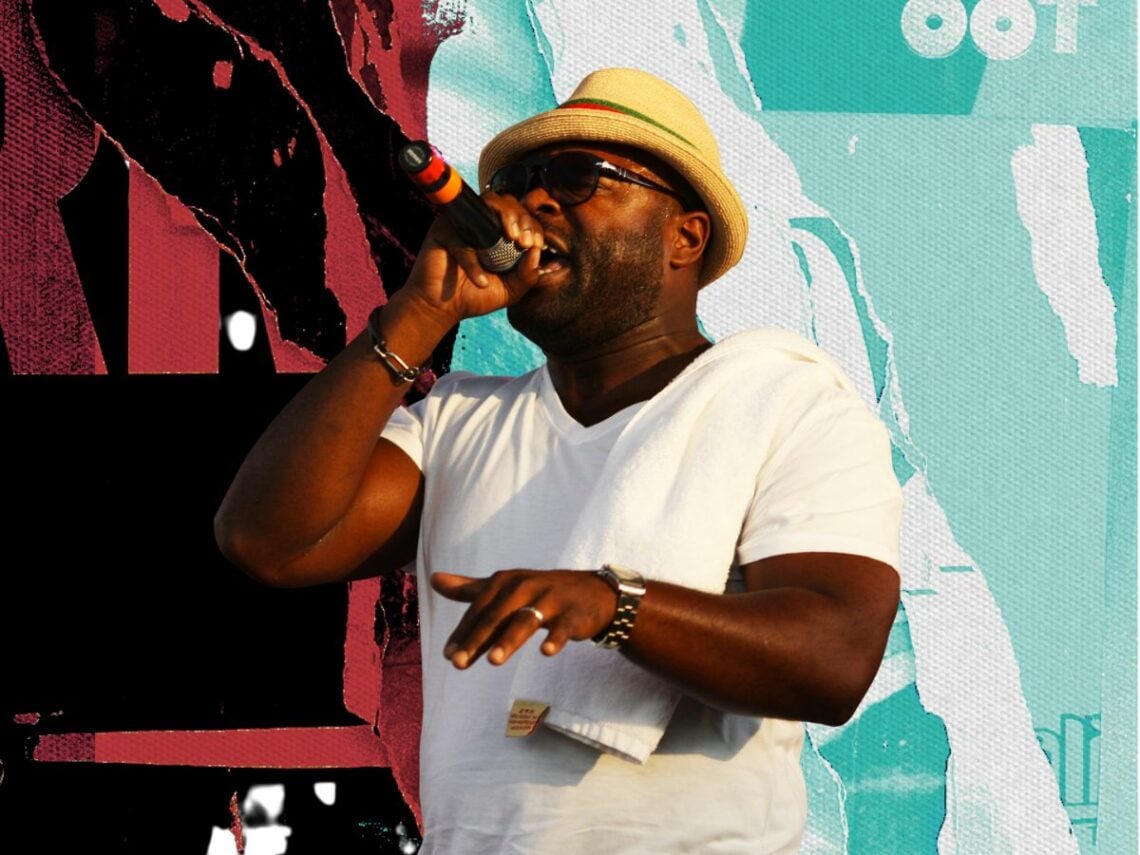
The legendary musicians that meant “liberty” to lyricist Black Thought
Black Thought is different from many of the MCs out today, not just musically but philosophically. Some would resort to calling him a conscious rapper and assume that he grew up inspired only by politically charged black music. However, these people couldn’t be further from the truth.
Although the Philadelphia lyricist is known for his profound messages and political material, he grew up with an eclectic array of music around him and listened to a lot more than just militant hip-hop. Furthermore, irrespective of his parents and their religious beliefs, he wasn’t cut off from the rest of the world and was exposed to the melting pot of music that swept the US in the 1970s.
Black Thought grew up on the East Coast in Philadelphia, only a few hours’ drive from New York City. As such, he was aware of all the musical and cultural revolutions happening in the Five Boroughs during the late 1970s and early ’80s. The Things Fall Apart lyricist knew of all the New York acts, from Whodini to Big Daddy Kane.
However, while New York City was the mecca, he was also enthralled by figures such as Schoolly D, who were rising out of Philadelphia, his hometown. Musically, Philly was an interesting place to grow up during the 1970s because, despite the prevalence of soul in the mainstream, the Pennsylvania city managed to cultivate its own scene and create its own soul music subgenre.
Referred to as ‘Philly soul’, the style was characterised by funk influences that local producers then fused with lush instrumental arrangements, such as orchestral strings and horn sections. The creativity and extra skill required to make these arrangements set the city’s sound on its path.
Still, there was one looming beast that black culture couldn’t ignore in the 1970s, and that was the dominance of funk music. The catchy and undeniably hip genre gained vast amounts of traction across the US, especially in black communities. However, during this decade, one peculiar individual began to come to the forefront of the genre and capture the charts with a unique, almost alien sound, and Black Thought fell in love with him.
During the 1970s, P-Funk began to emerge. The genre was developed by the band Parliament-Funkadelic, began to shoot up the charts with its catchy hooks, and it was pioneered almost solely by George Clinton. The session instrumentalist was initially a member of two separate bands—Parliament, formed in the 1960s in New Jersey and an independent collective named Funkadelic. The two eventually merged to form one mega group.
The latter outfit (Funkadelic) made funk music, but that’s where they parted with “regular” black culture. Instead of flares and afros, they brought a sci-fi aesthetic, the outlandishness of glam rock, the psychedelia of the 1960s, and then fused it with a splash of electronic music. This captured the imagination of many adolescents, including Black Thought, who, to this day, is in love with the band’s 1978 studio album, One Nation Under a Groove.
Speaking with Pitchfork about how much Funkadelic means to him, the Philly rapper explained, “I remember a certain level of creative freedom in the atmosphere in the late ’70s. It was infectious. And it was traceable back to a few artists, one of whom was George Clinton and all the different configurations of his collectives.”
Black Thought then spoke about the group’s 1978 project, detailing, “When I think of One Nation Under a Groove, I’m immediately taken back to sliding across the backseat of a big body vehicle, one of those gas guzzlers like a Nova, back in the day before seatbelts was a thing. That was the soundtrack. It transports me to the safe space of community I had as a young person.”
The Roots once toured with Funkadelic and seeing them on stage influenced Black Thought even further and left a last impression on him. While trying to pinpoint exactly what Clinton embodies, he told Pitchfork, “When I think about the energy George Clinton represents, it’s liberty—in the studio and definitely onstage. When the Roots were still emerging, we toured with his band extensively, and getting to see those guys for the first time was otherworldly. It definitely felt as though they’d descended down from the mothership.”