

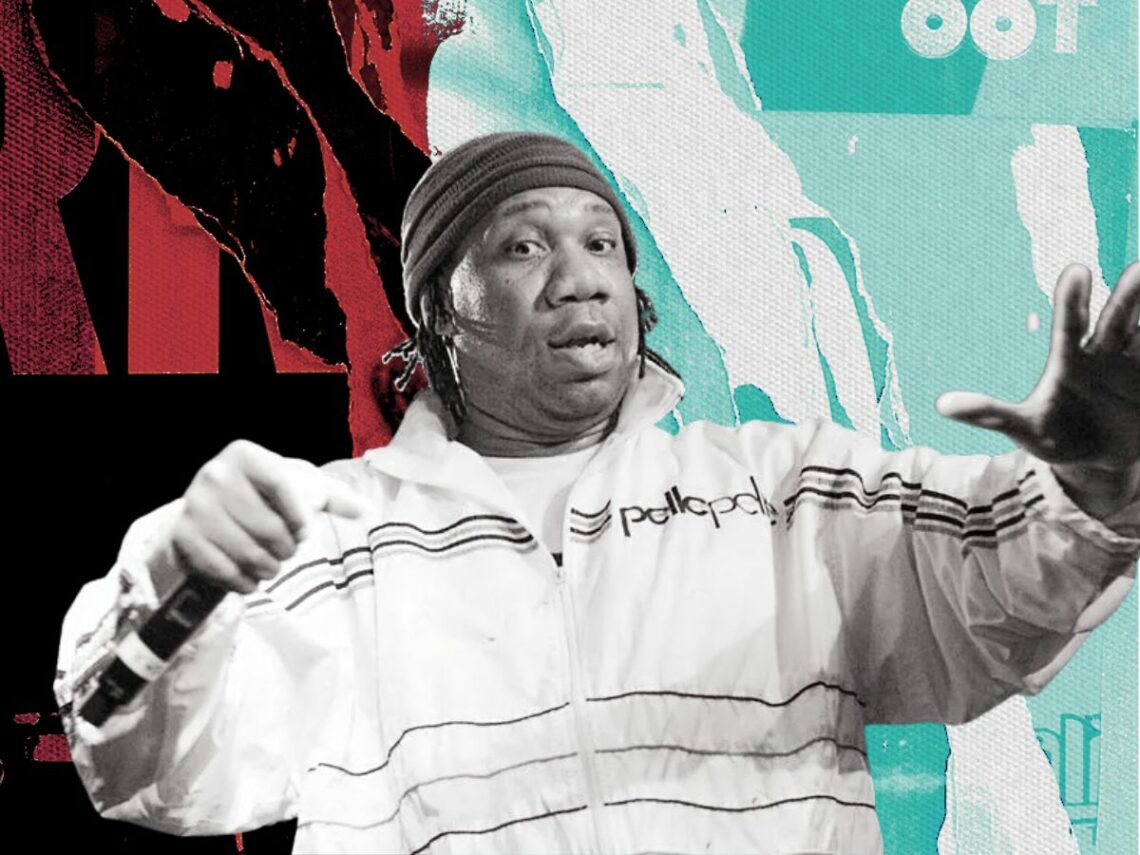
Lord Jamar and KRS-One clash about hip-hop’s origins
Hip-hop’s creation has always been a disputed subject. People often argue about who began the genre and what ethnicity the culture can be traced back to. Many of the earliest pioneers of rap music were Caribbean Americans. From DJ Cool Herc to Grandmaster Flash, who are Jamaican and Bajan, respectively. However, Brand Nubian member Lord Jamar once clashed with KRS-One about Puerto Ricans’ contributions to hip-hop.
KRS-One prides himself on being a historian of hip-hop. As a pioneering rapper during the 1980s, the lyricist (real name Lawrence Parker) saw the culture grow from the ground up in the South Bronx. The BDP artist lectures worldwide about rap music and its roots, and, as a pan-Africanist, he traces the music across several continents.
However, in an Instagram video, Lord Jamar responded to KRS-One’s insistence that Puerto Ricans and Caribbean Americans were a pivotal part of hip-hop and are partially responsible for its existence.
Parker took issue with those who have minimized the role of Latinos in rap development, stating, “Today, people want to downplay the Latino role in hip-hop. They are so stupid. Hip-hop cannot— would not have existed without Puerto Ricans specifically. Cubans were here, Haitians were here, Dominican Republic was here, everybody was here. All of South America been in the Bronx, okay?!”
delivering his seminar, Parker placed great emphasis on the contribution of Caribbean people to hip-hop, adding, “But Puerto Ricans in particular sided with the Black folk here, and the Jamaicans were coming in as well. This group of Puerto Ricans, Jamaicans and American Blacks made hip-hop.”
However, in his Instagram video, Lord Jamar refuted KRS-One’s entire lecture and wrote it off, disclosing, “I wasn’t upset, but I knew he was wrong. I knew he was wrong, and…some people posture themselves as super official.”
Lord Jamar asserted that the funk and soul influence that was integral to early hip-hop beats and delivery doesn’t reflect Puerto Rican or Jamaican culture. Expressing this, he insisted, “But “Nowhere do you see the DNA of Puerto Rican culture. I’m not talking about Puerto Rican individuals; I’m talking about Puerto Rican culture, Jamaican culture. Those things did not influence hip-hop.”
Lord Jamar’s response is understandable, yet akin to all exciting cultures, it would appear that hip-hop emerged as a result of several different cultures existing in one melting pot. As with all genres, especially those born in multicultural cities, it is frankly impossible to cover one group in glory while omitting others.