

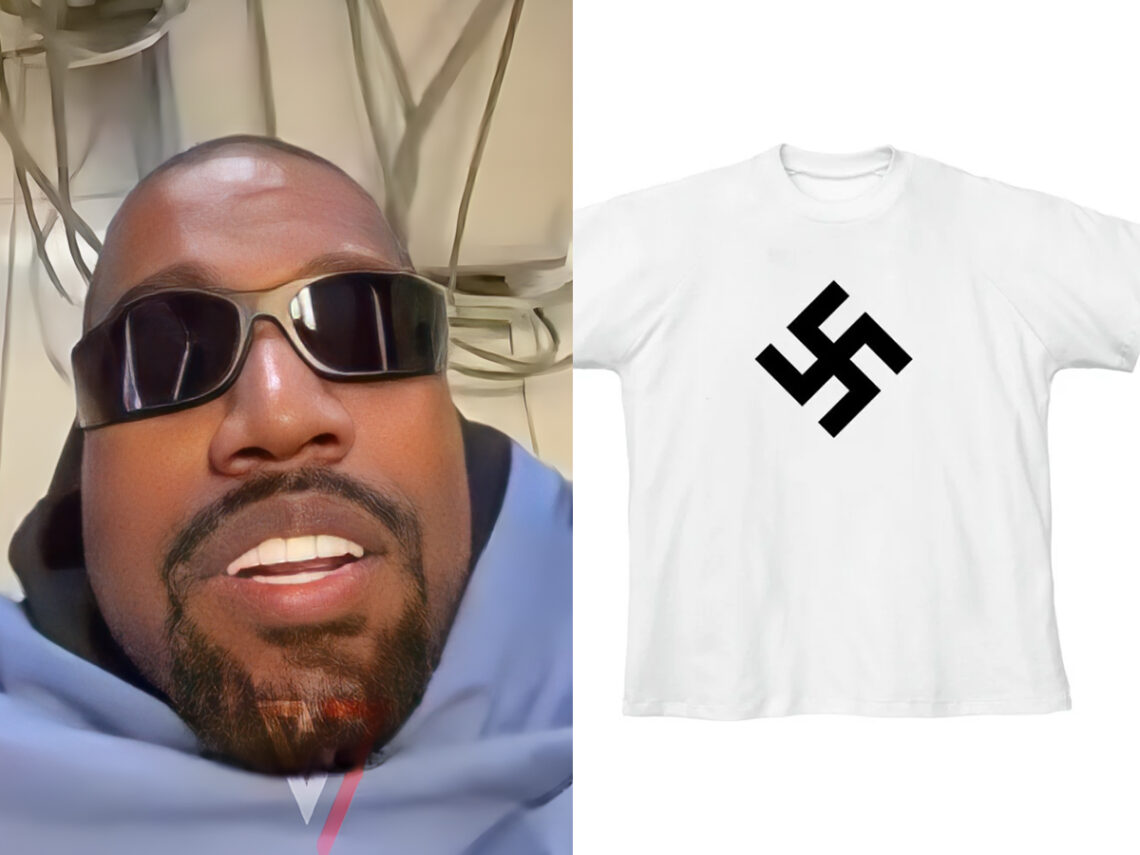
Kanye West reveals he had swastika t-shirt idea for over eight years
Kanye West caused controversy earlier this month by selling a swastika t-shirt on his Yeezy website. The Chicago rapper has claimed he had the clothing idea for eight years but only decided to act on it in 2025.
Ye sold the hateful shirt on his website for $20 after funding an advert during the Super Bowl, guiding viewers to his typical apparel before changing it to an item with a symbol associated with the Nazi Party. This came after Kanye posted on X, “I love Hitler. Now what, bitches? I’m a Nazi. I say whatever the fuck I want, p*ssies.”
He then deactivated his X account before returning last week. In a new post, Kanye claimed he came up with the t-shirt almost a decade ago after being inspired by his trips to Japan.
“IVE HAD MY SWASTIKA T SHIRT IDEA FOR OVER 8 YEARS,” he wrote on the platform. “IT WAS SO INTRIGUING TO ME THAT A SYMBOL HAD SO MUCH PROGRAMING IN IT. I REMEMBER GOING TO JAPAN AND GASPING WHEN I SAW WHAT IS KNOWN AS THE SWASTIKA ON CLOTHING.”
The rapper added: “IT FELT ILLEGAL TO EVEN LOOK AT IT. THATS HOW I HAD BEEN PROGRAMMED. I THEN FOUND OUT THAT SWASTIKA HAD MANY DIFFERENT MEANINGS AND MANY DIFFERENT NAMES.”
The Campaign Against Antisemitism condemned Kanye’s t-shirt and called on Elon Musk to ban him from X due to hate speech. “As if we needed further proof of Kanye’s antisemitism, he chose to put a single item for sale on his website – a T-shirt emblazoned with a swastika,” a post from the ADL read. “The swastika is the symbol adopted by Hitler as the primary emblem of the Nazis.”
The post continued, “It galvanised his followers in the 20th century and continues to threaten and instil fear in those targeted by antisemitism and white supremacy. If that wasn’t enough, the t-shirt is labelled on Kanye’s website as ‘HH-01,’ which is code for ‘Heil Hitler.’”
Kanye’s website was later taken down after Shopify revealed that he had violated their terms and conditions. The e-commerce company stated, “This merchant did not engage in authentic commerce practices.”