

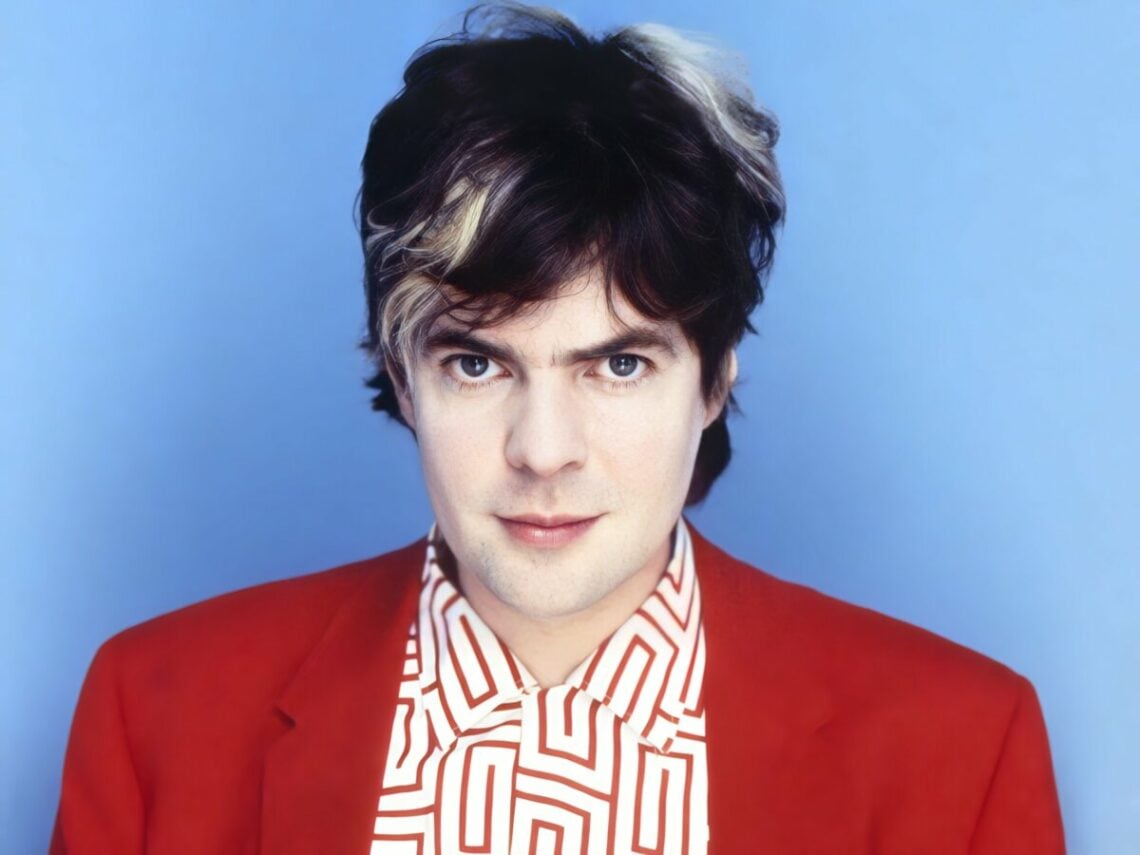
Jon Brion: the man who pushed Kanye West and Mac Miller “to another level”
Jon Brion is a man of many talents, best known for producing for the likes of Fiona Apple and Elliott Smith and scoring films such as Eternal Sunshine of the Spotless Mind, Magnolia and Punch-Drunk Love. However, he’s also dived into the world of hip-hop and crafted some exceptional bodies of work each time.
Keen to create something groundbreaking with his second album, Kanye West recruited Brion to co-produce the entirety of 2005’s Late Registration. The project was recorded with an orchestral style, using string arrangements and instruments like a harpsichord, celesta and Chinese bells – something that doesn’t typically go hand in hand with rap music.
Kanye knew he wanted to collaborate with Brion after hearing his work for Michel Gondry and Paul Thomas Anderson’s movies, as well as Apple’s catalogue. “One of the main differences [between] Late Registration and College Dropout, and every other album for that matter, is the producer Jon Brion,” he said.
“I actually brought him in to co-produce the entire album. He produced Fiona Apple’s three albums, he produced soundtracks for like Magnolia, Eternal Sunshine for the Spotless Mind. A musical genius, plays every instrument. And that really pushed me to another level.”
He continued, “Even like, not just playing instruments, but say I didn’t want to write a verse, he’ll push me: ‘I need another verse!’ Like really, it was kind of crazy for someone, you know, of my status as a producer, to have someone else producing and really pushing, and I really appreciate that.”
Brion produced some of the album’s biggest songs, including ‘Gold Digger‘ and ‘Heard ‘Em Say’, as well as other favourites such as ‘Hey Mama’, ‘Diamonds from Sierra Leone’ and ‘Roses’. Late Registration won Best Rap Album at the Grammys and is considered one of the classic albums in Kanye’s discography from the 2000s, largely down to Brion’s influence.
“What was interesting was that [Kanye] wanted to expand himself,” Brion said. “I felt that he was truly trying to make something that would communicate with lots of people but also have qualities in it that weren’t happening in other people’s records at the time.”

Similarly to Ye, Mac Miller was also a fan of Brion’s work from Eternal Sunshine of the Spotless Mind, although the Pittsburgh rapper’s initial approach was much more reserved. The pair collaborated on 2018’s Swimming, the last album to be released during Mac’s lifetime. Brion helped write and produce eight out of the 13 songs, which resulted in some of the most mature tracks of his career.
Mac felt insecure the first time he met Brion, believing he had something against hip-hop or people who made beats. “These were his exact words: ‘Oh, yeah. Hi. I really wanted to meet you, but I don’t know if you’d even consider what I do as music,'” Brion told Vulture.
“That seems absurd, but it was a worry in his head. Because of that, I remember feeling my insides change to this kind of thing, where I just wanted to encourage him immediately. I said, ‘Hey, man. Don’t worry about that. It’s all human expression.'”
As time passed, Brion saw a change in Mac’s confidence and began to hear more experimental music he was working on. That was the stuff Brion was most excited to hear when other musicians might not have shown as much interest.
“There was something different about the work every time he visited,” he said. “I feel like he got more and more comfortable, and he’d play me more of the stuff he was, frankly, maybe nervous about because it wasn’t straight hip-hop, R&B, or pop stuff. I think maybe when he had played that stuff for other people, they weren’t sure what to do. I lit up like a Christmas tree — ‘This is hiding in you?'”
Following Mac’s death, Brion went on to finish his posthumous album Circles at the request of his family, given the fact they had already worked together on the songs. “A lot of that stuff is essentially the Circles material,” he said about the music he was nervous about.
“As of that point, it was already going to be two albums, but once we were working, he got inspired, and then it was going to be a three-album cycle. He’d picked the stuff he picked for Swimming, and then we had this other pile.” The result was one of the most meticulous posthumous albums ever to be released.