

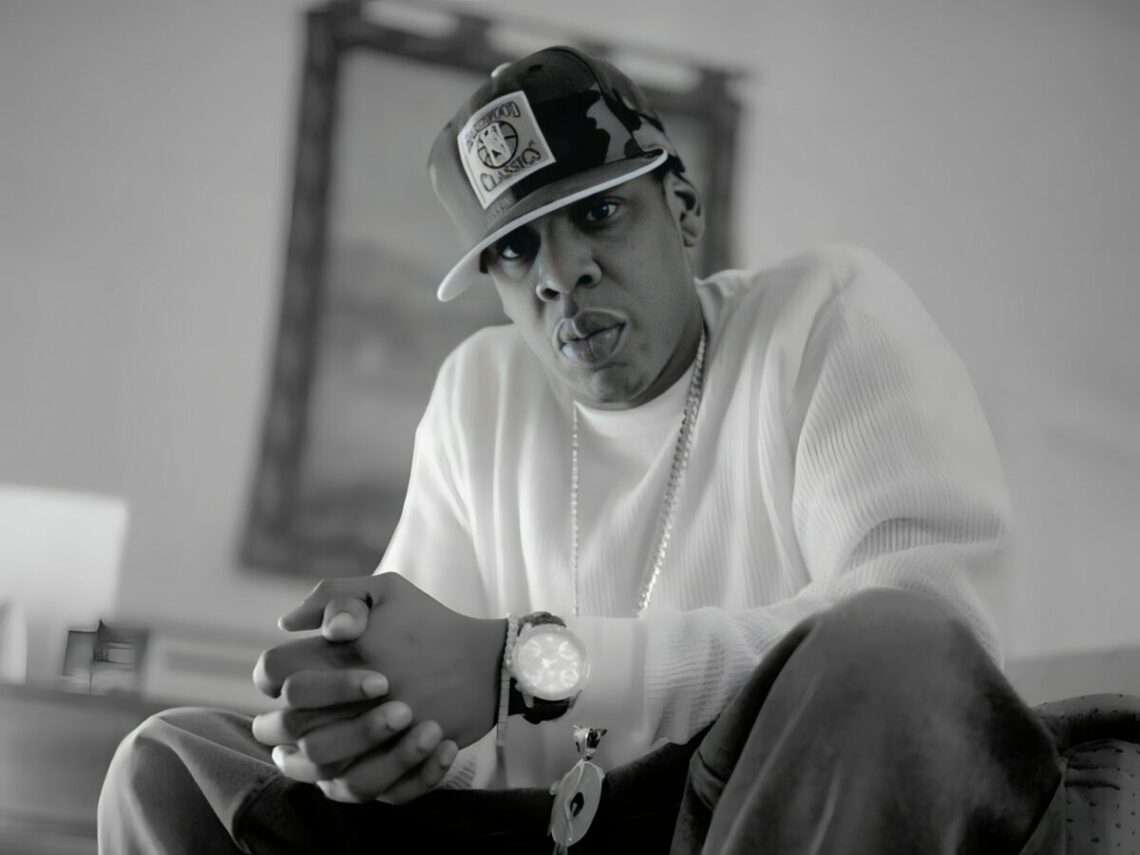
Jay-Z’s mammoth impact on NBA jersey sales
The NBA’s replica jersey sales, which had been booming just months before, were suddenly in freefall. Teams were still winning, stars were still shining, yet shirts were gathering dust on shop racks. A confused David Stern did what few commissioners would even think to do. He asked for a meeting with a rapper, and not just any rapper, but the man who had made jerseys cool in the first place: Jay-Z.
Chris Gotti remembers it clearly. ‘Hov’ walked into the office and said, “David Stern wants to meet me”. Back then, Jay-Z had been the poster boy for the throwback movement. On the Hard Knock Life Tour, he made a habit of wearing a different NBA throwback jersey in every city: a Bulls top in Chicago, a Sixers top in Philly, a Lakers piece in Los Angeles.
Fans clocked it, and kids wanted whatever Jay was wearing, and Mitchell & Ness could barely keep up with demand. The look wasn’t just popular; it was the uniform of hip-hop in the early 2000s, and inspired Kanye West, as well as many other rappers, to follow suit.
Then came the swerve. In 2003, with The Black Album looming, Jay declared he was done with jerseys. On ‘What More Can I Say’ he rapped, “And I don’t wear jerseys, I’m 30-plus, give me a crisp pair of jeans and button-ups”. That line was more than a lyric. It was a cultural decree. The man who had made throwbacks the hottest look in America had grown out of them, and suddenly, so did everybody else.
The effect was instant as sales of NBA throwbacks collapsed. Chris Gotti says they dropped by an almost cartoonish number of “4000 per cent”, but the sentiment was real. Retailers who had built entire businesses on the jersey boom were left holding stock nobody wanted. Stern, alarmed at the sudden crash, wanted to understand how one artist had tanked a billion-dollar sideline with a single verse.
What happened speaks to Jay-Z’s unique place in culture at the time. Jerseys had transcended from being mere sportswear to become a symbol of authenticity, a way for rappers to wear their city or their idols on their chest, and blurred the lines between the court and the stage. When Jay wore them, he wasn’t just repping a team; he was making basketball part of hip-hop’s armour. But fashion in rap has always been about hierarchy, and the moment Jay moved on, jerseys started to look juvenile. Wearing one made you seem stuck in the past, while the ‘Hov’ was already suited up for the future.
Naturally, the clubs caught on quickly. In New York, promoters began banning jerseys and oversized fits, pushing for a more polished aesthetic. But the truth is, the rulebook didn’t matter. Nobody wanted to be the guy in a baggy Celtics top when Jay-Z was on TV in a blazer. The whole style felt like a dead trend overnight. For a generation of fans, growing up meant putting the throwbacks away and ironing a button-down.
This wasn’t just a change in wardrobe but a shift in how hip-hop would be perceived from then on, with Jay-Z’s pivot highlighting that success wasn’t about looking like a kid on the playground but treating it with the respect it deserved, akin to walking into the boardroom ready for business. The jersey era had been about nostalgia and flash. The button-up era was about maturity, confidence, and money. Jay didn’t just change the look of rap; he forced a coming-of-age reckoning across the cultural landscape.