

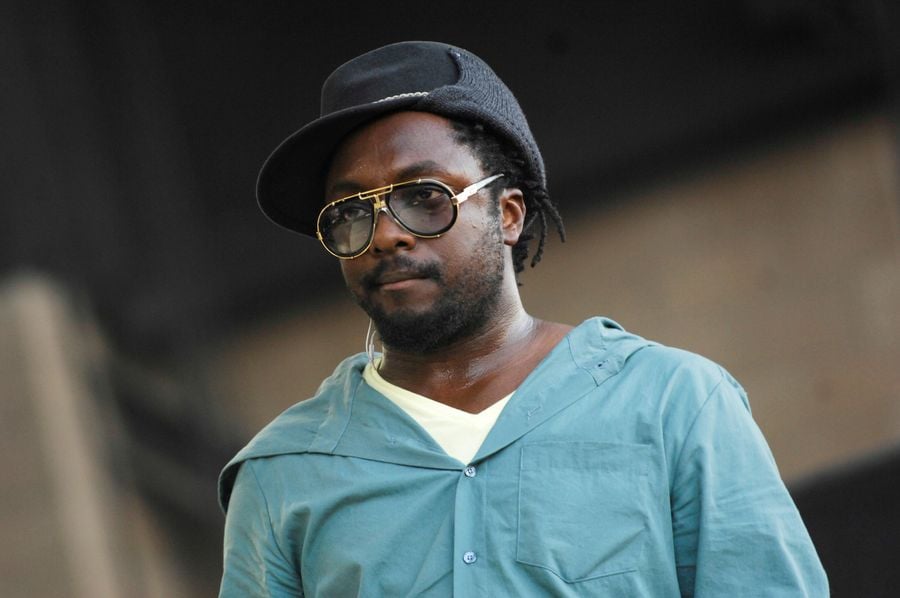
The one issue that “hurts” will.i.am about Black Eyed Peas
The Black Eyed Peas are literally one of the best-selling groups of all time, but such a level of success can be a double-edged sword. As band leader will.i.am sees it, their fame throughout the 2000s and 2010s came to overshadow a core aspect of who they are—and that hurts.
When the Black Eyed Peas formed in the ’90s, they were essentially an alternative hip-hop trio composed of Will, apl.de.ap and Taboo, plus a number of guest vocalists. It was only after Fergie joined the group for their third album, Elephunk, that they broke into the mainstream.
Elephunk marked a fairly major departure for the group, with its sound leaning into a pop sensibility designed to appeal to wider audiences. In those terms, the change worked a treat. Elephunk and several of its singles proved to be major hits, and the group were on the way to becoming superstars.
Throughout the 2000s and into the 2010s, the Black Eyed Peas grew and grew. Today they are considered to be one of the best-selling musical acts ever, having sold maybe 80 million records or so.
Fergie left the band in 2018, meaning they’ve had to reinvent themselves again, but, regardless, their legacy as one of the biggest groups of their generation is secure. Given the more alternative appeal of their first couple of records, their ultimate rise was quite astonishing—but will.i.am isn’t entirely pleased about how that played out.
Given their level of popularity, Will thinks that the group’s identity as a Black band has tended to be overlooked. Where once they were viewed as a diverse, multi-ethnic hip-hop group led by an African-American man, now, as a pop band, their identity has been collapsed somewhat.
Speaking on Wyclef Jean’s Run That Back podcast in 2020, Will explained his perspective. “In 2004,” he said, “Black Eyed Peas—we were just trying to get on… We got so big that… and it hurts, it still hurts a little bit that we’re not considered a Black group because we got that big.”
That the Black Eyed Peas came to be understood in a more homogeneous way, stripped of their ethnic and cultural identity, is damaging, according to Will. “It’s not good for the Black community that Black Eyed Peas is not looked at as a Black group because we’ve had international success,” he said.
Will doesn’t view this situation as unique to the Black Eyed Peas, but, rather, as part of a much larger pattern. “That’s just a thing that we suffer from all the time,” he claimed. “When you think of jazz, you no longer think of Black anymore. When you think of rock ’n’ roll, you don’t think of Black anymore… When you think of even country, you don’t think of Black.”
This, from Will’s perspective, is a further example of Black culture being appropriated. “A lot of the things that we create and we invent,” he said, “we dispose of or it gets stolen from us to the point where it’s no association to its origins.”