

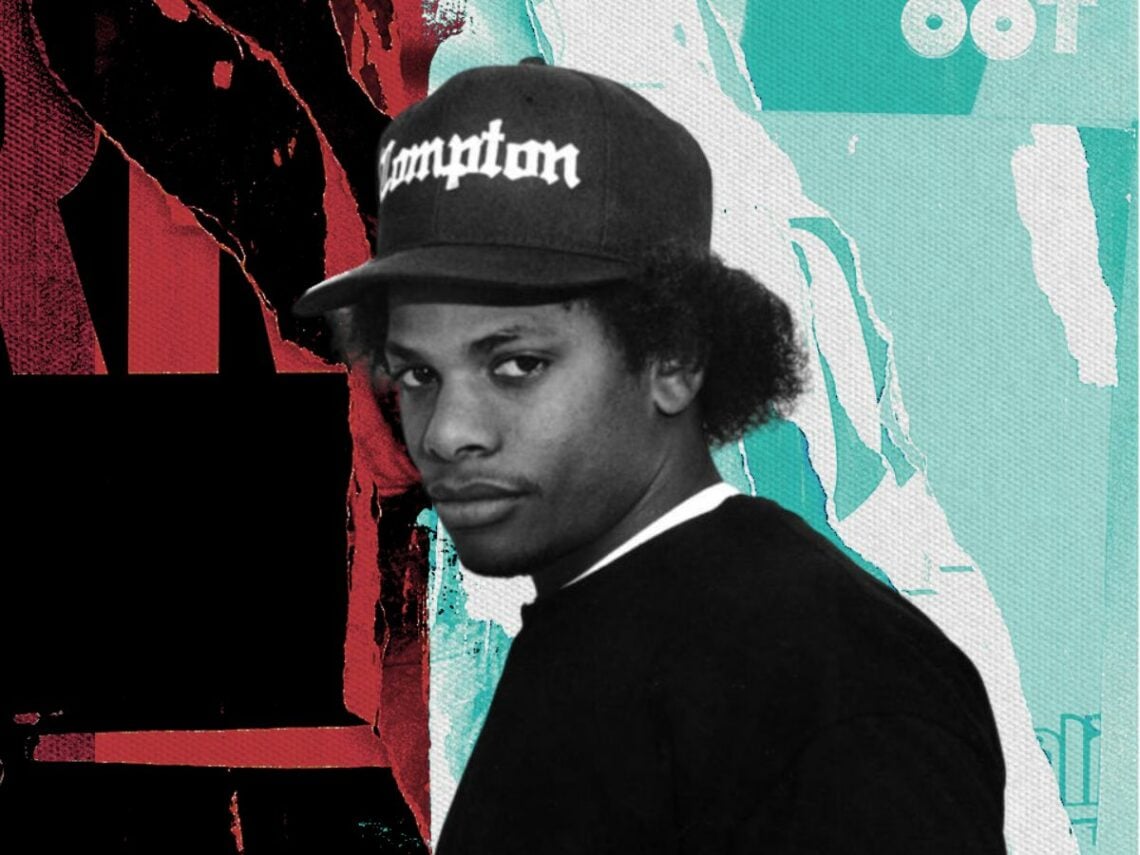
The impact Eazy-E had on hip-hop, according to Ice Cube
Ice Cube certainly had his differences with his old NWA bandmate Eazy-E, but, still, he looks back now and recognises the immense talent that he had.
Eazy had already become a star by the time NWA got up and running. His solo album, Eazy-Duz-It, came out in November 1988, just months before Straight Outta Compton arrived. But his classic single, ‘The Boyz-n-the Hood,’ had come out in 1987, meaning he’d already been well known for some time before NWA blew up.
While it was released as a solo effort, the marks of the wider NWA project were all over the single. Dr Dre produced it, and Ice Cube wrote the lyrics. Both of them, as well as DJ Yella, were very involved in the wider Eazy-Duz-It album, too, but, as Ice Cube himself explained to Complex in 2013, the two projects were their own things.
“Eazy had taken off first,” he recalled. “It was a concentrated effort to get that record done. And then we figured after his record, we would work on the NWA record. So we were looking at [it] as one record at a time.”
Cube recalled that, at first, Eazy didn’t seem to have much interest in being a performer. He was focused on finding success on the industry side of things, but, eventually, his talent as a rapper became apparent.
Cube had written ‘The Boyz-n-the Hood’ for a New York-based group associated with Eazy, but, when they heard it, they rejected it. Cube and Dre then convinced Eazy to jump on it, and that was that. Once ‘The Boyz-n-the Hood’ had become a big success, Eazy was, as Cube put it, “on his way from there.”
It’s probably fair to say that, while Eazy-E was a talented rapper, he wasn’t the greatest of all time or anything. But Cube nonetheless thinks he was “a true original and a true visionary,” and that his impact upon hip-hop runs much deeper than his rapping abilities might suggest.
“He made it okay for all artists to be themselves,” he claimed.
Cube painted Eazy as an artist who stayed true to himself. He found great success, without ever hiding who he really was. This, Cube believes, was a big moment in hip-hop’s development. Demonstrating that artists didn’t need to hide who they were, he argued, is “one of the biggest contributions to pop culture that you could make.”