


How Swizz Beatz caused trouble with a classic DMX beat
Swizz Beatz is one of the greatest hip-hop producers of all time. During the 2000s, due to his raw and rugged sound, he was in high demand, and his instrumentals were in the charts on a regular basis.
The Bronx native (real name Kasseem Dean) began as a prodigy child DJ as part of Ruff Ryders Entertainment alongside DMX. However, the beatmaker didn’t start producing as a professional straight away.
Dean joined the Ruff Ryders in 1998 as a teen and stuck to DJing. However, he idolised DJs who could also produce, such as DJ Premier and Marley Marl. During the early days of his career, he used to compile mixtapes and made small intros for artists that they could rap on but he wasn’t that good initially.
Dean moved from the Bronx to Atlanta as a young adult due to the stress and worries of living in the Bronx. In BET’s series, Ruff Ryders Chronicles, the producer explained, “I migrated to Atlanta from the Bronx because a lot of my friends around me were getting locked up, passing away, and it was just getting too close.”
However, he did build a following as a DJ in Atlanta before moving back. Detailing how he built a buzz around his name, Swizz recalled, “I played music from everywhere. I played music from the West Coast, East Coast, and down South, and I became famous for those eclectic parties, and that’s how my growth happened.”
Swizz Beatz’s family ran Ruff Ryders Entertainment. Both Joaquin and Darrin Dean are his uncles. That said, when he returned to the Bronx in 1998, the company already had in-house producers, including the likes of Dame Grease and P. Killer Trackz (PK), who had been running the studio while DMX was recording It’s Dark And Hell IS Hot.
However, Swizz uncles were keen for him to learn how to make instrumentals and, in the Ruff Ryders Chronicles, PK vividly remebers of Joaquin and Darrin telling him, “‘PK show my nephew how to make beats’. But Swizz didn’t know how to make music. He didn’t know how to make beats.”
According to the in-house beatmaker, Dame Grease, he was performing poorly at the beginning. He reflected, “He was definitely struggling. I remember Swizz had about two or three beats that he kept playing. Just two or three joints around and around.” PK insisted that he didn’t have his own sound at that point. However the creation of ‘Ruff Ryders Anthem’ changed that.
The inspiration for Ruff Ryders Anthem came from Swizz’s time in Atlanta. Recalling what he was trying to emulate, Dean told BET, “‘Ruff Ryder’s Anthem’ came kinda organically it was a sound that I made while I was in Atlanta. I was looking, and I’m seeing these pep rallies and the different games and things I was going to. They had the marching bands and these different particular chants, and I was like, ‘Man, I wanna bring that energy into music!'”
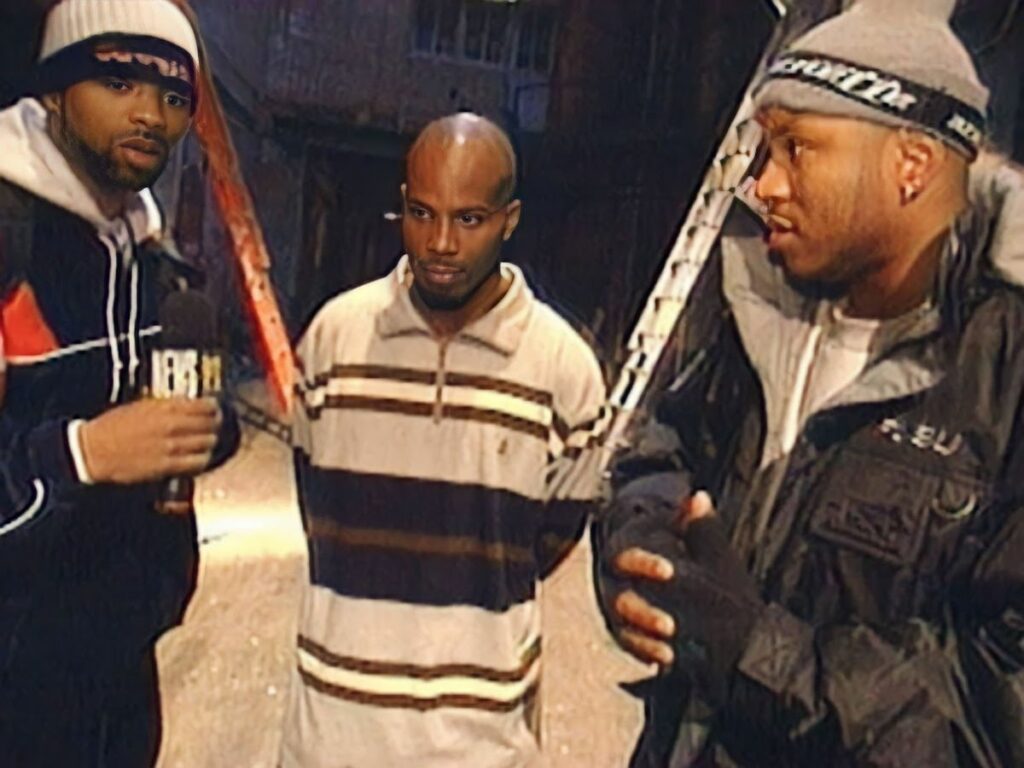
However, although DMX didn’t initially want to record the song when he did it, it ended up being one of the biggest singles from the album, and Swizz made it. The beatmaker had only returned to New York during the latter stages of It’s Dark And Hell Is Hot. As such, Dame Grease and PK contributed far more to the project than him.
Recalling his reaction to the beat, Irv Gotti remembered, “I was like Swizz! Swizz, he did it! It’s incredible, and when I saw the video I spazzed! I was like, ‘This is gonna change the game. We gonna own this shit. Ruff Ryders all over! Everybody’s gonna be a Ruff Ryder in the hood! It was all street, and the shot to me was all of the bikes.”
Speaking about the success of the album, A&R Craig Brodhead told BET, “In 1998, when It’s Dark And Hell IS Hot Came Out it was just a confirmation of the hard work that everybody had put in. It was like a nuclear effect!”
Although the project was a huge success, as DMX prepared to release his sophomore, tension arose in the Ruff Ryders camp. Many of the musicians who had worked on DMX’s debut were no longer getting recognition from the Dean family, and they were suddenly rejecting beats.
This sudden change in attitude toward Dame Grease and PK, credited for the majority of It’s Dark And Hell Is Hot, resulted from sheer nepotism and wasn’t based on talent. They had taught Swizz how to make beats and, in their opinion, were still leagues ahead of the young man.
Reliving the chaos, Brodheat explained in the mini-series, “As we began to explode, which seemed like overnight. The dysfunction came in with the producers in the studio.” He also recalled a sense of paranoia among the beatmakers, detailing, “Between the producers, it got ultra-competitive. You had different producers feeling like, ‘Uh oh, this one is stealing my sound. ‘This one took my drums, so people eventually started complaining about Swizz.”
Grease described the period as a time of “turmoil” and explained that concerning dynamics, “things started changing.” This resulted in a breakaway.
Trying to calmly break down how it looked from their side of the fence, PK added, “Me and Grease just started seeing some favouritism as him being their nephew. And I’m like ‘Wait a minute, we built this. We done this. He came at the tail-end like we put in the real labour, we put the real feeling into this shit!'”
However, It’s Dark And Hell Is Hot resulted in far more exposure for Swizz Beatz than for others. It is most likely true that following the success of ‘Ruff Ryders Anthem’, the Deans wanted to recreate that success with whatever formula Swizz had created. Still, the constant rejection of high-quality beats from older, more skilled musicians was undeniably a cruel way to treat those who contributed the most to DMX’s debut album.