

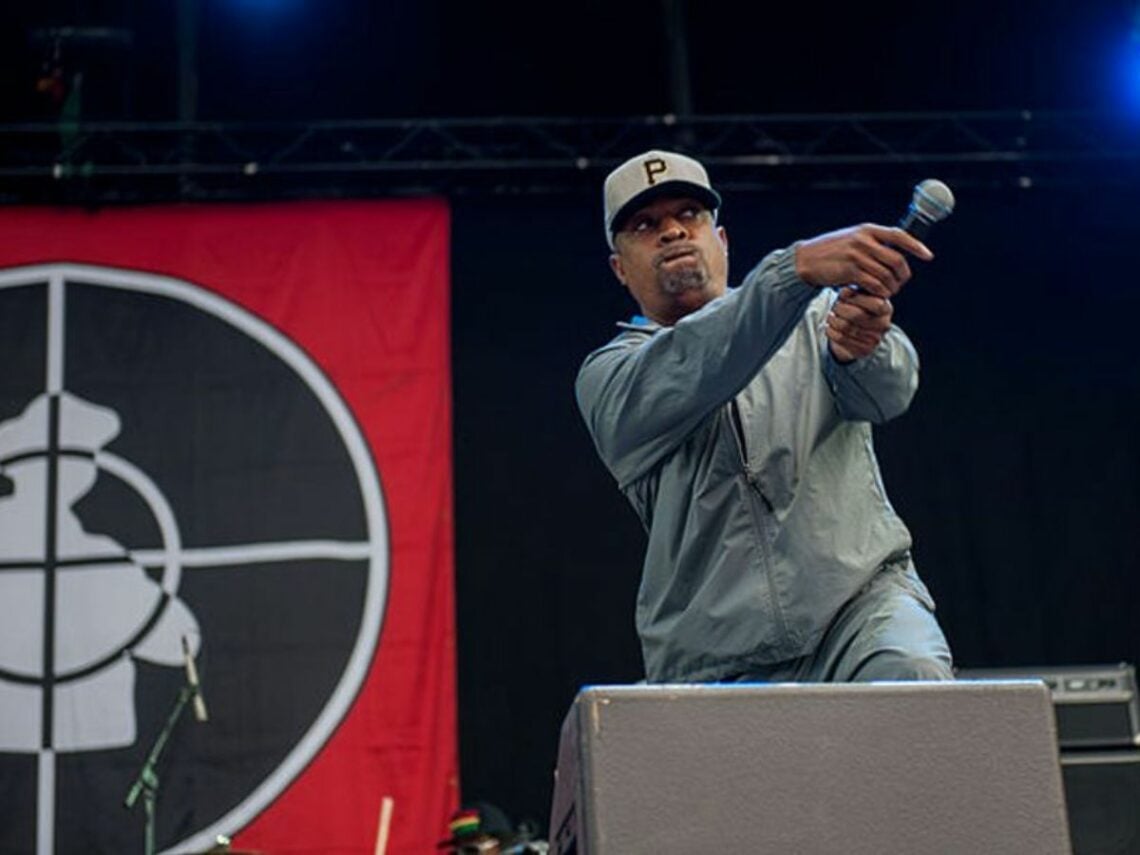
How Marvin Gaye inspired Public Enemy’s seismic album
It appears that the days when musicians were solely considered to be entertainers are behind us. In their current iteration they are often required to use their platforms to speak about pressing social issues in an effort to instil positive change. This expectation can be traced back to hip hop artists who took it upon themselves to advocate for injustice and inequality. The group that is arguably at the forefront of this movement is Public Enemy.
Leader and creative director, Chuck D, was highly influential in the incitement of political discourse, as the group addressed the harsh reality faced by Black America in the 1980s and 1990s. Their debut album, Yo! Bum Rush The Show, was born out of a time when rap albums only just began being considered as solid investments for music labels. Speaking to discover music, Chuck D elaborates on the key elements which allowed for longer rap projects to become the norm.
“1986 was really when the rap album was official in the mainstream as being a legitimate format. The albums released before were more like compilations. Grandmaster Flash and the Furious Five and Run-DMC’s first album were more like a collection of singles. Whodini[‘s] was the first album in hip hop that was kind of significant as being a mighty piece of work. Run-DMC’s Raising Hell was really the album that broke that mould and that’s my personal favourite album of all time.”
With the success of the album greenlighting the production of a second titled, It Takes A Nation Of Millions To Hold Us Back, Chuck knew there was a shift in mentality which had the potential to secure rap as a genre which executives saw as valuable.
“By 1987 and ’88, the major record companies finally got what they were looking for when they invested in hip-hop and rap. They didn’t want to be in the singles market. Singles weren’t enough for them. We were right there at the cusp of proving hip-hop was an album-oriented format. When we released that first album, we then knew what to do with our second album. After travelling the country and the world, we knew what an album was supposed to be like. I predicted in an interview that I wanted to make the record our What’s Going On by Marvin Gaye.”
Gaye’s 1971 album has been used to protest conflicts all over the world in the 50 years since. Nelson George, a music journalist who interviewed the ‘Ain’t no Mountain High Enough’ singer during his lifetime, spoke about its lasting impact.
“Ultimately, the world came back to this album, and I think that’s one of the things that happened in the last few years with all the turmoil over race relations, the entire chaos and the fragmentation. These are all ideas and conversations we’re having right now in 2021 that Marvin was having, and so the themes of the album have proved to be enduring.”
With It Takes A Nation Of Millions To Hold Us Back aiming to have the same lasting impact, it would not solely take inspiration from Gaye and his message of peace. Other prominent musicians of the time would also play a role in shaping the album.
“We were really influenced by the live Earth Wind & Fire album called Gratitude. It influenced It Takes A Nation when we finally had all our songs done. I had this tape of our live performances in London to intersperse within the album. That was the first album that was broken up. We used live excerpts from that point on…we wanted to present an experience, so all of those elements went into it.”
What resulted were era defining tracks such as ‘Rebel without a pause’ and ‘Don’t believe the hype’, which would help fulfil Chuck D’s assertion that “Rap music was the invisible TV station that Black America never had.”
Public Enemy’s presence in the hip-hop world as a catalyst for social change would continue producing iconic tracks such as ‘Harder than You Think’ and ‘Fight the Power’. By learning from artists who may not have shared their exceptional vision, but their intended impact, they were able to start and continue the conversation of a united nation.