

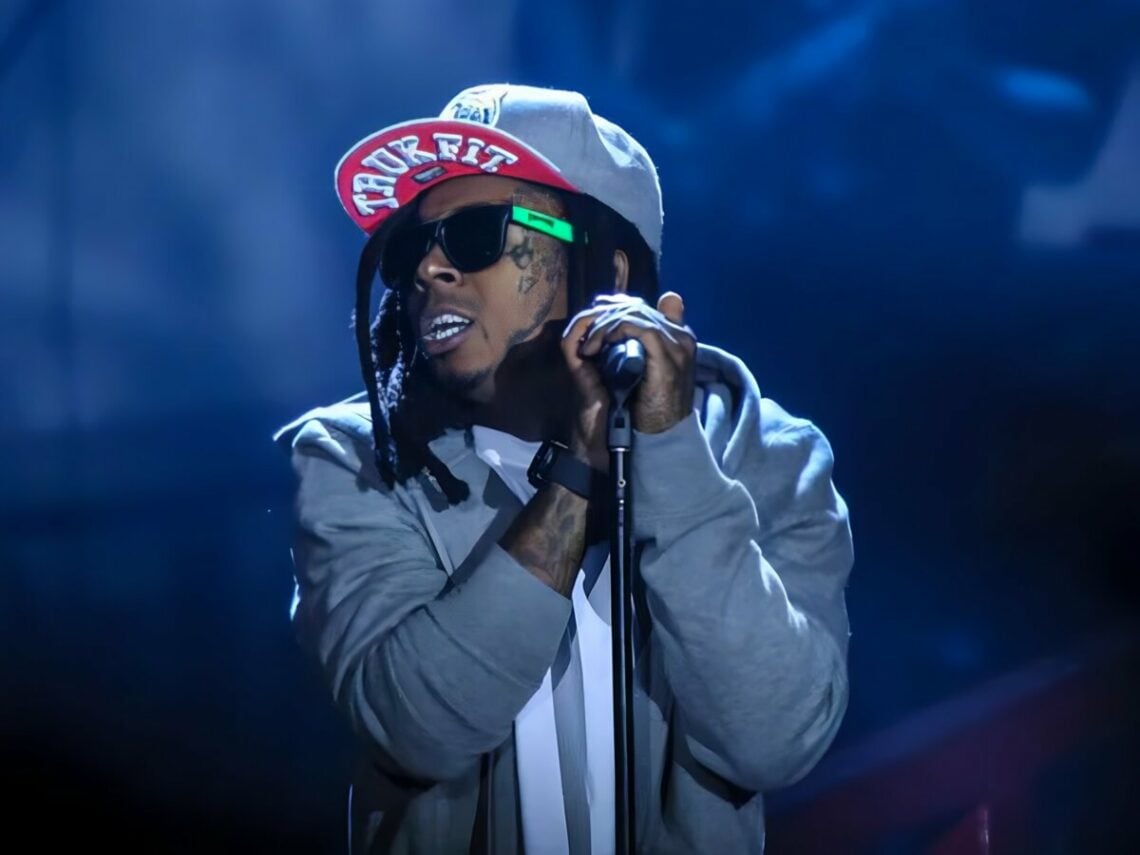
How ‘Lollipop’ defined a generation of new school rappers
Lil Wayne is among the most lyrical rappers ever and is respected by many of the golden age MCs for his contribution to hip-hop. Although his style is often looked down upon by artists who made their name before the turn of the millennium, Lil Wayne had a seismic effect on the culture and, in actuality, changed it forever.
When hip-hop first arose in the late-1970s, it was strictly an East Coast phenomenon. However, by the mid-1980s, California had stepped into the fray and rap music began to expand. The South was not heavily involved in the movement despite the various groups that existed at the time.
However, with the emergence of crunk and the electronification of hip-hop in the early 2000s, more and more people began looking to the South for their rap music. Whether they were from Mississippi, Florida, Georgia, Louisiana, or Texas, in the South, producers and MCs alike made music for the strip club.
Musicians combined the energy of electronic music with the aggression of rap, and the various subgenres that emerged quickly began to dominate the charts. Beginning with the emergence of crunk and then trap, Southern lyricists such as Lil Wayne saw a huge boost. However, it was one song in particular that changed the course of hip-hop in 2008.
Lil Wayne was popular long before the release of his 2008 project, Tha Carter III, but one artist in the South inspired him heavily and led him to experiment. In the mid-2000s, Atlanta vocalist T-Pain began to take advantage of auto-tune but in an extreme way that hadn’t been heard before.
Although the tool previously used to subtly correct off-pitch singers was not necessarily new, it had never been used to the degree that listeners could hear the software tuning the vocalist’s voice. T-Pain introduced auto-tune in this way, and the robotic perfectly pitched verses were surprisingly satisfying to the ears.

Following the release of T-Pain’s 2007 sophomore album, Epiphany, which debuted at number one on the Billboard 200, Lil Wayne saw the potential for the use of auto-tune in hip-hop and began to experiment with it for his 2008 project Tha Carter III.
Although some MCs in Atlanta, such as Yung Joc, had begun to utilise auto-tune, it was on a local level, and not much of the music began to reach the mainstream. As such, when New Orleans legend Lil Wayne released ‘Lollipop’ in 2008, it was a completely new sound.
The Young Money founder wasn’t singing but rapping, and the auto-tune wasn’t used to the same extent as T-Pain, but there was enough for the ‘Drop The World’ lyricist to record a hip-hop song driven by melody. Wayne wasn’t emceeing with a monotone gangsta delivery. Instead, his cadence and pitch changed with the instrumentals.
Furthermore, with weed smoke and a cup of Lean at his side in the booth, Lil Wayne’s raps were relaxed and nonchalant, and at times, he even slurred them with a swagger. ‘Lollipop’, produced by Static Major, was released as the lead single for Tha Carter III and was a smash hit.
The track spent five weeks at the top of the Billboard Hot 100 and was certified a diamond by the RIAA within a year. The song was so good it even earned Lil Wayne a Grammy Award for ‘Best Rap Song’.
Since Lil Wayne first used auto-tune for ‘Lollipop’, it has become the de facto way rappers deliver their verses in the US, with artists such as Lil Yachty and Lil Uzi Vert using it extensively on songs such as ‘Poland’ and ‘XO Tour Llif3’. With ‘Lollipop’, Wayne embraced a catchy, melodic hook, signalling a shift towards more commercially viable sounds in hip-hop. This track opened the floodgates for rappers to experiment with pop structures and sing-rap styles, bridging the gap between hip-hop and other genres.
Although there are still lyricists such as Kendrick Lamar and J Cole who don’t use auto-tune, the melodic style of rapping heard on ‘Lollipop’ still dominates the charts and is almost universal in its use. The song has paved the way for the future of hip-hop’s evolution into the mainstream music landscape.