


Did Mos Def try to kill his own rap career?
Mos Def was a legend in hip-hop during the late 1990s and early 2000s and looked like he was on his way to the top of the charts. While other Brooklyn rappers around him shot to fame with unbelievable speed, Mos Def, alongside Talib Kweli as part of the duo Black Star, seemed to be on a slower route despite his unparalleled skill.
The music industry is a business and comes with a set of tradeoffs. However, over the years, fans have watched MCs who appear to be destined for stardom quickly drop and replaced with lesser talents due to their personal and political views. Mos Def is one of these artists.
To be a mainstream artist, individuals often have to be careful about what they say and who they criticise, and they are regularly made to filter their content to make it palatable to a broader audience. However, as part of Black Star while on the New York underground, Mos Def was used to pushing Afro-centric, anti-establishment, and socially conscious messages, which proved popular among many in the culture. His lyrical content landed him features on albums by A Tribe Called Quest, De La Soul, and The Roots.
Still, when it came to transitioning into a solo artist, unlike so many in hip-hop, he was firm in his position and unwilling to become a commercialised package pushing the mafioso rap of the 2000s.
At the turn of the millennium, he was thrust into the limelight as he graced the cover of Fader magazine, where Q-Tip praised him, writing, “Mos Def has a willingness to be liberated, to not have anything bar him from expression is something that’s just brave and not a lot of artists have that. It’s something that’s just kind of innate.”
Unfortunately, as previously mentioned, full creative control is not often gifted to up-and-coming MCs, especially those with politically charged, potentially offensive lyrics. As such, it seemed that Mos Def sabotaged his career before it even got off the ground. Even after getting signed to a major label, he challenged them and refused to follow the path they had set for him.
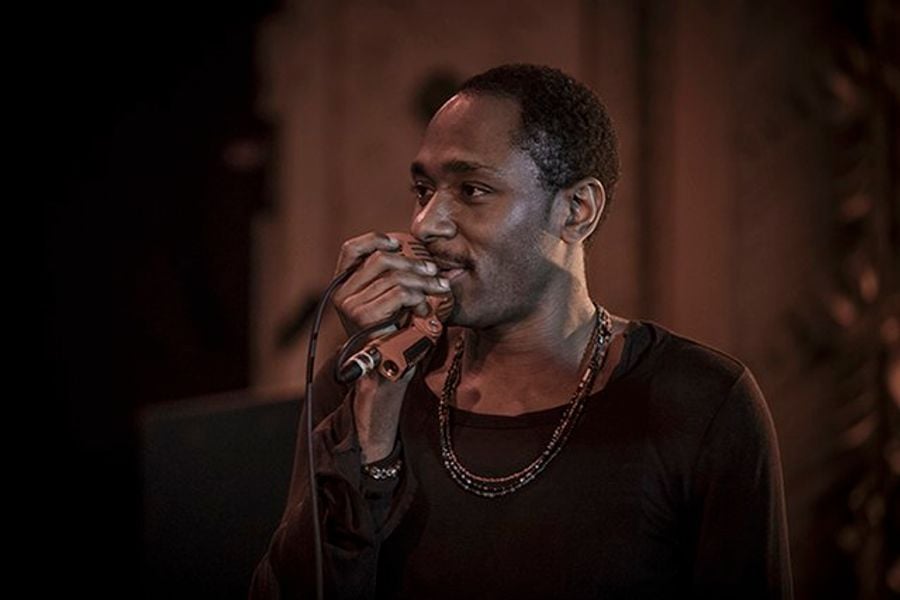
In the 2000 issue of Fader magazine, one could already see him pushing back against the authority as he told the publication, “There’s a very racist practice in the record industry around the sales issue, in my opinion.” He added, “We have to perform quicker, stronger and with less resources and when we satisfy that criteria, we’re still under appreciated. It seems like white artists do less and get more.”
It’s evident here that Mos Def was unwilling to alter his speech for success as merely months after signing with a major record label, he was already labelling the entire industry as racist, regardless of the consequences.
In 2004, while still signed to Interscope for his sophomore album, The New Danger, Mos Def decided to record a cover of Jay-Z’s ‘Takeover’ entitled ‘The Rape Over’ on which he referenced corporate ownership of hip-hop directly mentioning Lyor Cohen of Def Jam.
On the track, he rapped, “Old white men is running this rap shit / Corporate force’s running this rap shit / Some tall Israeli is running this rap shit.” The track, which was deemed to have antisemitic lyrics, was pulled from his album without his knowledge, and his career only went downhill from there.
Although from the outside, it may seem as if the Brooklyn native sabotaged his career, it has been seen in hip-hop before, and an unwillingness to play ball with record labels will ultimately lead to a break away from the business. Whether it’s a refusal to curb anti-establishment speech or a reluctance to include more palatable production, if MCs are looking to retain 100% creative control of their music upon their arrival in the industry with no negotiation, more often than not, they find themselves out of business within years.