

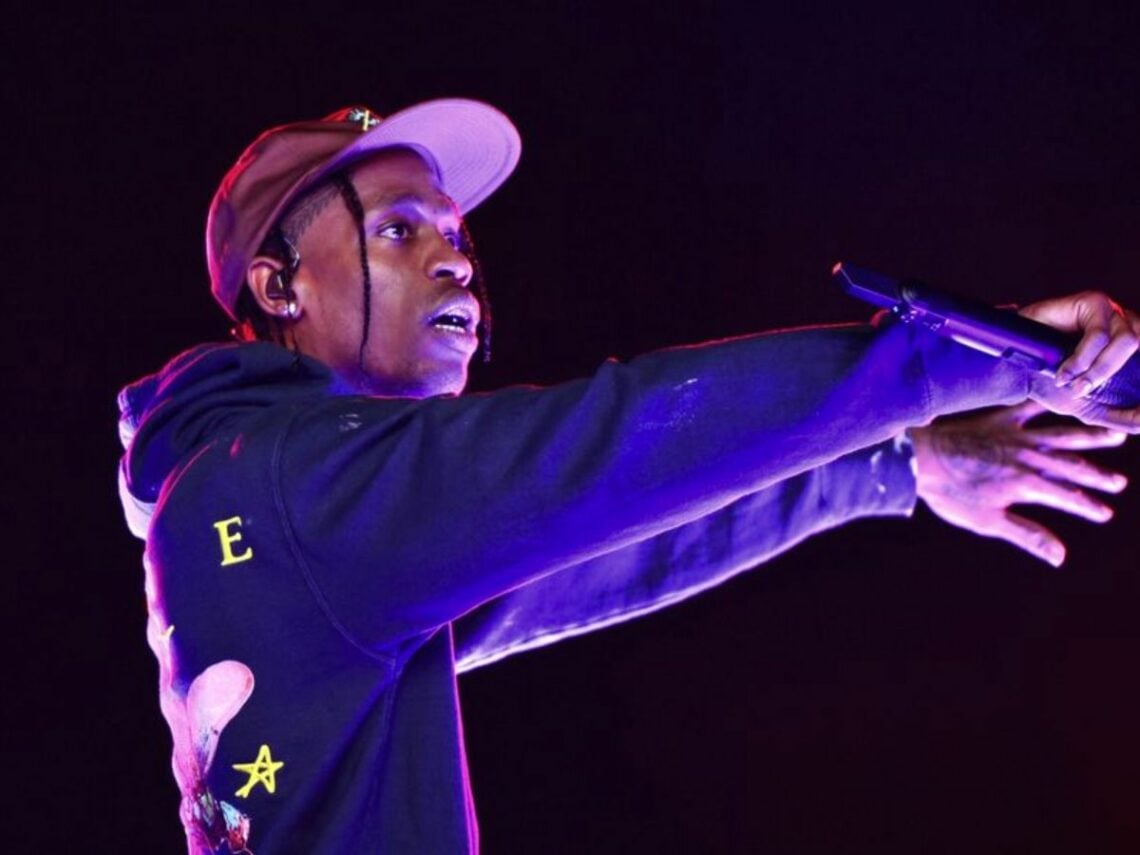
Why Chuck D refused to blame Travis Scott for the Astroworld disaster
The 2021 Astroworld Festival, fronted by Travis Scott, ended in disaster, with a catastrophic crowd crush leaving ten people dead and many more injured. It was an appalling tragedy, and a lot of blame went around.
Scott himself took a lot of criticism for his part in events, but one person who refused to lay the blame squarely at his door was Chuck D. He stepped back to take in the wider context surrounding the disaster, and, in doing so, he concluded that Scott was just part of a wider machine that was truly responsible. The problem went much deeper than just this one performer.
As much media coverage took a negative view on Scott in the aftermath of the crush, the outspoken Public Enemy leader wrote an open letter in his defense. In it, he explained why he refused to pin responsibility for the disaster on Scott, while also pointing towards those he did blame.
“Travis Scott is a performer, not a concert promoter,” Chuck noted in his letter. “He doesn’t build stages or coordinate logistics, he’s not an expert in crowd control or security or emergency medical services.”
What Scott did do, however, was “trust Live Nation and all the other concert promoters who are supposed to do all of this.” Responsibility, therefore, lay with such enterprises, the biggest of which were, almost counterintuitively, financially doing well around this period, despite the COVID-19 lockdowns of the year previous. Stocks of Live Nation, for instance, hit all-time highs in 2021.
“I’m tired of these corporations shucking their most crucial responsibility,” Chuck wrote. “I’m not buying the Young Black Man did it. He’s being blamed for a crime while the old white men running the corps that Travis and his fans trusted with their lives stay quiet in the shadows, counting their money and watching their stock prices go up and up.”
Chuck wasn’t necessarily suggesting that Scott, as a performer on stage at the time of the crush, was entirely free of blame, especially in light of the fact his shows had a track record of violence and disruption. But, again, the promoters were implicated in this, as Chuck believed they should have done their due diligence.
“If his act had a history of that behaviour why promote him to bigger venues?” Chuck asked in the letter. “Why partner with him in the first place?”
Large-scale, corporate promoters, from Chuck’s perspective, were the most powerful players in this story, and it was they who should front up and accept responsibility for the failures that occurred during the crush. It was down to them “to do the right thing. To step up and step out of the shadows to fix these situations and save lives. To stop letting one Young Black Man take the blame, the hate, the fall.”