

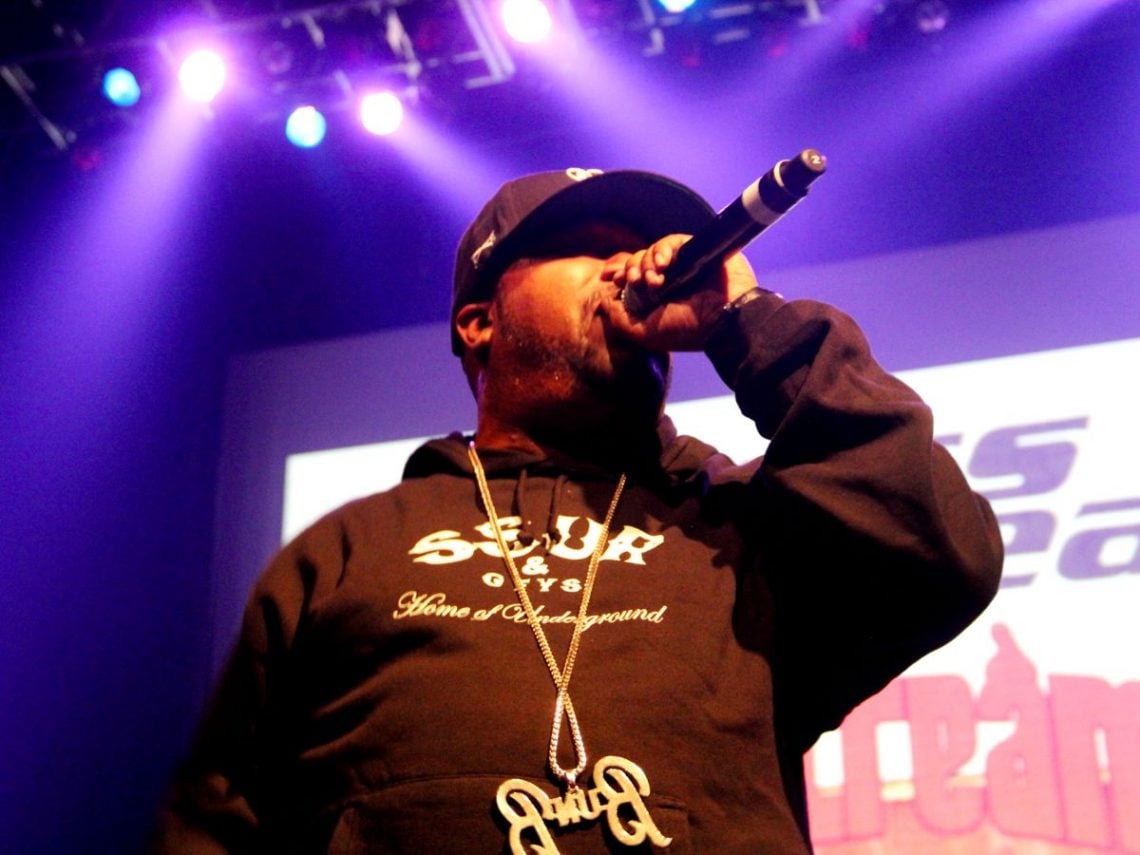
The rapper who inspired Bun B to start rapping: “He was also a heavy dude”
Bun B might not have had a career in hip-hop if it wasn’t for Heavy D. The Houston rapper (born Bernard Freeman) first heard rap music on his local radio show, KTS Jam, which started out at Texas Southern University. “I would go to Houston and spend time with my dad and I could hear the show there,” he said in an interview. “I would try to record whenever they would do these hip-hop mixes on that station and then bring them back [to Port Arthur, Texas] and let friends hear some of the music.”
He was a fan of rappers like LL Cool J and Run-DMC, but Heavy D and the Boyz changed everything for him. The group’s namesake convinced him he could make a career out of hip-hop, not only through his lyrics but also his weight.
“Heavy D was the one that really made a big difference for me, because Heavy D not only was a very talented rapper, but he was also a heavy dude,” Bun told Rock the Bells. “He was the ‘Overweight Lover’, right? And I’d always been a big kid all my life.”
He continued, “But he took pride in it and he was very clean and very well-dressed. Heavy D was considered a ladies man, and I’m like, ‘OK, so you can be a fat dude, you can rap, you can still be cool and you can still get girls?’ I’m like, ‘OK, I’m here, let’s do this.’”
Heavy D and the Boyz released five albums as a group between 1987 and 1994: Living Large, Big Tyme, Peaceful Journey, Blue Funk and Nuttin’ but Love, landing hit singles such as ‘Got Me Waiting’, ‘Now That We Found Love’ and ‘Somebody for Me’. As a solo artist, Heavy D also released four solo albums, including Waterbed Hev, Heavy, Vibes and Love Opus, and he found further success with his ‘Big Daddy’ single.
Heavy D passed away in 2011 after collapsing outside his Beverly Hills home and being rushed to Cedars-Sinai Hospital, with the cause of death being a pulmonary embolism. He and Bun were apparently in talks to collaborate before he died.
“I literally got an email from him about a month before he passed,” he said. “He had sent me some music because he was also a producer, and he wanted to collaborate. But he passed away before we could even do anything.
“A lot of the people that I looked up to and idolised ended up going from being just people in magazines and on television to actually being my peers. I wouldn’t dare call them my contemporaries obviously, but we were moving in the same circles.”
He added, “Different artists that I’d looked up to, I met them and there was a mutual respect for each other. And so yeah, finally meeting people like him and Big Daddy Kane in person, and having them be like, ‘Oh yeah man, I know who you are. Dude, you can really rap’—for me, that was the real validation.”