

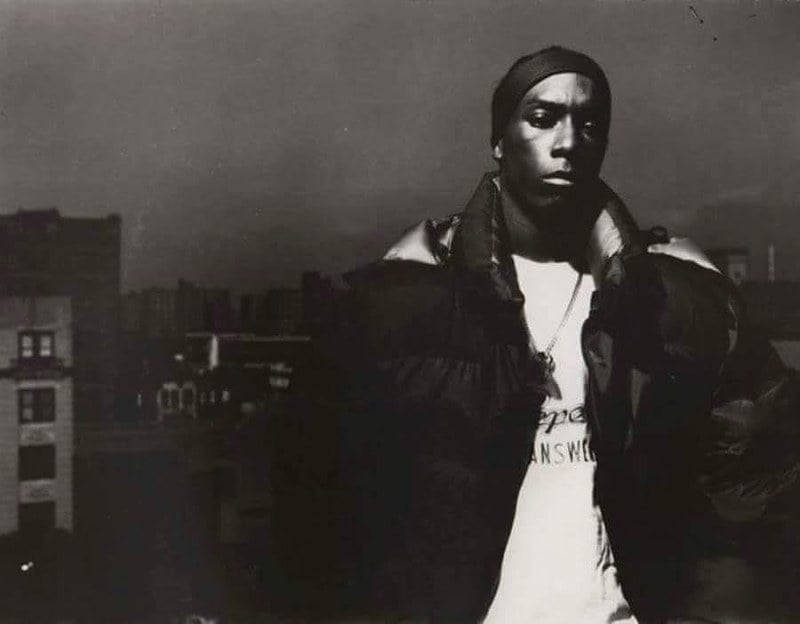
Big L’s five best songs of all time
Aged only 24 when he was murdered in a drive-by shooting, Big L was not on this Earth for very long. But, in the short time that he had, he secured a legacy for himself as one of underground hip-hop’s greatest ever figures. He didn’t leave the world with very much material, and he certainly still had a lot more to give. But the songs that he did gift us with are legendary.
Big L’s rhyming abilities were arguably the best of his generation, and, considering he was working during the era of Tupac, the Notorious BIG and Nas, that is quite the claim. A playful lyricist, with a sense of humour and a knack for metaphors, L was especially adept at vividly depicting street life and the challenges that come with it. For that he received acclaim from the critics and huge respect from his peers.
Nas, speaking with Funkmaster Flex for an interview, once remarked of L, “He scared me to death. When I heard that on tape, I was scared to death. I said, ‘Yo, it’s no way I can compete if this is what I gotta compete with.” Flex himself later told Vibe in 2019, “People can get mad at me for saying this, but he was the best lyricist at the time. He was a better lyricist than Biggie and Jay-Z. He just didn’t have the marketing and promotion. Let me go on the record and say that. It’s the truth.”
High praise, but such is the legacy of Big L. He died just before his career could really take off, having only ever released one album, Lifestylez ov da Poor & Dangerous, during his lifetime, with all subsequent releases coming after his death. But even though his career was cut short, he left his mark on hip-hop. These five tracks illustrate just how good he was.
The five best songs of Big L:
5. ‘Devil’s Son’
Going right back to the beginning, ‘Devil’s Son’ was L’s first ever promotional single, recorded while he was still a teenager. It’s quite jarring to hear someone who’s only 18 or so describing extreme violence in vivid detail—“When I was in pre-school I beat a kid to death with a wooden block”—but it is certainly gripping, in terms of its story-telling. L had wanted this song to be on his debut album, but it never made the cut. It seems likely that his label was concerned about quite how graphic it was.
L didn’t necessarily know this as he was putting together ‘Devil’s Son,’ but he was laying the groundwork for an entirely new subgenre of hip-hop to emerge. It’s probably fair to suggest that L wasn’t a “horrorcore” artist, because his music was broader than that. But ‘Devil’s Son’ can most certainly now be seen as proto-horrorcore, and, without it, perhaps the scene wouldn’t have developed as it did.
4. ‘Ebonics (Criminal Slang)’
The second track of L’s second album The Big Picture, released posthumously more than a year after his murder, ‘Ebonics (Criminal Slang)’ is a unique song that, in the hands of someone with less musical flair, would probably be incredibly dull, but with L rapping is quite remarkable. The track basically serves as a manual to understanding street slang, with L breaking down for the listener the linguistic quirks and codes that one needs to get by in Harlem.
“A victim’s a mark / A sweat box is a small club, a ticker’s your heart / Your apartment is your pad / Your old man is your dad / The studio is the lab and heated is mad / I know you like the way I’m freaking it / I talk with slang and I’mma never stop speaking it…” The track is heavy on language, yet, because of his smooth rapping style and the tight beat beneath it, it doesn’t come off as stuffy. He makes poetic discipline come to life.
3. ‘Let ’Em Have It “L”’
Closing Lifestylez ov da Poor & Dangerous is ‘Let ’Em Have It “L,”’ a song that exhibits its maker’s lyrical verve at its best. Balancing extreme violence with a genuine sense of humour was part of L’s genius, and a line like “I knocked out so many teeth the tooth fairy went bankrupt” is a shining, glittering example of that particular knack of his. It’s a powerful, aggressive track that serves as a space for L to simply let rip.
Lord Finesse, while not this particular song’s producer, did handle several others on Lifestylez ov da Poor & Dangerous, and he was privy to what was going on with the other tracks. “L just wanted a braggadocios song,” he explained to HipHipDX in 2010. “He wanted something that he could get his rocks off on.”
2. ‘Put It On’
‘Put It On’ wasn’t a hit when it was released as the lead single from Lifestylez Ov Da Poor & Dangerous in 1994—it only hit number 81 on the rap charts—but time was kinder to it. It is now recognised as one of hip-hop’s great songs, a source of inspiration for so many rappers who came later. The song’s producer, Buckwild, noted to Okayplayer in 2022, “There’s kids at school now who tell me it’s their favorite rap song. When I met Mac Miller he showed me his Big L tattoo and said ‘Put It On’ was the blueprint to him becoming a rapper. That influence is just as big [to me] as having a hit record.”
As Buckwild tells it, L carefully put together his verse over the course of a couple of days. He took his time to find the right words, but, once he’d done that, things moved quickly in the studio. He apparently nailed it in two takes. “L was a person who took his time writing, you know?” Buckwild said. “It had to be perfect. His writing process was so unique.
1. ‘Street Struck’
There’s a poignancy to ‘Street Struck’ that, unfortunately, is linked to L’s untimely death. The track is a warning to listeners, with L rapping about the dangers of a life of crime. It came about after his label requested something to balance out the jet-black content of the rest of Lifestylez ov da Poor & Dangerous. “When he was raised in Harlem,” Lord Finesse explained to HipHopDX, “he seen a lot of things and he witnessed a lot of things and he wanted to put it on wax. But at the same time, Sony made him come with something that can also leave a message to young kids that are listening to your music, and that’s what he came up with, ‘Street Struck.’”
The tragedy is that, on the one hand, L succeeded. The song really is an effective song for younger listeners to listen to and take note of. It warns kids of the dangers of a criminal life, but, still, L himself would succumb to such a life not very long after the song was released. He was murdered while he was still just a kid himself, sadly imbuing this song in particular with an especially haunting quality.